Arizona Governor Hobbs Doubles Down on Sports Betting Tax Hike
Key Highlights:
- Sports Betting Tax Hike: Arizona Governor Katie Hobbs has proposed increasing the sportsbook tax from 10% to 45% for companies generating more than $75 million in monthly revenue.
- Impacted Companies: Currently, only four major sportsbooks meet this threshold: DraftKings, FanDuel, Caesars, and Fanatics.
- Financial Goal: The administration estimates this change would add roughly $150 million annually to the state’s General Fund
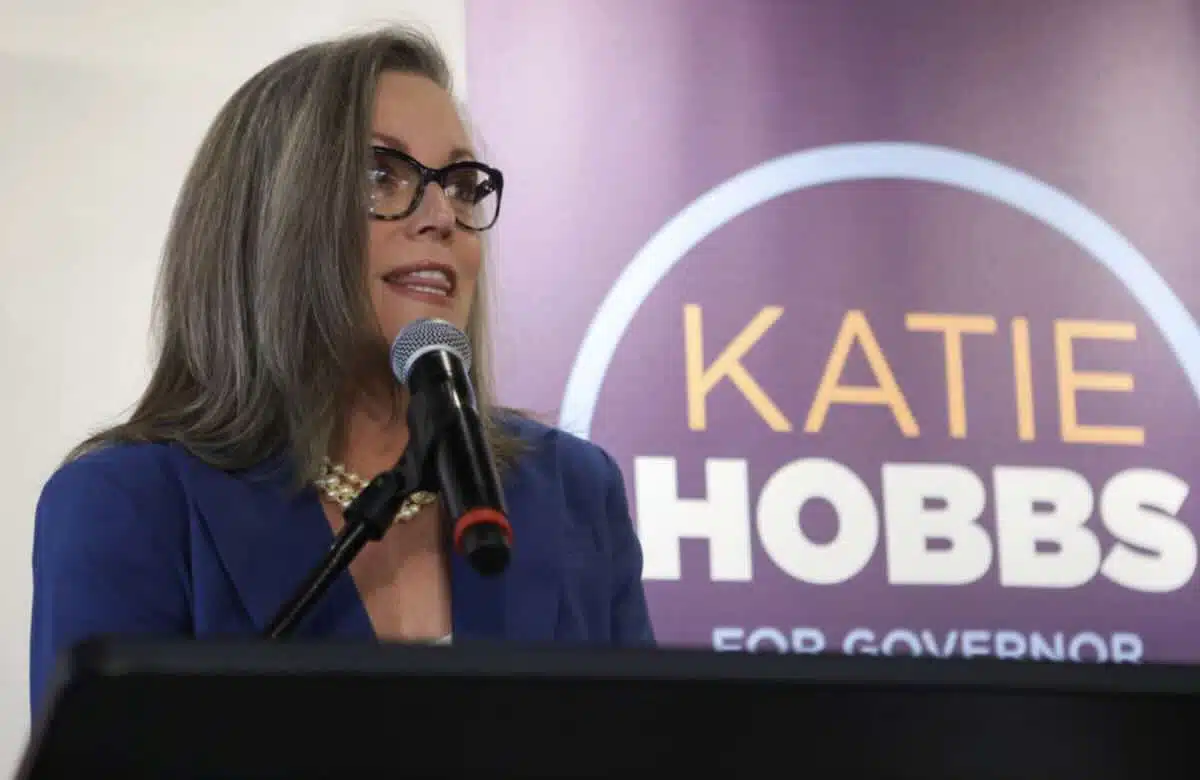
Arizona Governor Katie Hobbs has set the stage for a high-stakes legislative battle, proposing a dramatic increase in the state’s sports betting tax rate from 10% to 45%.
The proposal, unveiled as a cornerstone of her FY 2027 Executive Budget, specifically targets “large operators” that handle at least $75 million in monthly betting volume.
According to the Arizona Department of Gaming, only four sportsbooks reached that milestone in the state’s last event wagering report in November 2025: FanDuel, DraftKings, BetMGM, and Fanatics.
Currently, Arizona has the fifth-lowest sports betting tax in the nation.
By shifting these industry leaders to a top-tier tax bracket, the Hobbs administration estimates the state could reap an additional $150 million annually to help bridge a significant budget deficit.
The strategy puts Republican lawmakers in a political bind: protect major sportsbooks’ profits or deliver direct relief to workers and seniors.
The “Middle Class” Funding Mechanism
The Governor isn’t just seeking more revenue for the general fund; she is using the proposed tax hike as the primary engine for her Middle Class Tax Cuts Act (HB 2531 / SB 1203).
By bundling the 45% gambling tax with popular relief measures, such as eliminating state taxes on tips and overtime pay, Hobbs has created a calculated political dilemma for her opponents.
The strategy effectively forces the Republican-controlled Legislature to choose between protecting the profit margins of multi-billion-dollar sportsbooks or delivering direct tax breaks to Arizona workers and seniors.
For the gambling industry, this “Robin Hood” framing makes the proposal far more dangerous than a standard budget line item.
While the state has protected sportsbooks before by issuing cease-and-desist letters to offshore operators, this aggressive tax hike could paradoxically undo those efforts by forcing legal operators to tighten their odds and slash promotions.
Constitutional Hurdles and the “Fee” Loophole
Despite the strategic bundling, the path to a 45% rate is blocked by a major constitutional barrier.
Under Arizona law, any legislation that increases state revenue typically requires a two-thirds supermajority in both the House and the Senate—a nearly impossible threshold given the current GOP opposition to tax hikes.
However, the Hobbs administration is reportedly preparing a legal workaround.
Officials contend that because the payments are structured as regulatory “fees” rather than traditional taxes, the increase may only require a simple majority to pass.
Industry advocates and Republican leaders like Rep. Jeff Weninger have already pushed back, arguing that a 350% increase would inevitably drive legal bettors back to the offshore market, ultimately shrinking the very “pie” the Governor hopes to slice.
Players trust our reporting due to our commitment to unbiased and professional evaluations of the iGaming sector. We track hundreds of platforms and industry updates daily to ensure our news feed and leaderboards reflect the most recent market shifts. With nearly two decades of experience within iGaming, our team provides a wealth of expert knowledge. This long-standing expertise enables us to deliver thorough, reliable news and guidance to our readers.
Latest News