Scotts Valley Tribe Escalates Legal Fight Over Proposed Vallejo Casino
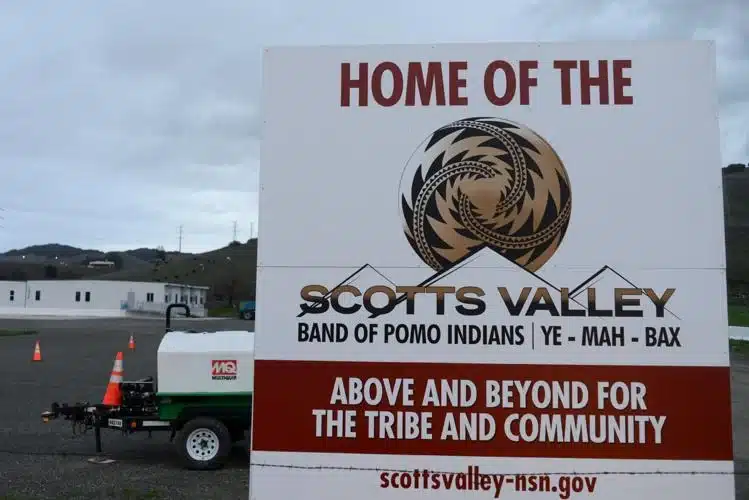
The Scotts Valley Band continues its push for a Vallejo casino as rival tribes challenge federal approval and local agreements.
The Scotts Valley Band of Pomo Indians is continuing its legal and political fight to develop a casino project in Vallejo, as opposition from multiple Northern California tribes intensifies and federal approvals remain under legal scrutiny.
At the center of the dispute is the Scotts Valley Tribe’s plan to build a casino resort on land near Interstate 80 in Vallejo, a project the tribe argues is essential for economic self-sufficiency, but which rival tribes say would unfairly encroach on their ancestral territories and violate federal gaming law.
The conflict has grown into one of the most contentious tribal gaming disputes in California in recent years, pitting four tribes against one another and drawing in federal courts, the Department of the Interior, and state and local governments.
The Proposed Vallejo Casino Project
The Scotts Valley Tribe, whose reservation is located in Mendocino County, received federal approval in 2022 for a casino project in Vallejo under the Indian Gaming Regulatory Act (IGRA).
The project includes:
- A full-scale casino with slot machines and table games
- A hotel and entertainment complex
- Significant infrastructure and job creation promises
The tribe has also secured a development agreement with the City of Vallejo, which includes revenue sharing, public safety funding, and local infrastructure investments.
Scotts Valley leaders argue the project represents a rare opportunity for the tribe, which currently lacks a casino and has limited economic development options on its existing land.
Opposition From Rival Tribes
The project has drawn sharp opposition from three other Northern California tribes:
- Yocha Dehe Wintun Nation
- Kletsel Dehe Wintun Nation
- Cachil Dehe Band of Wintun Indians of the Colusa Indian Community
These tribes operate successful casinos near Vallejo and argue that the Scotts Valley project violates the spirit, and potentially the letter, of IGRA’s restrictions on off-reservation gaming.
Opponents contend that allowing Scotts Valley to build far from its historical lands could:
- Set a precedent for “reservation shopping”
- Undermine geographic protections in tribal gaming law
- Create economic harm for neighboring tribal casinos
They have pursued legal action in federal court seeking to overturn the Department of the Interior’s approval.
Federal Approval and Legal Challenges
The U.S. Department of the Interior approved the Scotts Valley application under IGRA’s restored lands exception, concluding that the tribe had sufficient historical ties to the Vallejo area.
That determination is now under challenge.
Rival tribes argue that:
- Scotts Valley lacks sufficient historical connection to Vallejo
- The federal approval process was flawed
- The project exceeds the intended scope of IGRA
Federal courts have thus far allowed the project to proceed, but litigation remains active and unresolved.
Vallejo’s Role and Local Impact
Vallejo officials have backed the project, citing economic benefits for a city that has struggled with fiscal instability for years.
Under the development agreement, Vallejo would receive:
- Millions in annual payments
- Funding for police, fire, and emergency services
- Infrastructure improvements
City leaders say the casino represents one of the largest private investments in Vallejo’s history.
However, some local residents and advocacy groups have raised concerns about traffic, environmental impact, and long-term reliance on gaming revenue.
A Broader Tribal Gaming Conflict
The Vallejo dispute highlights deeper tensions within Indian gaming nationwide, particularly as:
- Prime casino locations become scarce
- Established tribes seek to protect existing markets
- Land-into-trust decisions face growing scrutiny
Tribal leaders on both sides argue they are defending sovereignty, but with very different interpretations of what that means.
Scotts Valley officials say blocking the project would entrench inequality among tribes by protecting those that already benefit from gaming. Opposing tribes counter that allowing the project would weaken the regulatory framework that made tribal gaming viable in the first place.
What Happens Next
The legal battle is far from over.
Next steps include:
- Continued federal court proceedings
- Potential appeals related to land-into-trust decisions
- Ongoing political pressure at the federal level
Construction timelines remain uncertain as litigation continues, though Scotts Valley has indicated it intends to move forward unless explicitly blocked by the courts.
Why This Matters
The outcome of the Vallejo casino fight could have implications far beyond Northern California.
A ruling in favor of Scotts Valley may:
- Expand opportunities for landless or non-gaming tribes
- Broaden interpretations of IGRA’s restored lands exception
A ruling for the opposing tribes could:
- Reinforce geographic limits on tribal gaming
- Slow or halt similar off-reservation casino efforts nationwide
For now, the dispute remains a high-stakes test of how tribal gaming law evolves in an increasingly competitive landscape.
Players trust our reporting due to our commitment to unbiased and professional evaluations of the iGaming sector. We track hundreds of platforms and industry updates daily to ensure our news feed and leaderboards reflect the most recent market shifts. With nearly two decades of experience within iGaming, our team provides a wealth of expert knowledge. This long-standing expertise enables us to deliver thorough, reliable news and guidance to our readers.
Latest News