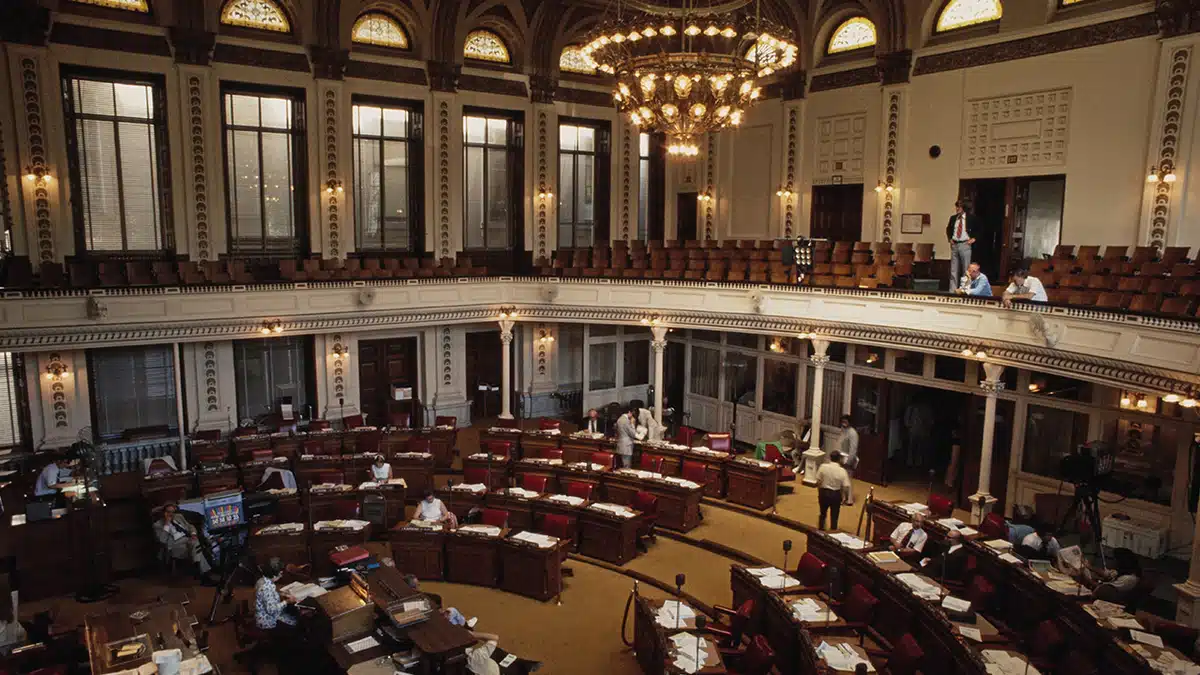
For the First Time in Modern American History, the Federal Government Is Suing a State to Protect Gambling
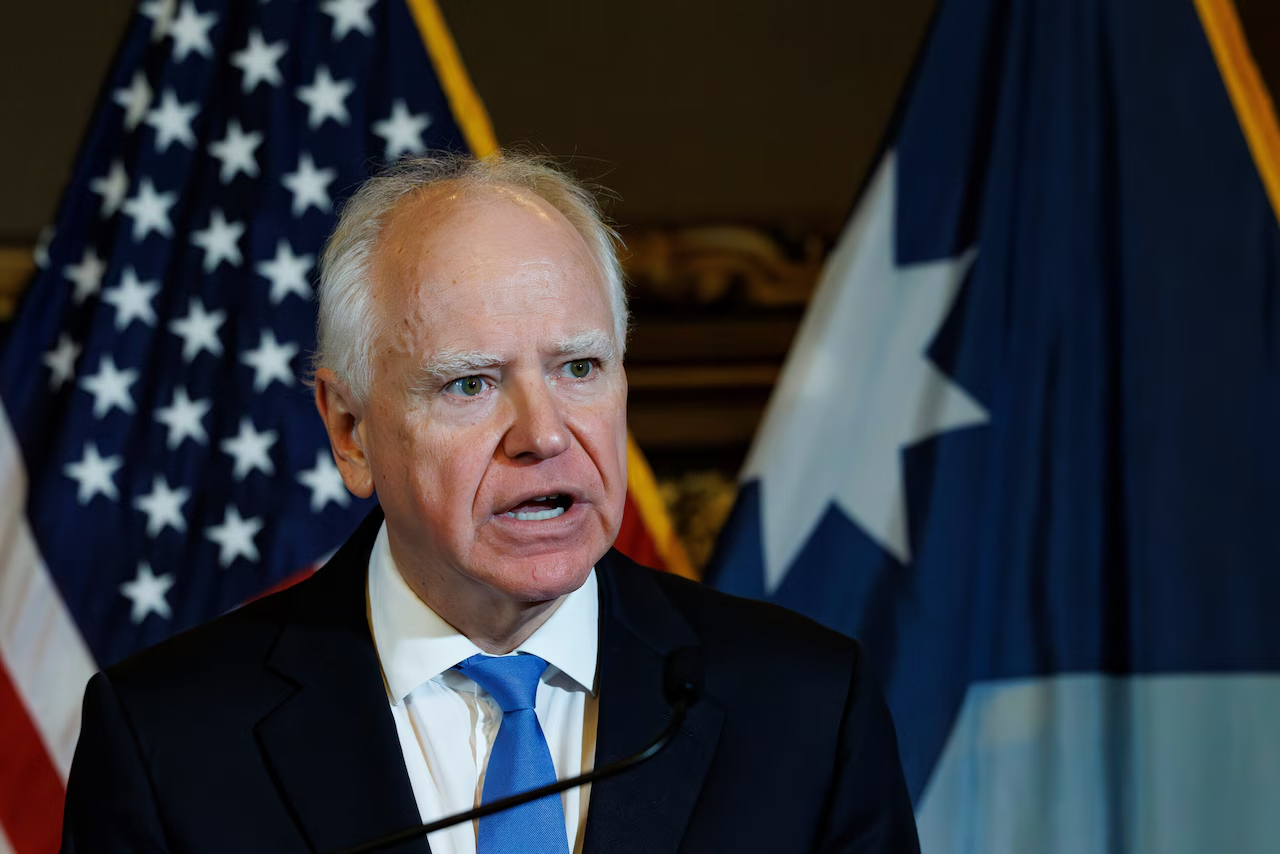
The CFTC just sued Minnesota to block its ban on prediction markets. The federal government has never sued a state to protect gambling before.
On Tuesday, the Commodity Futures Trading Commission filed a lawsuit in federal court seeking to block Minnesota from enforcing its new prediction markets law. The Minnesota statute, signed by Governor Tim Walz earlier this spring, makes operating or assisting in the operation of a prediction market a criminal felony beginning August 1. The CFTC wants the law enjoined before it takes effect. The agency described it as the most aggressive state action against federally regulated markets that Congress established more than fifty years ago.
The procedural story is what every gambling trade publication will cover this week. The state passes a restrictive law. Th Federal agency sues, and then the courts decide. That framing is accurate. It is also missing the part that actually matters.
What happened on Tuesday is genuinely without modern precedent. For the first time in living memory, the federal government has gone to court to stop a state from restricting gambling. Every major federal gambling action in the past seventy-five years has run in the opposite direction. This one inverts the entire pattern.
The Direction of Federal Gambling Policy Has Always Been One Way
Modern federal gambling policy started in 1961 with the Wire Act, which made it a crime to use interstate communication facilities for sports betting. The Travel Act followed the same year. The Illegal Gambling Business Act of 1970 came next. The Indian Gaming Regulatory Act of 1988 imposed federal supervision on tribal gaming. The Professional and Amateur Sports Protection Act of 1992 banned states from authorizing sports betting outside of a handful of grandfathered jurisdictions. The Unlawful Internet Gambling Enforcement Act of 2006 went after the payment processors that supported online poker and casino gambling.
Every one of those statutes pushed in the same direction. The federal government was the restrictionist party. States were either constrained by federal law or left to make their own choices within federal limits. The federal role was to put walls around gambling, not to knock them down.
The 2018 Supreme Court ruling in Murphy v. NCAA changed the legal architecture but did not change the direction. The Department of Justice argued in that case on the side of the leagues and against New Jersey’s attempt to legalize sports betting.
When the Court struck down PASPA, it did so by ruling that the federal government had overreached in trying to commandeer state legislatures. Even in the case that opened American sports betting, the federal government’s position was restrictionist. States had to win the right to allow gambling. They never had to defend the right to ban it.
The Minnesota Lawsuit Reverses That Pattern Entirely
The CFTC’s filing on Tuesday does something no federal agency has done in seven decades of modern gambling regulation. It argues that a state lacks the authority to criminalize a product that the state has determined is illegal gambling. The federal agency is the permissive party. The state is the prohibitionist. As of Tuesday, the roles have officially completely switched.
CFTC Chairman Michael Selig said the Minnesota law would turn ordinary users into “felons overnight.” He framed Minnesota farmers as the victims of the legislation, pointing to weather and crop-related event contracts that Selig said farmers have used for decades to hedge agricultural risk. “Gov. Walz chose to put special interests first, and American farmers and innovators last,” Selig added.
That framing deserves attention. The CFTC chairman is publicly defending gambling access against a state’s anti-gambling law. He is using the language of innovation and consumer protection that, in any previous era, would have come from the casino industry, pushing back against federal restrictions. The script has flipped completely.
How This Differs From the Other Kalshi Cases
The Minnesota lawsuit is also structurally different from the existing prediction-market cases working their way through the courts. In every other case to date, the platform has been the plaintiff. Kalshi sued New Jersey in March 2025 to block state enforcement and won a preliminary injunction. The Third Circuit affirmed in April. Kalshi also has active cases in Nevada, Maryland, Massachusetts, New York, and Ohio. In each one, the company is the party asking the federal courts to override state authority.
Tuesday’s filing puts the federal government itself in that role. The CFTC is the plaintiff. Minnesota is the defendant. The agency is asking the courts to use federal supremacy to block a state’s exercise of its historic police powers over gambling. Federal agencies almost never sue states directly over preemption. They typically file amicus briefs supporting private plaintiffs. The CFTC stepping in as the primary litigant signals that the agency now considers prediction markets a federally protected category worth defending in its own name.
What This Means for the Industry
The practical effect of the lawsuit, regardless of outcome, is to formalize a federal commitment to prediction markets as legitimate financial products. The agency could have stayed on the sidelines and let Kalshi and Polymarket fight Minnesota in court themselves. Instead, it chose to lead. That choice tells the industry, and tells every other state legislature considering similar bans, that the federal government will go to court to defend these markets.
It also signals something about the political coalition forming around prediction markets. Donald Trump Jr. is an investor and advisor at both Kalshi and Polymarket. Selig is a Trump appointee. The Trump administration has consistently positioned itself as friendly to crypto, derivatives, and prediction market innovation. Governor Walz, a Democrat, signed the Minnesota ban. The federal-state split on prediction markets now maps cleanly onto the partisan split, with the federal government taking the pro-industry position.
For the gambling industry specifically, the implications extend beyond one Minnesota statute. Sportsbooks, casinos, and state lottery operators have spent decades operating in a federal-state regulatory environment where federal law set the outer limits and states made the operational choices. Prediction markets are now establishing a parallel framework where federal authority preempts state authority entirely. If the CFTC wins in Minnesota, the message to every other state is that gambling-adjacent products structured as event contracts are no longer subject to state regulation in any meaningful way.
That is a fundamental change to how gambling is regulated in the United States. It is happening through a single lawsuit in a single federal court. And it is happening because, for the first time in modern American history, the federal government has decided that protecting gambling access is worth suing a state to defend.
Players trust our reporting due to our commitment to unbiased and professional evaluations of the iGaming sector. We track hundreds of platforms and industry updates daily to ensure our news feed and leaderboards reflect the most recent market shifts. With nearly two decades of experience within iGaming, our team provides a wealth of expert knowledge. This long-standing expertise enables us to deliver thorough, reliable news and guidance to our readers.
Latest News