

Minnesota Senate Passes Bans on Sweepstakes Sites, Prediction Markets
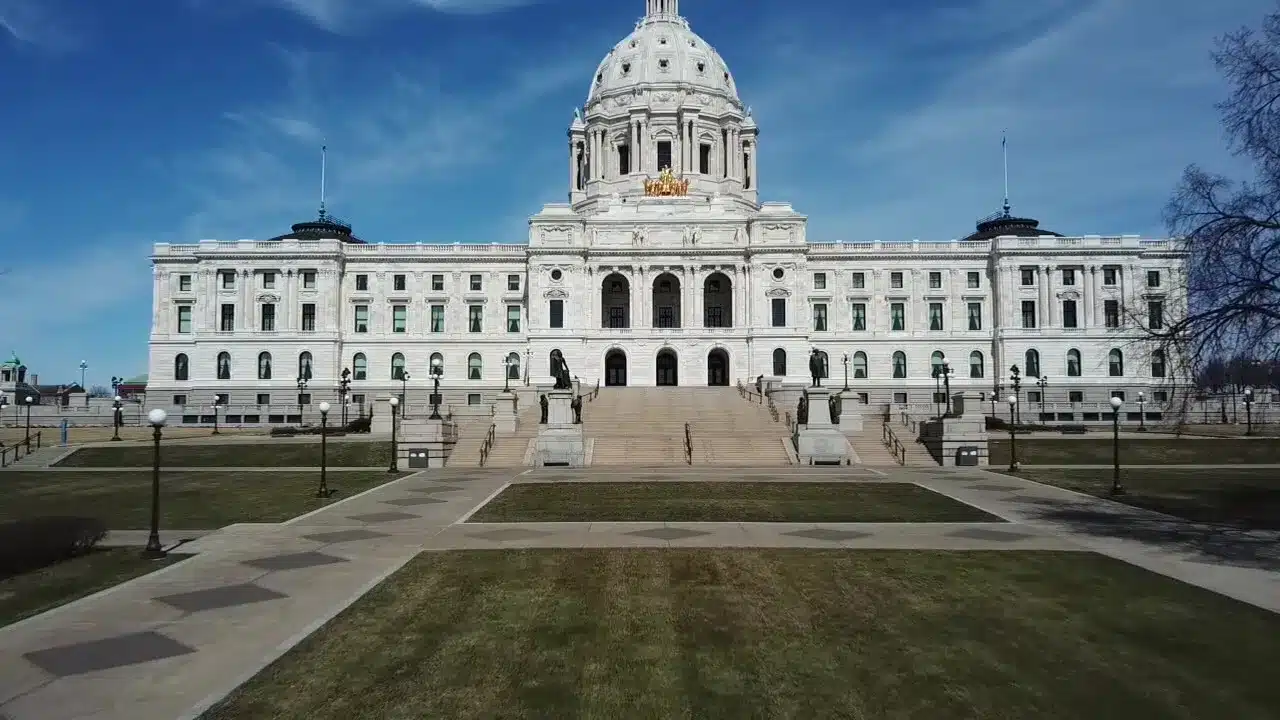
Minnesota’s Senate passed bills banning sweepstakes casinos and prediction markets on the same day by wide bipartisan margins.
Minnesota’s Senate chamber voted on both on the same day, with the same basic argument underpinning each: these are gambling products, and Minnesota does not allow online gambling. On April 30, the Minnesota Senate passed SF 4474 to ban dual-currency online sweepstakes casinos and SF 4511 to ban prediction markets, with criminal penalties attached to both.
Both bills now move to the House, where companion versions exist but have not advanced significantly, and where the session closes on May 18.
The votes were not close. SF 4474 passed 62 to 3. And just as lopsided, SF 4511 passed 56-10. For two bills that touch genuinely contested legal territory, those margins reflect a notable degree of consensus in a chamber that does not always produce it.
What the Sweepstakes Ban Does
SF 4474 defines online sweepstakes casinos as internet or mobile products that simulate casino-style gambling and use a dual-currency payment structure, in which players use a secondary virtual currency that can be redeemed for prizes, cash, or cash equivalents. The bill extends liability well beyond operators themselves, reaching financial institutions, payment processors, geolocation providers, gaming content suppliers, platform providers, and media affiliates that support sweepstakes operators in the state. Enforcement authority falls to the Commissioner of Public Safety and the state Attorney General.
The legislative groundwork was already partly laid. Last November, Attorney General Keith Ellison issued cease-and-desist orders to 14 online gambling companies, including sweepstakes operators Fortune Coins, LuckyLand, and Zula Casino, ordering them to exit the Minnesota market by December 1. Some of those sites continued to operate. The bill gives Ellison’s office the statutory authority to back those orders with felony charges rather than relying on existing consumer protection statutes that sweepstakes operators have contested.
The dual-currency definition does contain a potential gap. Single-currency sweepstakes models, which some operators have already deployed in California following that state’s ban, could theoretically fall outside the bill’s scope. Whether Minnesota’s regulators and courts treat those models as compliant or as an evasion of the law’s intent is a question that will likely be tested quickly if the bill becomes law.
What the Prediction Market Ban Does
SF 4511 makes it a felony to create, operate, or facilitate a platform that allows consumers to trade on a defined list of future events. That list is broad: sports, elections, government actions, court rulings, wars, natural disasters, deaths, short-term weather, pop culture awards, and what the bill calls “mention markets.” Advertising or marketing such platforms carries the same felony exposure. The effective date for both criminal provisions is August 1, 2026.
The bill preserves existing carve-outs for insurance contracts, commodity futures, bingo, horse racing, lottery tickets, and private social bets. Those exemptions matter for understanding what the legislature is and is not trying to do. The bill is not a broad restriction on financial derivatives. It is a targeted measure targeting the specific class of products offered by Kalshi, Polymarket, and their competitors.
Senator John Marty, the bill’s chief author, was characteristically direct on the floor: “Prediction markets are nothing more than gambling, but they have found loopholes to circumvent our laws and allow sports betting on their platforms.” The vote following that kind of statement reflects the degree to which, in Minnesota, that characterization has found bipartisan traction.
The Lawsuit That Is Already Coming
The debate was not entirely one-sided. Senate Minority Leader Johnson noted that the Trump administration has sued every state that has moved against prediction markets, arguing that federal law preempts state gambling regulation. “They’re going to be coming to Minnesota soon,” Johnson said. “It’s almost a guarantee that every state that’s passed this so far has dealt with a lawsuit.”
That observation is accurate. The CFTC has filed amicus briefs defending prediction market operators against state enforcement actions across multiple jurisdictions, and the Trump administration has filed five such lawsuits in April alone. Minnesota would not be the first state to pass a ban and immediately find itself in federal court defending it.
Notably, even most Senate Republicans who voted for the bill acknowledged the legal uncertainty. Senator Jordan Rasmusson said, “We are seeing the rapid expansion of these prediction markets, we are seeing an expansion of corruption that follows.” The vote for the ban was not an assertion that Minnesota will win the jurisdictional fight. It was a statement of position ahead of a fight that will ultimately be resolved at the appellate or Supreme Court level.
The Matt Klein Subplot
The timing of the vote carried a certain irony for one of the bill’s supporters. DFL Senator Matt Klein is a co-sponsor of the prediction market legislation and voted for both bans. He is also the same Senator Matt Klein who, weeks earlier, admitted to placing a $50 bet on his own congressional primary race on Kalshi and was fined and suspended from the platform for five years. Klein addressed the matter in a statement, saying he had been informed in March that the trade was a violation of platform rules, cooperated with Kalshi’s investigation, paid the penalty, and that the wager was the only one he had ever made on a prediction market. “This was a mistake, and I apologize,” he said.
Whether Klein’s personal experience with the platform informed his enthusiasm for banning it is a question his colleagues were perhaps too polite to ask on the floor.
What Happens Next
Both bills now sit in the House with eighteen days left in the session. The House has its own companion versions on file, HF 4410 tied to SF 4474 and HF 4436 tied to SF 4511, but neither has advanced significantly. The House could bypass its own versions and take up the Senate-passed bills directly, thereby streamlining the path to the governor’s desk.
The governor’s position has not been publicly stated on either bill. Minnesota does not have a commercial gaming industry fighting for its turf the way some states do; gambling is largely limited to 32 tribal casinos, horse racing, and cardrooms, which removes one of the more common sources of opposition to sweepstakes and prediction market bans. The tribal gaming coalition has supported both bills, and the religious and civic organizations that typically oppose gambling expansion are aligned on the same side.
If both bills reach Governor Tim Walz and he signs them, Minnesota joins a growing group of states that have moved aggressively against these products regardless of the legal exposure that comes with it. The federal preemption fight will arrive when it arrives. The legislature has made clear it intends to be on the record before it does.
Players trust our reporting due to our commitment to unbiased and professional evaluations of the iGaming sector. We track hundreds of platforms and industry updates daily to ensure our news feed and leaderboards reflect the most recent market shifts. With nearly two decades of experience within iGaming, our team provides a wealth of expert knowledge. This long-standing expertise enables us to deliver thorough, reliable news and guidance to our readers.
Latest News