Appeals Court Denies Kalshi Relief as Ohio Moves to Regulate With New Bill

Warren Lemay via Flickr
Ohio has opened a second front in its battle with prediction markets, with one lawmaker suggesting state-level regulation of sports contracts if an attempt to ban them fails. Meanwhile, a federal appeals court denied Kalshi’s request for emergency protection from state enforcement, bringing that ban one step closer to fruition.
The Commodity Futures Trading Commission has sued other states — though not Ohio, yet — for what it sees an intrusion on its jurisdiction when it comes to event contracts. Nonetheless, Sen. Bill DeMora, a Democrat, says the state should regulate and tax prediction markets offering sports contracts if the courts ultimately site with the federal agency.
These developments show how Ohio officials are taking a hedged approach to the matter as courts around the country reach contradictory conclusions on one of the most consequential regulatory questions in U.S. gambling law.
The debate over whether prediction market platforms like Kalshi are governed exclusively by federal regulators or are sports betting operators subject to the same licensing requirements as DraftKings and FanDuel continues.
Sixth Circuit Denies Stay and Fast Tracks Appeal
A three-judge panel of the U.S. Court of Appeals for the Sixth Circuit rejected Kalshi’s request for an emergency injunction on April 24 that would have safeguarded the company from Ohio enforcement actions while its appeal proceeds. Kalshi initiated the lawsuit to protect itself from a cease-and-desist from the state’s sports betting regulator.
The ruling clears the way for Ohio officials to move ahead with a proposed $5 million fine that the Ohio Casino Control Commission announced earlier this month, accusing Kalshi of operating an unlicensed sportsbook in the state.
The panel acknowledged that the underlying legal questions are “close” and that Kalshi would suffer irreparable harm without protection. However, the judges found that even if federal law governs event contracts, Kalshi did not demonstrate that it displaced Ohio’s authority in this instance.
The order reflects a wider reluctance among courts in the Sixth Circuit’s jurisdiction to accept the company’s central argument that its registration with the CFTC immunizes it from state gambling laws.
Chief Judge Sarah Morrison previously made this point when she denied Kalshi’s preliminary injunction at the district court level in March, writing that “history reveals no evidence that Congress intended to preempt state sports gambling laws.”
The appellate panel fast-tracked the appeal and instructed that courts should grant filing deadline extensions only in extraordinary circumstances. Kalshi’s brief is due May 6, and Ohio’s response follows on June 4.
A Patchwork of Rulings
The Sixth Circuit’s denial arrives amid a fractured national legal landscape that has left prediction market operators in a state of regulatory uncertainty. Courts have reached starkly different conclusions on almost identical facts.
The U.S. Court of Appeals for the Third Circuit handed Kalshi its most significant legal win last month when it ruled 2-1 that the Commodity Exchange Act (CEA) preempts New Jersey’s attempt to enforce its gambling laws against the platform.
That ruling found that Kalshi’s sports event contracts qualify as “swaps” under the CEA and that federal law shields them from state regulation. This directly conflicts with the approach taken by courts in Ohio, Nevada, Maryland, and Massachusetts, which have sided with state regulators.
The CFTC has not stayed on the sidelines, as it has filed lawsuits against Illinois, Arizona, Connecticut, and New York, arguing that state enforcement actions intrude on its exclusive jurisdiction.
At the same time, 38 state attorneys general signed an amicus brief backing Massachusetts in its case against Kalshi, arguing that the CEA was not designed to federalize sports gambling.
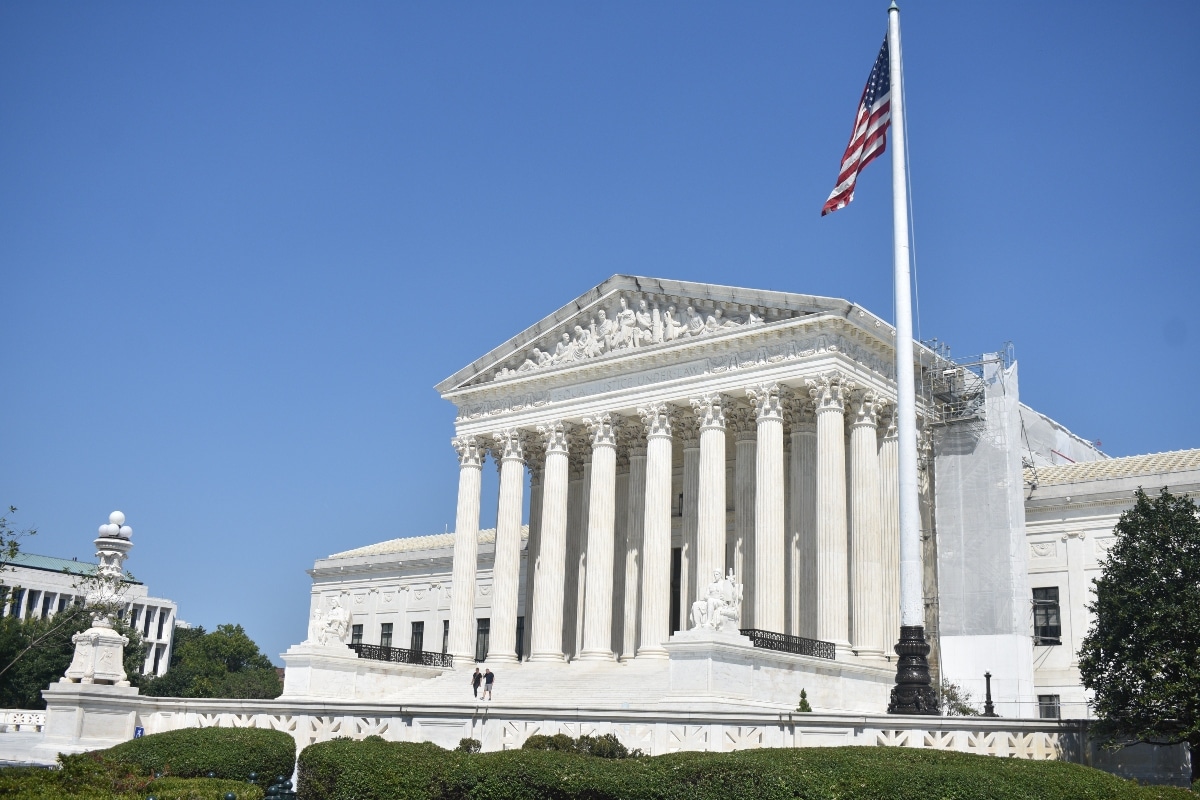
The diverging rulings between circuits have set up what legal observers expect to be an eventual Supreme Court confrontation. Until then, Kalshi and its rivals will operate under different legal frameworks depending on which state a user opens their app in.
The Backup Plan
Ohio Senator Bill DeMora stepped into the uncertainty by introducing Senate Bill 430 on Monday. The bill would explicitly bring prediction markets within the scope of Ohio’s existing sports betting law by defining the use of prediction markets to trade event contracts on sporting events as “sports gaming.” The state would regulate and tax them the same way as any online sportsbook.
DeMora, a Democrat and the lead minority member on the Ohio Senate Select Committee on Gaming, told Gambling Insider that SB 430 serves as a contingency plan. It would ensure that prediction market platforms still need to get a licence from the Ohio Casino Control Commission, pay Ohio’s 20% tax on gaming revenue, and comply with consumer protection requirements, including the state’s minimum age of 21 and advertising restrictions, if the courts ultimately decide that Ohio cannot simply ban platforms like Kalshi. The senator has been direct about his view of Kalshi’s business model, calling the platform “a sham.”
If SB 430 becomes law, it will likely face its own legal challenge. A licensing and taxation framework raises a different question about whether a state can regulate a CFTC-registered exchange by treating its products as sports betting, even if a court rules that federal law precludes an outright ban.
The CFTC’s position in its lawsuits against other states suggests the agency would view such an approach skeptically. It has been argued that any state activity that treats event contracts traded on federally registered exchanges as gambling conflicts with the CEA.
In the immediate future, Ohio officials can move forward with their $5 million penalty against Kalshi. Whether the penalty withstands appeal and whether DeMora’s bill advances through the Republican-controlled Ohio Senate will be closely watched by stakeholders across the country.
Image Credit: Warren LeMay via Flickr (license)
Players trust our reporting due to our commitment to unbiased and professional evaluations of the iGaming sector. We track hundreds of platforms and industry updates daily to ensure our news feed and leaderboards reflect the most recent market shifts. With nearly two decades of experience within iGaming, our team provides a wealth of expert knowledge. This long-standing expertise enables us to deliver thorough, reliable news and guidance to our readers.
Latest News