Michigan Cuts Ties With National Council on Problem Gambling to Protest Kalshi Involvement

"That's it, I'm out."
Michigan has taken its ball and gone home, ending its association with the National Council on Problem Gambling (NCPG) to protest the organization’s involvement with popular prediction market Kalshi.
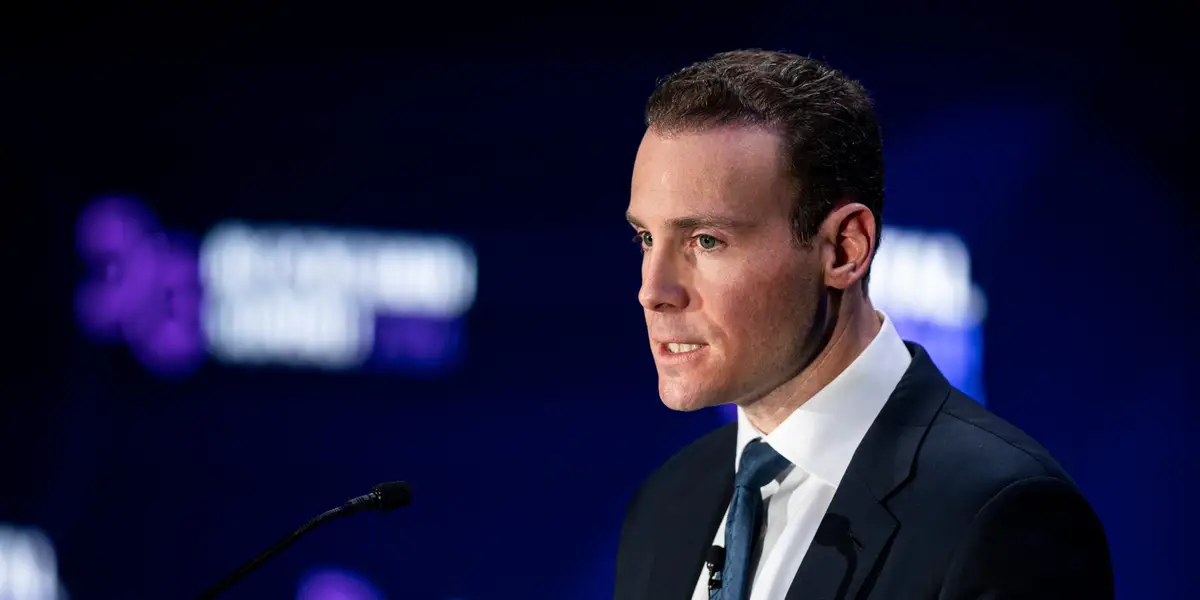
Henry Williams, executive director of the Michigan Gaming Control Board (MGCB), drafted a sternly worded letter to the NCPG. In the letter, dated July 1, Williams explained that the MGCB was ending its membership with the NCPG, effective immediately.
The move isn’t merely symbolic. It means Michigan will no longer contribute financially to the NCPG, including its partial sponsorship of the annual conference set for later this month in Nashville.
The seemingly acrimonious split illustrates the chaos that the legal gaming sector finds itself in as a result of the rise of prediction markets. While the word “disrupter” is usually meant in the sense of disrupting the status quo, prediction markets have also been disruptive to relationships within the industry.
Michigan leaving the NCPG is just the latest example. FanDuel and DraftKings also had a high-profile falling out with the American Gaming Association due to their decision to venture into the predictions space instead of fighting its spread.
It leaves the responsible gaming sub-sector in a state of flux, with groups like the NCPG caught in a no-win situation.
Michigan’s Letter to the NCPG
ESPN reporter David Payne Purdum broke the news of the split on Thursday.
Williams’ letter, available in full here, explained Michigan’s position. The state has been among the most aggressive in defending its regulated industry from perceived threats that include sweepstakes casinos, skill games, offshore iGaming, and even federally-regulated online racebooks.
“I am writing to express my strong disapproval of Kalshi’s recently announced membership and investment partnership with the National Council on Problem Gambling (NCPG),” he wrote. “By partnering with a company that numerous states, including Michigan, are actively litigating against for disregarding state gaming laws, NCPG directly undermines state enforcement actions and risks weakening the positions of state regulatory bodies nationwide.”
Williams pointed out the incongruity of a responsible gambling organization partnering with a company that frames sports bets as investment opportunities:
“The notion that internet sports betting can and should be pursued as a viable means of financial gain or protection against financial loss undermines this position and increases the risk of irresponsible and problem gambling behavior.
I regret that this action is necessary but trust you understand the MGCB’s need to ensure that it is not associated with organizations that are affiliated with companies engaged in illegal gambling.”
Williams’ last potshot references the state’s recent court battles over prediction markets. Michigan recently secured a temporary restraining order against Kalshi, stopping it from offering sports contracts in the state. Meanwhile, it batted aside a preemptive strike attempt from Polymarket that aimed to ensure that the prediction operator could continue serving Michigan residents.
The NCPG is in a No-Win Situation
The state understandably doesn’t want to associate itself with industry coalitions that include its counterparties in high-stakes litigation. As for the NCPG, it has become caught in a no-win situation.
On the one hand, it has the stated mission to “minimize the economic and social costs associated with gambling addiction.”
Turning away from overtures by the prediction markets would do nothing to advance that goal. If the NCPG simply pretended prediction markets didn’t exist, critics would rightfully skewer the group for not doing enough. Admitting the prediction operators as members allows the NCPG to potentially reach more affected individuals.
Accepting more funding from Kalshi furthers that mission as well. The more money the NCPG has, the more positive change it can effect.
Yet, these same actions are obvious turn-offs for state regulators, who want the prediction markets shut down and can’t abide any legitimization of their sports contracts. As Williams wrote, many remain in active litigation against prediction markets. Associating with groups that welcome prediction markets makes no sense from that standpoint. Why would they want to help fund anything associated with their sworn enemies?
Until Thursday, nobody had really done anything about it. But Michigan has now drawn a line in the sand. If others follow, the NCPG’s future could be at risk.
Prediction Markets Continue Fostering Chaos in the Industry
All of this chaos could be avoided if prediction markets just admitted that they’re a form of gambling. Interestingly, Kalshi’s membership in the NCPG is probably the closest any of them has come to such an admission.
Of course, that would mean prediction markets are then subject to the rules of gaming regulators. They’d have to get state-by-state approval, operate within state tax frameworks, etc.
They can avoid all of that by insisting that they’re financial instruments. So, that’s the playbook they’re going to continue using. And that’s the catch-22 that continues to infuriate the regulated gaming industry. Prediction markets are functionally gambling products, until it’s time to be regulated like one, at which point they’re financial derivatives, hedging instruments, or whatever Commodity Futures Trading Commission Chair Michael Selig wants to call them.
The situation has already driven a wedge between the American Gaming Association and former members FanDuel and DraftKings. Those leading sports betting operators renounced their memberships in the trade group so that they could enter the prediction space themselves, even as the AGA campaigns hard against the vertical.
It’s important to note that Michigan isn’t abandoning its responsible gambling efforts. In fact, it has enjoyed some recent success via a partnership with third-party app Gamban.
Still, the state choosing to disassociate itself with the NCPG can hardly be a good thing. Especially if other states follow, the already-underfunded responsible gambling efforts in the U.S. will only become less equipped to deal with the growing issue.
Players trust our reporting due to our commitment to unbiased and professional evaluations of the iGaming sector. We track hundreds of platforms and industry updates daily to ensure our news feed and leaderboards reflect the most recent market shifts. With nearly two decades of experience within iGaming, our team provides a wealth of expert knowledge. This long-standing expertise enables us to deliver thorough, reliable news and guidance to our readers.
Latest News