Court Upholds Kalshi’s Preliminary Injunction, Allows it to Keep Operating in New Jersey
Credit: wp paarz/Flickr
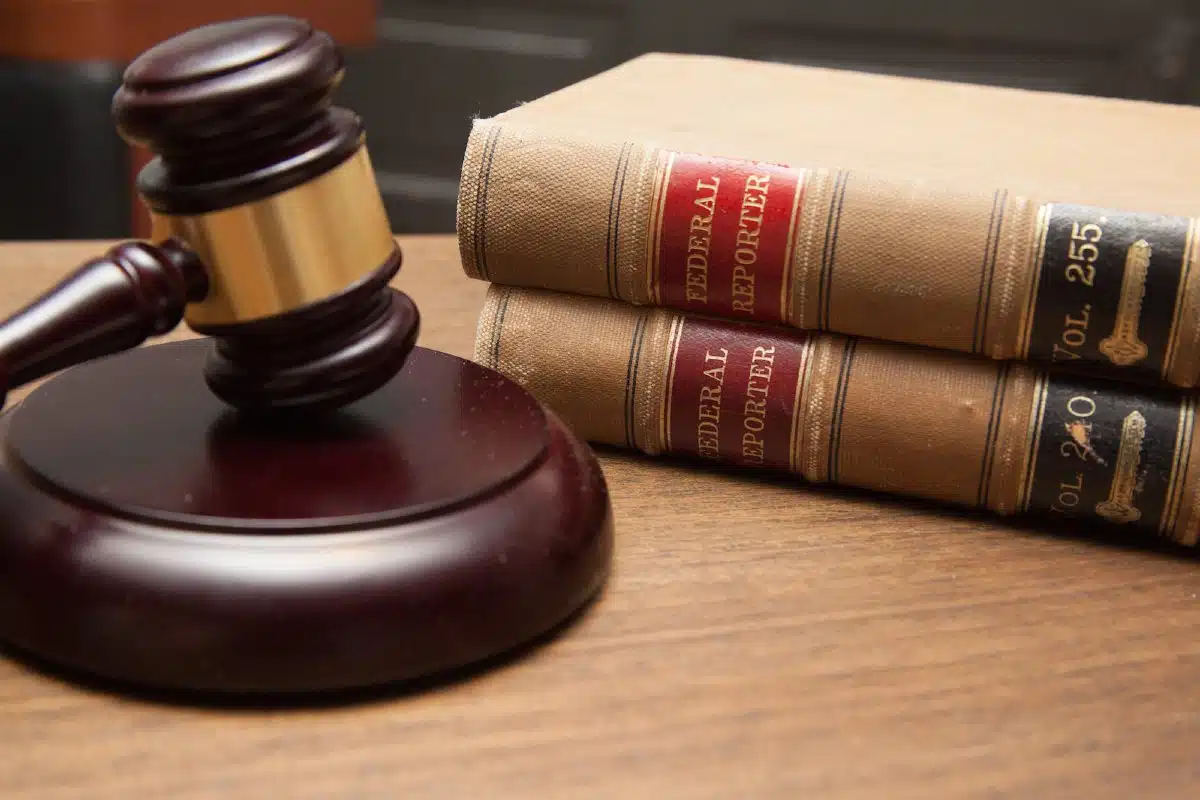
The U.S. Court of Appeals for the 3rd Circuit upheld a preliminary injunction allowing Kalshi to continue operating in New Jersey.
The ruling is an important win for Kalshi. For one thing, it clears the way for the prediction market to continue serving its customers in New Jersey while the case plays out. However, it also indicates that the Third Circuit sees merit in Kalshi’s arguments and believes it is reasonably likely to win the case.
New Jersey had sought to stop Kalshi from offering event contracts on sports there. A district court had ruled in favor of Kalshi last April. This split 2-1 decision will prevent Garden State authorities from enforcing the cease-and-desist until the legal fight reaches its conclusion.
Court Ruling: Kalshi Demonstrated ‘Reasonable Chance of Success’
Chief Judge Michael A. Chagares and Judge David J. Porter comprised the majority opinion. They wrote that Kalshi “demonstrated a reasonable chance of success” in arguing that federal law preempts state regulation of prediction markets.
Kalshi and other prediction markets have argued that because they are regulated by the Commodity Futures Trading Commission, they aren’t subject to state gambling law. States have largely disagreed, asserting that Kalshi is operating an illegal sportsbook.
Arizona even went so far as to file criminal charges. The CFTC responded by suing Arizona and two other states.
“Because we agree with the District Court that Kalshi has shown likelihood of success on its argument that the CFTC’s exclusive jurisdiction over [Designated Contract Merchants] preempts New Jersey gambling laws and the state constitution, we conclude that the public interest factors tip toward Kalshi,” the majority opinion said.
The majority noted, however, that courts have not interpreted “reasonable” to mean “more likely than not.” They did judge Kalshi’s chances as “significantly better than negligible,” and that was enough to keep the preliminary injunction in place.
Nonetheless, gaming lawyer Daniel Wallach called the ruling a “big win” for Kalshi. Company co-founder Tarek Mansour concurred.
“This is a big win for the industry and millions of users,” he wrote on social media.
Judge Roth Pens Lengthy Dissenting Opinion, Cites Kalshi’s Marketing Materials as Indicative of Gambling Product
Judge Jane R. Roth delivered the dissenting opinion, and it was the lengthier of the two sides laid out in the official decision.
Roth noted that Kalshi’s sports markets are “indistinguishable” from those at state-regulated online sportsbooks. She wrote that Kalshi’s “acts of alchemy,” registering as a DCM and calling the markets event contracts, are “performative sleight meant to obscure the reality that Kalshi’s products are sports gambling.”
“Because Kalshi is facilitating gambling, it can be subject to state regulation,” she wrote.
Roth noted that the question of whether sports prediction markets are swaps is a thorny one, one that could “radically upend the legal landscape governing the gambling industry.”
Congress opted to leave gambling regulation to the states, passing on a chance to do so at the federal level. Roth cited Kalshi’s own marketing materials as a clear sign that it offers gambling. Such ads have often promoted “legal sports betting in all 50 states.”
“Marketing materials such as these, coupled with the fact that Kalshi’s sports-related offerings are a dead ringer for the products offered by state-regulated online sportsbooks, make it difficult for me to accept the proposition that Kalshi is not facilitating gambling,” Roth wrote.
The split decision suggests that the battle for Kalshi is far from won. It shows that a reasonable judge could rule either way. This is likely to be a tightly fought case both at the district level and on appeals.
New Jersey Ruling Breaks Losing Skid for Prediction Markets in Court
Prediction markets had endured a rough stretch in courtrooms, so the New Jersey ruling will be a welcome development for the industry. According to Wallach, states had won 14 of 16 cases involving temporary restraining orders or preliminary injunctions.
However, multiple industry observers said the split decision opened the possibility for New Jersey to ask for an en banc hearing. Such a hearing would require up to 11 of the judges on the U.S. Court of Appeals for the 3rd Circuit to hear the case. That panel could well come to a different conclusion in the complex case.
Despite the characterization of the ruling as a big win for the prediction markets, gambling industry analyst Steve Ruddock cautioned against getting too caught up in the ebbs and flows of the various court battles. New Jersey has experienced this before, he wrote, having lost multiple court decisions in the landmark sports betting legalization case before the U.S. Supreme Court ruled in the state’s favor. That cleared the way for widespread legalization and regulation.
Eventually, all roads may lead to another Supreme Court case.
Image credit: wp paarz/Flickr (license)
Players trust our reporting due to our commitment to unbiased and professional evaluations of the iGaming sector. We track hundreds of platforms and industry updates daily to ensure our news feed and leaderboards reflect the most recent market shifts. With nearly two decades of experience within iGaming, our team provides a wealth of expert knowledge. This long-standing expertise enables us to deliver thorough, reliable news and guidance to our readers.
Latest News