Kalshi Traders Flock to Bet on Peruvian Election as Ex-Pat Votes Look Set to Reverse the Result
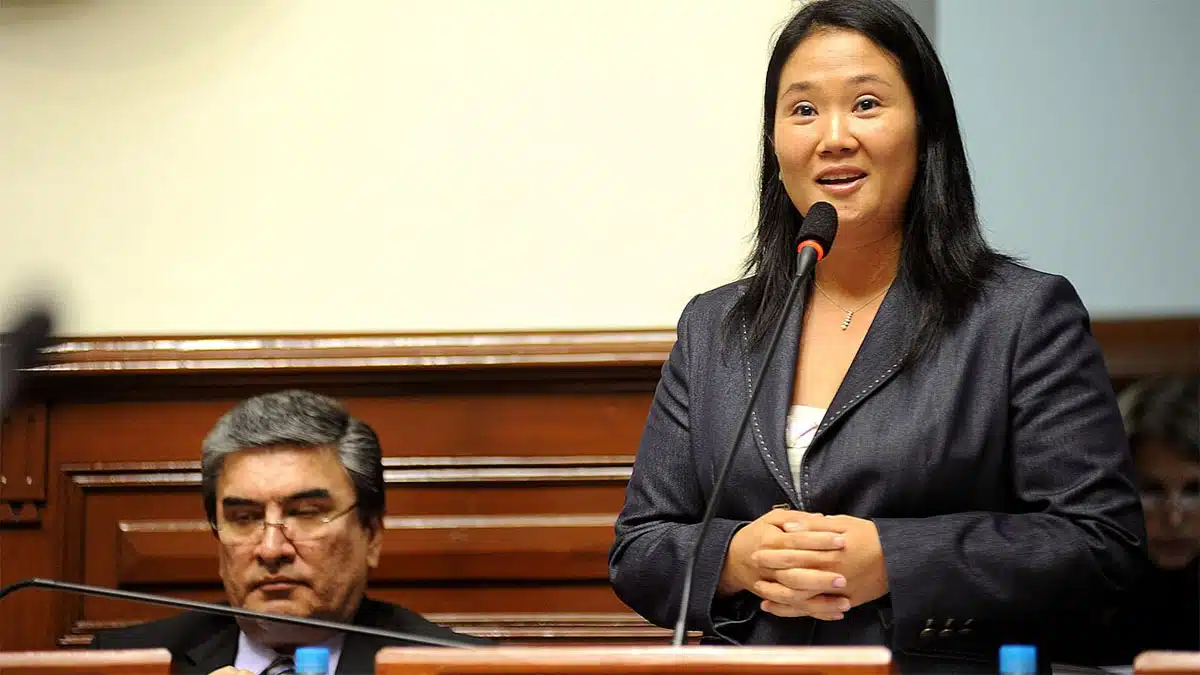
Keiko Fujimori is predicted to win Peru's presidential election by Kalshi users.
Peruvians woke up on Monday morning to find that left-wing presidential candidate Roberto Sánchez was leading in the vote counts, but prediction markets are betting heavily against that result holding.
Keiko Fujimori, the conservative candidate currently trailing Sánchez, finished the day at 90 cents a share and rose to 94 cents the morning after.
The divergence between what the ballot tallies show and what bettors believe says as much about Kalshi users’ habits as it does about Peru’s extraordinary 2026 presidential race. The market generated over $2 million in trading volume on Kalshi on election day, and $6 million all-time.
It’s typical that the busiest political markets are those where the likely result runs contrary to first impressions. That dynamic draws in naive speculators to take the wrong end of the bet, which in turn gets the sharp bettors circling.
A Close Race That’s Far From Over
Fujimori has also held the title of the country’s First Lady, albeit not in the usual sense. She was given the honor by her father, former President Alberto Fujimori, after he became estranged from his wife at the time.
She leads the latest count by a little more than 30,000 votes, with officials having tallied 94.6% of ballots. With a breakdown of 50.087% to 49.913%, this is already guaranteed to be one of the closest presidential races in recent Latin American history.
That raises the question of how Kalshi bettors could be so sure that Fujimori will come out on top. The answer lies in what ballots remain to be counted.
There are a handful of domestic ballots still to be counted. These come from poorer, rural regions, and are likely to favor Sánchez. However, significantly more will be mail-in ballots from the 300,000 or so Peruvians living abroad, including in the U.S.
That demographic has historically voted for right-wing candidates by a huge margin. Officials have processed only 5.5% of those ballots so far. Added to those are about 455,700 disputed ballots, most of which come from Lima. There, too, Fujimori’s support clocks in at more than 60%. Officials don’t expect the final outcome until July, with the close nature of the race complicating matters. However, the uncounted ballots are expected to skew heavily enough toward the right-winger that Sánchez would have needed a much bigger lead than just 0.026% at this stage.
Sharp Money vs Square Money
The Kalshi market prices Fujimori’s victory at 96%, which means Sànchez, though technically leading the race by current counts, trades at just $0.04.
Sanchez winning on paper makes him legitimately appealing to casual bettors who are the “square” bettors wagering on the visible scoreboard and not the underlying probabilities. Traders could buy a Yes contract for Sanchez for as little as $0.075 on Tuesday, which offers a possible 12/1 payout if he wins, a price that attracts money.
Sharp bettors who conduct structural analysis see a candidate whose expected vote share from the remaining ballots almost certainly trails his current lead. If Fujimori replicates anything close to her 2021 overseas performance, experts believe she stands to gain roughly 100,000 net votes alone. Sanchez would need a near-historic collapse in Fujimori’s diaspora support to offset it.
A Market That Moved Early and Often

The Kalshi data tells the story of how this market evolved. Fujimori contracts traded in a tight range for most of May, around $0.63 and $0.66. Then the first-round results arrived in mid-to-late May, and the market jumped sharply, with Keiko’s contracts reaching $0.72 by May 19 before closing at $0.78 the following day.
Then election day hit, and the market careened. Fujimori’s price swung from $0.70 down to $0.42 before recovering to close to $0.63. The big day came on June 8, as analysts started to publicly talk about the diaspora math, and Peru’s financial markets also signaled confidence that Fujimori would ultimately prevail.
Smart money started flowing in, and Fujimori’s contracts went from around $0.59 to $0.90, with an intraday high of $0.94. Keiko contracts generated $890,000 in volume, while total market volume reached almost $2.1 million in a single session for a Peruvian election.
Peru has a habit of close elections. Fujimori lost to Pedro Pablo Kuczynski by only 41,000 votes in 2015 and to Pedro Castillo by 44,000 votes in 2021. There’s a deep divergence between the rural poor who vote for economically populist candidates and the urban middle class and diaspora who take a more conservative position.
Weeks of uncertainty now lie ahead as officials adjudicate the disputed ballots and the overseas tallies trickle in. The Kalshi market has already rendered its verdict, pricing Fujimori as a $0.94 certainty.
Players trust our reporting due to our commitment to unbiased and professional evaluations of the iGaming sector. We track hundreds of platforms and industry updates daily to ensure our news feed and leaderboards reflect the most recent market shifts. With nearly two decades of experience within iGaming, our team provides a wealth of expert knowledge. This long-standing expertise enables us to deliver thorough, reliable news and guidance to our readers.
Latest News