Is a Supreme Court Case in the Future for Prediction Markets?
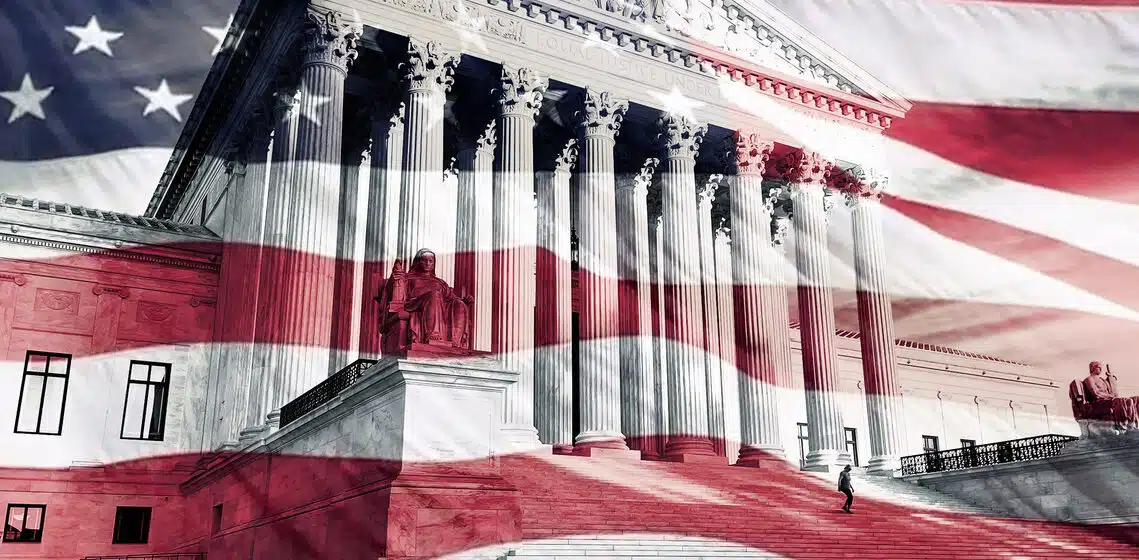
The legal fight over prediction markets no longer feels like a question of whether it will reach the Supreme Court, but of how long it will take to get there.
The conditions for a landmark constitutional confrontation are already in place: a federal agency asserting exclusive jurisdiction, nearly 50 active cases in courts across the country, and a statutory question that different judges keep reading differently.
The only missing ingredient and the biggest unknown is time.
A Split That Was Made for Supreme Court Review
The underlying dispute is straightforward to describe, if not to resolve.
Kalshi and other prediction market platforms argue that their sports event contracts are swaps under the Commodity Exchange Act, subject to exclusive federal jurisdiction by the Commodity Futures Trading Commission (CFTC). The head of the CFTC, Michael Selig, agrees. States argue that the same contracts are sports wagers, dressed up as derivatives to evade gambling regulations that predate the U.S. Constitution.
Both positions are legally coherent, and that is precisely the problem.
The past several months have produced a patchwork of rulings that would make any appellate lawyer reach for a drink. A federal court in Tennessee sided with Kalshi in February, finding that its contracts are likely swaps and that federal law likely preempts state enforcement.
Massachusetts stayed an injunction that would have barred Kalshi from operating there, while the Nevada courts have largely moved in the opposite direction. Different courts are reading the same statute and reaching opposite conclusions, which is precisely the kind of circuit split the Supreme Court exists to resolve.
The CFTC has not been a passive observer. In February, Selig declared the agency would defend its exclusive jurisdiction and filed an amicus brief in the Ninth Circuit supporting Kalshi against Nevada’s Gaming Control Board.
More than 36 states responded by filing their own amicus briefs in a related Fourth Circuit case, asserting states’ rights to regulate sports gambling. That is not a skirmish. That is a constitutional standoff, and the nine justices on One First Street are the only people positioned to end it.
What the Court Will Actually Have to Decide
The central statutory question is whether the CEA’s definition of a “swap” covers binary event contracts tied to sports outcomes, or whether those contracts fall under the statute’s gaming exclusion. The CFTC’s argument rests on the word “any” appearing throughout the statute, covering agreements dependent on “the occurrence, nonoccurrence, or the extent of the occurrence” of an event.
The Tennessee court found that reasoning persuasive, concluding that a football game and its outcome are both occurrences of events within the statute’s plain meaning. The Nevada courts found it less so.
There is a further wrinkle introduced by the Supreme Court’s own recent jurisprudence. In Loper Bright Enterprises v. Raimondo, the Court dismantled the Chevron doctrine that had long directed lower courts to defer to agencies’ interpretations of ambiguous statutes. Courts must now conduct their own independent textual analysis, and that cuts in unpredictable directions here.
The CFTC’s statutory arguments are textually strong, but the agency can no longer rely on deference to shore up the weaker corners of its position. Justices newly empowered to interpret statutory terms from scratch may also be more inclined to ask whether a platform that takes bets on the Kansas City Chiefs is genuinely a derivatives exchange, whatever the formal legal architecture says.
That last point matters more than it might seem.
The “I know it when I see it” standard is not a legal test, but it still shows up in judicial reasoning. A court that looks at sports event contracts and sees a sportsbook in a suit and tie may find a way to say so in the opinion, the textual analysis lands.
The prediction market industry has a strong case under the statute. It has a harder case on optics, and the Supreme Court is not immune to optics.
The Incumbents Are Not Waiting Around
It is worth noting what is at stake for the existing sports betting industry. Licensed sportsbooks spent years and considerable capital obtaining state-by-state regulatory approval to operate legally.
If the Supreme Court ultimately affirms federal preemption and rules that CFTC-registered prediction markets can offer sports contracts in all 50 states without state licenses, it would represent a significant competitive asymmetry, to put it generously. The incumbents have not been silent about this, and their lobbying presence in the state enforcement actions is not coincidental.
A future presidential administration could also unwind some of the current regulatory posture, regardless of how the lower courts rule, and that uncertainty is real. But it undersells the stakes to treat this as a question that politics alone will settle.
Administrations change. Statutory interpretation by the nation’s highest court is considerably harder to reverse, and a clear SCOTUS ruling in either direction would reshape this industry in ways that no executive order or change in CFTC leadership could easily undo.
If you haven’t already, get your popcorn out and grab a seat. This is going to be a monumental, high-stakes battle that will most likely end in the highest court in the land.
Players trust our reporting due to our commitment to unbiased and professional evaluations of the iGaming sector. We track hundreds of platforms and industry updates daily to ensure our news feed and leaderboards reflect the most recent market shifts. With nearly two decades of experience within iGaming, our team provides a wealth of expert knowledge. This long-standing expertise enables us to deliver thorough, reliable news and guidance to our readers.
Latest News