Why There Won’t Be Another Tom Dwan in Poker
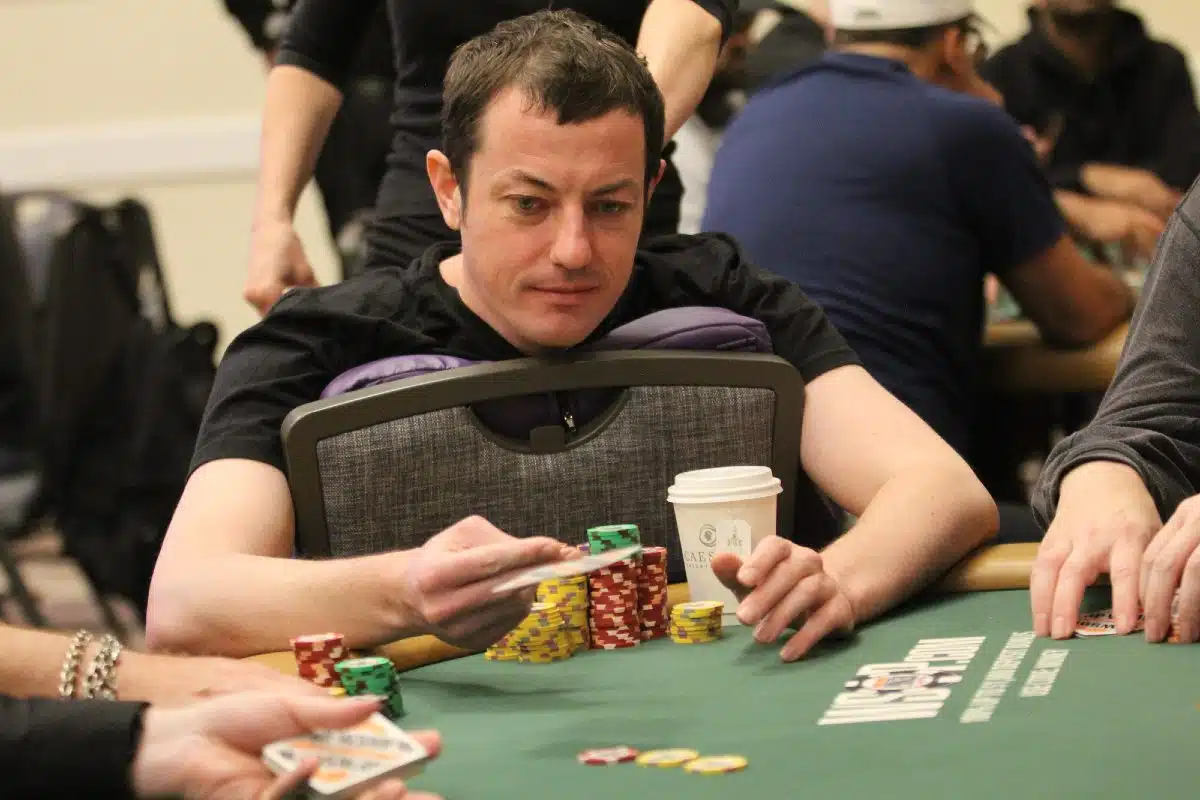
Credit: Erik Fast
Last week, Card Player ran a blockbuster interview with poker cash game legend Tom Dwan. Dwan, who has rarely done media in recent years, spoke with Michael Kaplan on a number of topics, including very personal issues such as mental health struggles and his current bankroll.
The interview is certainly worth a read for all poker fans and those interested in high-stakes gambling in general. And it all left me thinking about how Dwan is the product of a bygone era. The current landscape of poker has shifted so drastically that it’s almost impossible for a player to experience that sort of meteoric rise to superstardom.
And given where Dwan ended up, maybe that’s a good thing.
Cash Game Poker is a Tough Business
When Dwan was coming up, cash game poker had a clear route to the top.
Players could build their bankrolls at small stakes, gradually increasing their skill levels and working toward playing in the biggest games. When they reached high stakes, they would battle with famous poker legends. If they succeeded, as Dwan did, they could win untold millions and cement their own names among the poker greats.
Every poker player from my generation vividly remembers Dwan proving his ability on High Stakes Poker. Already having conquered the biggest cash games online, Dwan sat in live with players like Phil Ivey, Barry Greenstein, and Daniel Negreanu. And he didn’t just beat them, he crushed them.
They folded when Dwan had the worst hand, and they called him when he had the best hand. It seemed like he was operating on an entirely different plane of existence, a poker version of Neo watching the back end of the Matrix. Dwan was the best, and everyone knew it, at least until Dan Cates and Viktor Blom came along.
But he was a product of his time. If Dwan were starting today, he would encounter obstacles that were unheard of in 2007.
Tougher Players, Higher Rake, Private Games
Let’s start with the obvious fact that online cash games are tougher than they’ve ever been, and get tougher every year. It’s not only that the regulars incredibly well-studied and skilled, although that’s a big part of the problem.
The effective rake is also much higher than it was in Dwan’s day. During the boom years, the highest-volume players earned most of their rake back in rewards. Sponsored pros, like Dwan, actually got paid to play.
The most popular poker site for American players these days, ClubWPT Gold, charges rake that works out to several times what PokerStars and Full Tilt collected in the golden age of online poker.
Even just finding a game can be hard. There are still a handful of ultra-high-stakes cash games out there, mainly on cryptocurrency site CoinPoker. But the path to getting there is not nearly as smooth as it was in 2007.
Even if a modern-day Dwan rose up to that level, there’s no path for translating that success into massive live games.
Televised poker once provided some of the biggest games around. Such shows still exist, but the lineups look nothing like those on the old High Stakes Poker, Poker After Dark, and The Big Game. One look at the next episode of High Stakes Poker on PokerGO tells it all. People named Sam Kiki, Justin Gavri, and Darin Feinstein are listed as the participants.
Patrik Antonius vs. Phil Ivey, this is not.
Turn on Hustler Casino Live, and the picture is no different. It’s essentially a group of rich whales who couldn’t beat an online $1-$2 game.
That sounds good, except that someone like Dwan wouldn’t be able to get a seat. Modern crushers are not invited to these cash games, following the general trend of privatization throughout the industry. Anyone who wants to play a live game bigger than $25-$50 in Las Vegas has to get on the good side of someone called “Boston Jimmy.”
Upward mobility in cash poker ain’t what it used to be.
Poker Tournament Stars Are Coming Up, But the Aura Can’t Match Dwan’s Rise
If a young player does begin to build a bankroll and gain sufficient skill to start beating high stakes, today’s tournament landscape actually does offer an avenue to stardom.
The modern high-stakes tournament scene is many times more robust than what existed in 2007. There are probably more $25,000-plus tournaments than there are weeks in the year. And unlike cash games, most tournaments can’t shut out the best players by going private or semi-private.
In fact, there are case studies developing before our eyes.
Bernhard Binder built his reputation on GGPoker, winning millions of dollars in tournaments there. He exploded onto the live scene by winning WSOP Paradise Super Main Event for $10 million in December 2025. Last week, he won his first Triton event for $2 million, announcing that he’s here to stay at high stakes.
And apologies to Binder, but does anyone really care all that much? He’s just another faceless human solver tournament robot in a sea of them.
Kayhan Mokri has done much the same, even winning in the nosebleed cash games online to go along with his tournament success.
I’m sure both of these men will do just fine for themselves and grind out a nice living in high-stakes tournaments for years to come. But there’s just no way they will match the aura that Dwan generated crushing the biggest names in the game in high-stakes cash. The edges aren’t there, the platform isn’t there, and variance will inevitably drive ebbs and flows in tournament results over small samples.
Mokri and Binder will try to win A-K against pocket queens at final tables for the next 10-plus years. And there’s just no comparison between that and bluffing nine high for $270,000 against Ivey on High Stakes Poker.
Young Gamblers More Often Gravitate to Sports, Prediction Markets
Say that some precocious young gambling genius like Dwan does emerge in 2026. What are the chances our modern-day hero would even choose poker as the arena in which to ply his or her skills?
When Dwan was coming up, poker had pizzazz. It was on TV, your dads and uncles played and watched it, and they all dreamed of being at a huge final table someday. The young and gamble-minded knew that if they put their minds to it, they could become the next star, as Dwan did.
Today, poker has settled into a comfortable plateau phase. It’s still quite popular, and there are still huge tournaments awarding hundreds of thousands of dollars. And while consolidation has seen the total number of rooms and tables shrink over the years, many of those that remain are doing steady business.
Young players are still finding the game, though not nearly as many as when Dwan and I were young (we’re about the same age, both born in 1986).
But the hot gambling verticals are sports and prediction markets nowadays.
When I walk by groups of young men, I frequently hear them conversing about their parlays in hopeful tones, rather than discussing whether they should have bluffed their missed straight on the backdoor flush runout. Pretty much every time I go to a sporting event these days, someone near me is sweating a prop or a parlay on their phone.
Two weeks ago, at a poker game, a player in his 20s, whom I know pretty well, excitedly told me about how he thought Kalshi was the future of betting.
Especially given the aforementioned roadblocks, it’s easy to see the modern burgeoning advantage gambler gravitating toward prediction markets or sports. Not only do these verticals have more cultural cachet, but they offer theoretical scale beyond what’s realistic in poker. A winning model in these verticals is essentially a license to print money as long as someone will take your action.
Poker offers no such assurances.
Dwan’s Struggles Provide a Cautionary Tale
And if the latter part of Dwan’s life is any indication, maybe it’s for the best that the first part was a one-off. Although many 20-somethings would leap at the opportunity to build million-dollar bankrolls, it’s a career path that can lead from dizzying heights to terrifying lows in a flash.
Yes, Dwan made a fortune. He became part of the 1% of the 1%, winning enough money to retire comfortably before age 30. He was a niche celebrity and a legend in his industry.
At the same time, it’s not hard to see signs of the strain imparted by the life of a high-stakes gambler.
After making millions of dollars, Dwan openly admitted he’s no longer liquid enough to play in today’s big games.
The swings are one thing, but the mental toll seems even worse.
Last year, Dwan essentially tweeted through what he said was an involuntary commitment to a U.K. hospital. His modern-day telling of the episode to Card Player was incredibly disjointed and bizarre, including seemingly paranoid claims about national security and global stability.
I wasn’t there, so I don’t know what happened. But neither the tweetstorm nor the recent quotes read like the thoughts of a lucid, coherent person.
In my own poker career, I’ve struggled mentally over swings in the five figures, sometimes even low six figures. That’s something any grinder needs to endure playing poker for stakes at a fraction of Dwan’s level. The game can be truly brutal at times. It can leave you in a dark place if you aren’t careful. That goes for all gambling, really.
Multiply those swings up into eight figures, repeat them year after year for two decades, and it would be more surprising if Dwan hadn’t suffered mentally. I don’t think the human brain was designed to endure that sort of thing.
Poker is Poorer for Its Lack of Dwans
Yet, despite the risks to the individual, poker as a culture has lost something important when the potential to be the next Tom Dwan is gone.
And those hardships aren’t inevitable. Some of Dwan’s generational cohort of crushers have gone on to successful, productive, relatively normal lives.
Take his friend Phil Galfond, for instance. He runs multiple successful businesses while still being able to compete at the highest levels.
Or the brothers Di and Hac Dang, who made millions and then opened successful restaurants in the DMV area.
But there are also the countless players who have come and gone, made fortunes and lost them. Dwan at least wound up living in suburban L.A. with enough money to fly an interviewer out for a feature piece and casually blow $2,000 in a small local game. Others certainly wound up far worse.
The mechanics of today’s poker landscape leave little room for a Tom Dwan successor. There are a lot of things I hate about that. Poker, for me, represented the possibility of a true meritocracy. It was an arena where the best could rise up and forge their own paths to the top. Dwan showed us what was possible.
Today, the next Tom Dwan’s path to fortune would involve weaseling his way into private games to pay uncapped rake against whales while a gamerunner pockets both that rake and a percentage kickback.
Subjectively, that sucks. And we, the poker fans, lose too. Because we’re never going to get to watch that guy bluff Barry Greenstein off his aces and Peter Eastgate off his trip 2s in a legendary hand. Instead, we turn on poker, and it’s a bunch of rich dudes splashing around with money that means nothing to them. And poker is worse off for it.
Players trust our reporting due to our commitment to unbiased and professional evaluations of the iGaming sector. We track hundreds of platforms and industry updates daily to ensure our news feed and leaderboards reflect the most recent market shifts. With nearly two decades of experience within iGaming, our team provides a wealth of expert knowledge. This long-standing expertise enables us to deliver thorough, reliable news and guidance to our readers.
Latest News