


American Odds Pricing on Prediction Markets Proves a Bridge Too Far for CFTC
The CFTC spent nearly two years arguing that prediction markets are financial exchanges, not sportsbooks.
Last week, the CFTC told those exchanges to stop looking like sportsbooks. The agency’s Division of Market Oversight and Market Participants Division issued a joint staff letter on August 7, warning regulated entities against displaying event contract prices using American-style gambling odds, the plus-and-minus format familiar to anyone who has opened a sportsbook app. All registered entities must confirm receipt by August 31. Kalshi said it would comply.
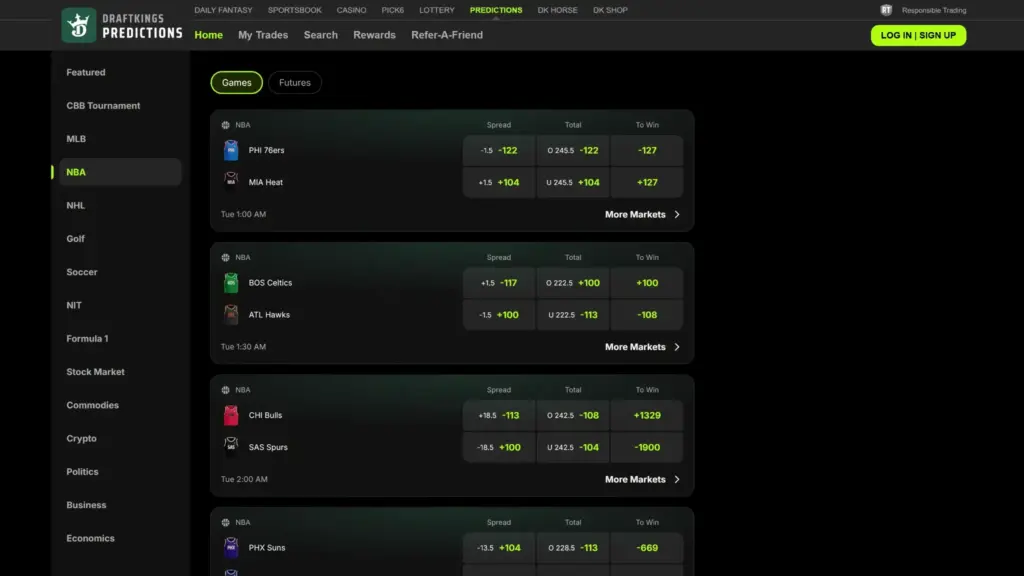
DraftKings Predictions still showed run lines, moneylines, and over/unders in plus-minus format as of Friday afternoon, when the letter was published. Polymarket has yet to comment.
The CFTC’s stated concern is consumer protection. The letter argues that displaying derivative prices in American odds format is likely to mislead market participants about the nature of the transaction they are entering. Derivatives pricing reflects competitive bidding through an order book. American odds represent a fixed relationship between risk and reward set by a bookmaker. Presenting one as the other, the CFTC argues, deprives users of information about market depth and pricing impact that they would have in a properly displayed derivative market.
That reasoning is sincere as far as it goes, and it also does double duty, which could be seen as protecting prediction market platforms from themselves.
The Optics Are Evidence in a High Stakes Legal battle
The CFTC is currently fighting litigation in at least nine states, defending prediction markets against claims that they are unlicensed gambling operations. New York’s $36 billion lawsuit describes Kalshi as operating a sportsbook by another name. Utah’s federal court granted summary judgment for the state on the same theory. The Sixth Circuit heard arguments on the Ohio and Tennessee appeals two weeks ago.
Every time a prediction market platform displays a contract at +150 or -110, it hands those states a photograph. The number format is indistinguishable from a DraftKings Sportsbook or FanDuel listing. A screenshot of a DraftKings Predictions page displaying NFL contracts in American odds format, placed next to a DraftKings Sportsbook page displaying the same game, produces two images that look identical. For a state attorney general arguing that prediction markets are sports betting regardless of their federal classification, that screenshot is evidence and is quite compelling.
By ordering platforms to drop American odds, the CFTC appears to be cutting off one of the strongest legal arguments against prediction markets. The agency is protecting the litigation position its own lawyers are arguing in federal courts nationwide.
For The CFTC, Distinction is Key
Kalshi and Polymarket display contracts natively in cents-on-the-dollar format, and they always have. The American odds problem is concentrated in the sportsbook and DFS operators that entered prediction markets over the past year and brought their existing product interfaces with them.
DraftKings Predictions is the clearest example, displaying sports contracts in the same format as its sportsbook. FanDuel Predicts has had similar presentation issues. These companies built prediction market products by adapting sportsbook technology. Adapting the technology included adapting the display conventions. Nobody at DraftKings thought the NFL contract pricing format would become a CFTC compliance issue, but here we are.
The irony here is layered. The sportsbook giants entered prediction markets partly to argue that the two products are adjacent and serve the same user. The CFTC is now telling them that adjacency, expressed through a shared pricing format, is actually a regulatory problem. The same agency that championed prediction markets as a distinct asset class is now policing the boundaries between prediction markets and sports betting, one formatting decision at a time.
The CFTC’s Choice of Language Carries the Weight of Its Messaging
The CFTC’s chosen language here is extremely important. “Mislead Market Participants About the Nature of the Transaction.” That phrase is doing significant legal work. Misleading consumers about the nature of a financial transaction is actionable under Section 9 of the Commodity Exchange Act and Commission Regulation 180.1.
The letter is not merely guidance; it is notice that using American odds formatting could constitute a deceptive practice under federal law.
It’s a remarkable sentence for a regulator who has spent two years arguing these products aren’t gambling. The concern is that users might think they are betting on sports. The platform is a federally regulated financial exchange. Users are entering derivative contracts. The American odds format might make them think otherwise.
Players trust our reporting due to our commitment to unbiased and professional evaluations of the iGaming sector. We track hundreds of platforms and industry updates daily to ensure our news feed and leaderboards reflect the most recent market shifts. With nearly two decades of experience within iGaming, our team provides a wealth of expert knowledge. This long-standing expertise enables us to deliver thorough, reliable news and guidance to our readers.
Latest News