Washington Court Calls Kalshi’s Event Contracts ‘Gambling’ and Orders Immediate Halt

A King County Superior Court judge issued a final order yesterday requiring Kalshi to cease most of its operations in Washington state.
After the Washington Court of Appeals granted a preliminary injunction in July, it denied Kalshi’s request to stay the order. The ruling is among the most sweeping state-level actions against the platform to date.
The order bans Kalshi from offering, accepting, or facilitating wagers on sports, elections, politics, entertainment, culture, tech, and science. Kalshi must implement an IP address and residency-based geofence by August 19 and a multi-source geofencing solution by September 2.
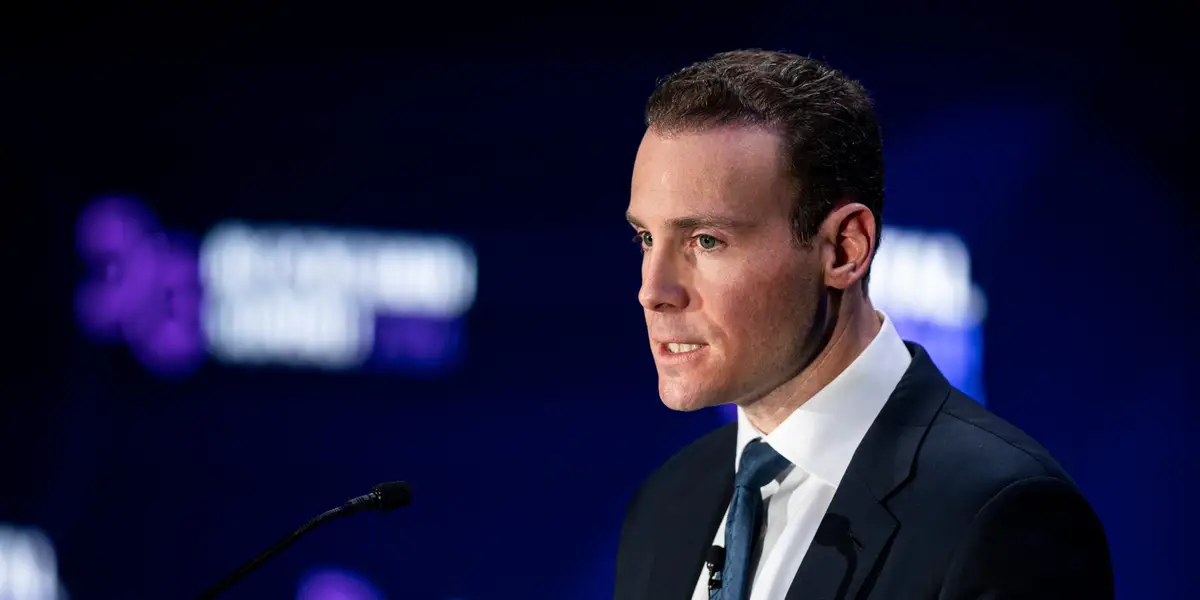
Washington Attorney General Nick Brown did not mince words. “Kalshi has gotten rich promoting wagers on sports, elections, natural disasters, events related to the Iran War, and more,” he said. The Iran War reference is a major talking point. It signals Washington is applying its gambling statute not just to sports contracts but to the full range of event-based markets that Kalshi offers, including geopolitical ones that the CFTC’s own rulemaking has never addressed as gaming-adjacent.
Washington Is Drawing a Line Prior to Federal Intervention
The July 21 preliminary injunction was significant, but the August 13 final order is more so, because it survived an appellate challenge before it was finalized. Kalshi asked the Washington Court of Appeals to stay the injunction, and the court said no. That denial means Kalshi has now lost at the trial level and at the first appellate level in Washington without federal intervention.
Judge McHale’s preliminary ruling found that “Kalshi has willfully ignored a Washington State Gambling Commission notice stating that offering event-based contracts is not authorized in Washington State.” Willful is the operative word here, and that word plays a major role in what comes next. A court finding of willful noncompliance forms the basis for contempt proceedings. It also signals how Judge McHale is likely to approach the trial on the merits.
Washington’s gambling statute defines the activity as “staking or risking something of value upon the outcome of a contest of chance or a future contingent event.” The court found Kalshi’s activities fall squarely within that definition. That is not a close call in the court’s view. It is a plain language match.
Washington Is Setting the Definition on Gambling Products
The most analytically interesting element of the Washington order is what it leaves unbanned. Washington state may still offer contracts related to commodities, climate, economics, and finance.
Read that alongside the banned categories: sports, elections, politics, entertainment, culture, tech, and science. Washington is effectively sorting Kalshi’s product catalog into two bins. The first bin contains contracts that resemble traditional derivatives with genuine price discovery and hedging value. The second contains contracts that resemble gambling by any reasonable plain-language definition. The court is allowing the first bin and banning the second.
This is the most precise judicial articulation yet of what states actually want from prediction market regulation. Nobody is trying to ban weather derivatives or inflation swaps. The fight is about sports contracts, election markets, and entertainment bets. The Washington order draws that line with more specificity than any prior state court ruling.
Kalshi’s continued argument is that the CFTC’s jurisdiction does not permit state courts to draw any line at all. The CFTC has filed emergency orders in Michigan and New York to that effect. Now we can expect a third in Washington.
The Emergency Order That Is Inevitably Coming
The CFTC’s Section 8a(9) emergency authority has now been invoked twice this summer: once against Michigan and once against New York. Both times, the trigger was Kalshi notifying the agency that a state court action threatened its continued operation as a federally licensed exchange.
The Washington final order is now in effect, banning most of Kalshi’s product catalog in the state. The Court of Appeals has declined to stay it. The geofencing deadlines are August 19 and September 2. The CFTC’s established pattern is to respond to exactly this kind of final, unresolved state court order with an emergency directive telling Kalshi to keep operating under the Commodity Exchange Act’s Core Principles regardless of what state courts say.
Two former CFTC counsels called the first Michigan emergency order extraordinary and unprecedented. Just as we predicted, it is now becoming a standard agency response. The question is not whether the CFTC will invoke emergency powers in Washington. The question is whether any federal court will eventually tell the agency it cannot.
That question is heading to Judge Marrero in the Southern District of New York, then to the Sixth Circuit in Cincinnati, and eventually to the Supreme Court. The Washington order adds another state to the enforcement map, another data point in the circuit split, and another reason for nine justices to take the case before year’s end.
Players trust our reporting due to our commitment to unbiased and professional evaluations of the iGaming sector. We track hundreds of platforms and industry updates daily to ensure our news feed and leaderboards reflect the most recent market shifts. With nearly two decades of experience within iGaming, our team provides a wealth of expert knowledge. This long-standing expertise enables us to deliver thorough, reliable news and guidance to our readers.
Latest News