CEO Special: Christopher Hebert – Building trust

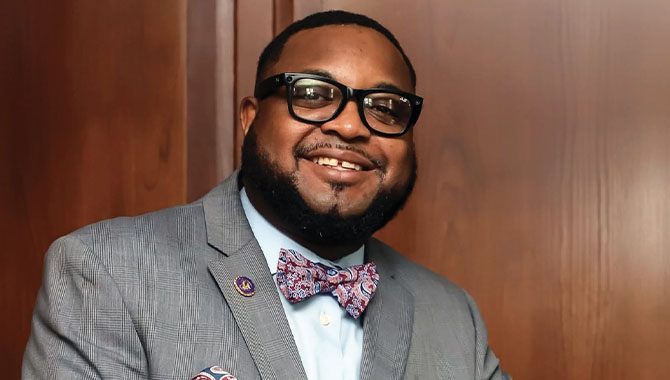
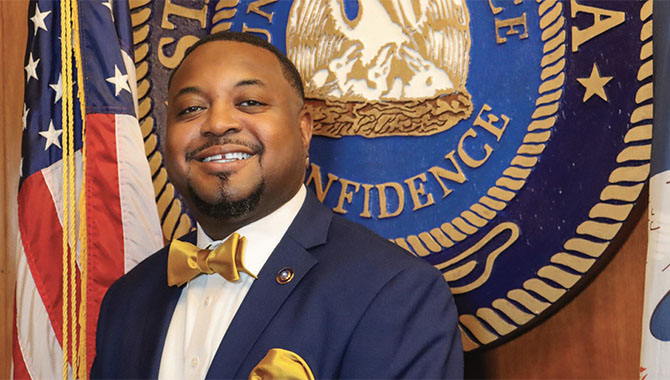
Christopher Hebert, Chairman of the Louisiana Gaming Control Board, speaks with Gaming America about growing up in Louisiana, working with the gaming industry – and inspiring others with his journey to becoming the first African American to serve as Chair of the Board. Words by Megan Elswyth.
As we sit down with Christopher Hebert, it is clear that his family, his work with the gaming industry, and, unsurprisingly for a regulator, upholding the law are what’s important to him. It can be easy to get lost in any one of these aspects and let it consume you entirely. Although Hebert not only strives to keep them well balanced, he also tries to ensure that everyone is happy about it too. While he’s settled in as the Chairman of the Louisiana Gaming Control Board now – the first African American to do so no less—the path to his position wasn’t always an easy one. He tells Gaming America…
COME FOR THE CULTURE…
“My mother was one of 10 children, and she was the first to graduate from college, even though she was not the oldest child”, Hebert explains. “My mother did remarry some years later but, for quite a few years there, I grew up in a single-parent household.” Despite coming from the small town of New Roads, Louisiana, with a population that peaked at just over 5,000 during the 1990s, Hebert didn’t let this dissuade him from aiming high even from a young age. After moving around during his childhood between New Roads and the state capital Baton Rouge, he eventually moved back to the small town to live with his grandparents while finishing high school. “That was a great opportunity for me simply because I was able to reconnect with some of my family members,” Hebert, a self-confessed family man illustrates.
“Particularly my first cousins, which I had a lot of.” It was during this time that his hard work paid off in a big way. “I actually won an essay contest,” Hebert says. It may seem like an unlikely beginning for the Chairman of a statewide gaming regulatory Board, but the early effect this had on Hebert was profound. The contest allowed him to go to Washington DC for the first time, and he “remembers the joy on particularly my grandmother’s face.”
Hebert’s grandparents had a basic education, dropping out of school around the age of 10 to find work. “It was a very fulfilling time for me, even more so than the trip and the opportunity to go visit our nation’s capital; it was seeing the look on my grandmother’s face when I was announced as a winner and got my face in the local paper.” This was the catalyst for Hebert’s drive to further his education, and Hebert would eventually receive a scholarship through his hard work to attend Louisiana State University. He would go on to work in the US Postal Service while he waited for his wife to graduate college, before he would take his next step and enter law school four years later.
… STAY FOR THE SUNSETS
Calling his journey during law school a “very interesting time” feels like an understatement from Hebert. When he entered Southern University Law Center he was freshly married with one newborn. During his second year, however, the family would grow by one with the arrival of his second child. “There were many complications when she was born,” Hebert says. “She was one pound nine ounces. We almost lost her.” During this time, Hebert was travelling to the neo-natal ICU every day, which resulted in many missed classes. After talking with his wife, Hebert “gave very serious consideration to dropping out of law school” – but this is when his professors stepped in. They helped devise a plan to keep him on course, despite him being absent for some daytime lectures until his daughter was stable enough to return home. “I was able to get through a really difficult semester. So, again, I’m forever indebted to them.”
Hebert would spend his next few years moving between offices as he gained experience in the field. His first job was working for Judge James Best in the 18th Judicial District Court, where he “was able to see the good, the bad and the ugly with regard to how to practice law.” He then spent time with law firm Gauthier, Houghtaling and Williams in Metairie, Louisiana. Although, there was only one problem. The commute was an hour each way without traffic – far from ideal with his current family situation.
With a wife and two young kids at home, it was hardly fair on anyone that Hebert was spending so long just travelling to and from work. This is when his friend suggested a position at the Louisiana Attorney General’s Office in Baton Rogue. “Before he could tell me anything about the position, I told him I’ll take it.” It was never Hebert’s plan to go into gaming, and as he explains “it could have been in any division in that office, but the opportunity to work closer to home with such a young family was what sold me.” So, almost two decades ago, in 2005, Hebert took his first steps into the industry…
SAFEGUARDING THE SPORTing PARADISE
The saying might be ‘never meet your heroes,’ but that wasn’t an issue for Hebert as he accepted an offer to work with Chief Justice Bernette Joshua Johnson of the Louisiana Supreme Court in 2016. It wasn’t until he’d already accepted the position that former Louisiana Attorney General, now Governor, Jeff Landry called Hebert and asked him to stay on at the Attorney General’s Office and become Director of the Gaming Division. “I talked it over with my wife and Chief Justice Johnson, who encouraged me to take that position”, Hebert explains. He would eventually accept Landry’s offer to become Director of the Attorney General’s Office Gaming Division, where he would serve until June 30th of this year.
Even though he very nearly left the industry, Hebert does reflect: “I can’t say enough about how grateful I am to Governor Landry for that opportunity, it was certainly life-altering for me” to become Director. Not only that, but Landry encouraged those in the Division to “think outside the box” and “foster better relationships with the industry,” which was something desperately needed at the time. Perhaps learning from his role as a father, Hebert realized that the adversarial atmosphere between regulators and operators wouldn’t work if they wanted to create a sustainable connection. So, one of the first things the Division did was hold regular, quarterly meetings with others in the industry, including Tribal gaming commissions, where anyone can air grievances and work through problems.
“One of the things I’m most proud of,” Hebert continues, “was the creation of our problem gambling resource services program” – a direct result of a challenge Attorney General Landry gave to each of the directors. This launched in conjunction with the Louisiana Department of Health but, most importantly, it was at no cost to those needing assistance. “Even prior to the passing of the legislation for sports wagering, one of the things I felt was important was that our citizens in Louisiana become educated about available resources.” If people aren’t exposed to something, they naturally aren’t educated on it. So, by simply opening sportsbooks without any level of support, some people saw this as throwing the US population to the metaphorical wolves.
Louisiana, under Hebert’s guidance, wasn’t about to let that happen. “In Louisiana, for problem gamblers and their families, we have a wonderful residential treatment facility in Shreveport, with plans to build and reopen the facility in the New Orleans area as well.” Indeed, while online support has been effective in reaching more people, this has also led to many resources being pulled away from in-person support, but not in Louisiana. “We started that program in 2018, and we feel like that program has been a success. It’s allowed me to go out and speak not only within our state, but also all Attorney General’s Office, Gaming Division attorneys are trained and go out and educate individuals about that program.”
It’s not just the Louisiana gambling program that Hebert feels passionate speaking publicly about either. In fact, Hebert has travelled the world to discuss the importance of the regulator’s role in responsible gambling, including conferences at ICE London and for the Bahamas Gaming Control Board. “I feel strongly that the regulator should not sit on the sidelines when it comes to problem gambling,” he goes on to explain. “We are, in effect, the ones who carry the big stick.”
Rather than ruling with an iron grip, though, Hebert understands the balance needed between an operator and regulator. One cannot have too much power over the other, or the dynamic can become a power struggle. As for how he manages to maintain a “pleasant working relationship,” Hebert adds that “I go around and try to dispel the myths that operators really don’t care about responsible gambling and problem gambling. What I’ve found has been quite the opposite. They do care very much about it – and they’ve been wonderful partners in the efforts, at least that we’ve had in the industry.”
Between the Louisiana Gaming Control Board, the Louisiana Attorney General’s Office and the Louisiana State Police, Gaming Enforcement Division, these agencies have got their eye pretty firmly on the Louisiana gaming ecosystem. “I think there has to be some trust built from the regulator side, and we have to have trust that the operator is genuine and not attempting to pull the wool over our eyes. Conversely, the operator has to have trust in us as well.” When Hebert first started in office, the notion of a ‘partnership’ between regulators and operators was seen as a “really dirty word” and Hebert would “get the slap on the hand” every time he worded it that way. He laughs about it now, though, “I’m happy to say that’s no longer the attitude of the regulators.”
It, too, seems to have changed the attitude of the operators themselves. Hebert explains that, in the past, companies would “assume and ask for forgiveness as opposed to permission” and viewed violations “as a cost of doing business.” It’s an unhealthy outlook for either side. “We don’t have that anymore and I do think it’s as a result of open and honest dialogue,” he continues. “Operators should feel comfortable that you’re going to listen and genuinely listen, because operators bring new ideas to us all the time. We have to build up a trust such that even when there’s something we’re not going to allow, the operator understands that. They understand that we have done our due diligence and that we are going to look at things in the light most favorable to them when we can.”
PROSPERITY IN THE PELICAN STATE
Among all of the different areas in the gaming industry, one in particular has prospered under the new open dynamic between the two sides. “The lion’s share of gaming revenue in our state comes from our casinos and video poker industry,” with video poker allowed in almost all hospitality-based areas, such as truck stops, bars, restaurants and hotels, as well as off-track betting facilities for racing.
As Hebert describes it, video poker has “more of a localized Louisiana feel.” While the casinos in the state are owned by corporations headquartered elsewhere, “most of our video poker owners are Louisiana residents, and so it gives it more of that hometown feel; there’s a different pride that you see.” In fact, video poker has grown so popular in the state that it’s helped the gaming industry as a whole surpass oil and gas as economic drivers. In June 2024, video poker generated approximately $60.3m in net revenue, or $749.8m when looking at fiscal the year to date. By comparison, land-based casinos in New Orleans brought in approximately $15.2m in gross gaming revenue, while mobile and retail sports betting had approximately $26.2m in net proceeds for the month of June.
“As I see it, we’re charged with making sure gaming is free from criminal and corrupt elements in our state; but in addition to that, we also have a responsibility to ensure our state is making revenue from gaming.” Hebert is very upfront about using gaming as means to support everyone involved, the businesses, the state, but also the workers. During the Covid-19 pandemic and its enforced shutdown, the Gaming Division realized that behind-the-scenes workers, such as those who care for the horses, would’ve “been left out on the street” if they didn’t step in. “We had to come up with a compromise that was amicable for all sides in that issue. But there are many issues that people don’t think about, ancillary to actual gaming, that we have to navigate and deal with. We work with our operators all the time on those issues.”
So, what happens when an industry feels seen enough to come forward with its problems? Well, let’s return to the video poker industry from earlier. Nothing shakes up a market quite like a new competitor, and that’s exactly what happened when the Louisiana Legislature and voters in 55 of the Louisiana’s 64 parishes legalized sports wagering in the state in 2021.
This didn’t just excite potential players, but “it caused the different segments of our gaming industry to start to think of innovative ways to stay in the game, if you will”, Hebert says. Video poker companies approached him with a few different ideas of how they could modernize their products and make them competitive against the changing industry. “They wanted to modernize their video poker screens and so we allowed them to have certain bells and whistles on those screens for entertainment purposes only. Where they are running into difficulties, we look for solutions that are beneficial to all involved,” Hebert explains. “It doesn’t always work out that way, but that is what we’re going to always attempt to do.”
UNION, JUSTICE, CONFIDENCE
It seems like a terribly straightforward idea on paper to get the industry you work with closest to cooperate with you on a professional level; but in the real world, that’s no easy feat. It’s the working dynamic many people can only dream of, especially when they’re on two opposing sides – as regulators and operators naturally are. So how did Hebert and his team manage it? “Again, it’s a testament to the faith that the Governor has in me.” Rather than coming through the Louisiana State Police, like many Chairmen before him, Hebert climbed the ladder almost entirely through the legal side. Rather than perceiving this as a potential disadvantage, though, Hebert understands that it works in his favor, “I think I’ll bring a little bit of a different perspective being that I’m coming from all aspects of gaming.”
How does a perspective born and bred in the industry differ from one forged in law enforcement? According to Hebert, it’s helped immensely in being able to tackle issues head-on in a way that seems constructive, rather than potentially confrontational. “What I have found is that, if you talk about those things on the frontend, it makes it a lot easier to deal with any issues that may come up on the backend regarding licensing or whatever those issues may be.” Again, this ties back to something being easy on paper. Rather than shying away from difficult or uncomfortable conversations, however, Hebert believes it’s in everyone’s best interests to simply have them out in the open. “It just doesn’t make sense to me to stonewall our operators and to have them go figure things out, because I certainly know that makes it more difficult.”
Hebert continues, “We really have encouraged our operators, or any of our stakeholders in gaming, to come and speak to us about any issues they may foresee or any questions they may have.” This is all well and good, of course, until a company relies on that trust and comes forward with an idea that doesn’t get passed. It can be easy for this to rock the foundations, no matter how much good will has been built, especially if there isn’t a particularly illegal reason for the idea to be dismissed.
You would assume a regulator would have a good reason for refusing a proposition, as long as it’s perfectly legal and doesn’t infringe on any compliance issues, right? Unfortunately, that’s not exactly the case. “Sometimes it’s as simple as – and I’ve also heard this from colleagues in jurisdictions across the country – sometimes states don’t want to be first to pass something new.” Even though it’s a discouraging answer, Hebert doesn’t shy away from the truth. It’s this level of openness he’s encouraged throughout his career, and it’s incredibly refreshing. “They would rather see something in operation in another jurisdiction. It’s a delicate balance to strike between looking at things in the best light of the operator and ensuring the integrity of the game. As long as the operator knows you are giving them a fair shake and that you have sound reasoning, I think everybody’s okay with those results.”
When something does get passed, though, it doesn’t get handled flippantly. For example, following extensive discussions, the Louisiana Gaming Control Board suggested that riverboat casinos should be brought onshore. This wasn’t just because of safety concerns, but also for the economic development of gaming in Louisiana. “Amenities are extremely important for casinos nowadays,” Hebert reasons. “If you look at places like Las Vegas, you know that many of these properties are making more money from their amenities than they are from the actual gaming. So, it was high time for us to allow something similar in Louisiana.” Not only will completing landside moves allow for more improvements to take place, but also new opportunities to flourish. In Baton Rouge, one of the riverboat casinos has transitioned into a landside casino facility and given the docking space to Viking Cruises, so that “when those passengers dock, the first thing they see is a casino. That’s going to be an economic driver in Baton Rouge.”
INSPIRING OTHERS
Coming from a small town in Louisiana, then, to overseeing the entire gaming industry across the Pelican State, how does Hebert reflect on his whole journey? “It was not my life’s goal to become the Chairman of the Louisiana Gaming Control Board”, he laughs. “It is purely as a result of hard work and dedication in this industry and others are taking note of that. Regarding being the first African American Chairman, I look upon that as both an extremely high honor, but also an enormous responsibility.” These aspects are widely recognized too. When Chief Justice Johnson offered Hebert the position with her office, she said, “I’ve been watching you, and you’re not a 9-to-5 lawyer. You’re out there in the community.
” Hebert reflects fondly on this: “That was really a lesson for me, because none of what I was doing was for that reason. But you never know when someone is paying attention to what you’re doing and someone as prominent as she may be watching. You may have some child somewhere watching, I certainly have my childhood heroes who I watched; specifically, my PTO President at school, Freddie Pitcher, who ultimately ended up serving as a Judge at the time, Judge Pitcher was my first introduction to the legal world and was an inspiration to me.”
Not being content with just regulating games of chance and supporting a family, Hebert has served in various roles, from coaching kids, particularly in underprivileged areas, to serving on the minority bar board and overseeing community activities. “I’m a true believer in community and giving back to the community.” Hebert doesn’t just hope to give time and resources back to the community, either. “It’s my sincere hope that someone who may be out there who does not think they can aspire to do this – and it doesn’t necessarily have to be this position, but a position like this – that it gives someone out there some sort of hope.”
If anything, Hebert’s journey to becoming Chair of the Board isn’t simply a professional achievement or a testament to his hard work, but it gives the opportunity to provide something so much more than his legal expertise. “I can only hope I can be that inspiration to not only my children, but to some child that is out there looking for that inspiration again. I came from a single-parent home. Unfortunately, my father was not there as much as I needed him to be, but there were other role models in the community that I could look to. Hopefully., I can be that for someone else.”
It’s my sincere hope that someone who may be out there who does not think they can aspire to do this – and it doesn’t necessarily have to be this position, but a position like this – that it gives someone out there some sort of hope.
Players trust our reporting due to our commitment to unbiased and professional evaluations of the iGaming sector. We track hundreds of platforms and industry updates daily to ensure our news feed and leaderboards reflect the most recent market shifts. With nearly two decades of experience within iGaming, our team provides a wealth of expert knowledge. This long-standing expertise enables us to deliver thorough, reliable news and guidance to our readers.
Latest News