CEO Special: Paul Burns – A voice for the industry

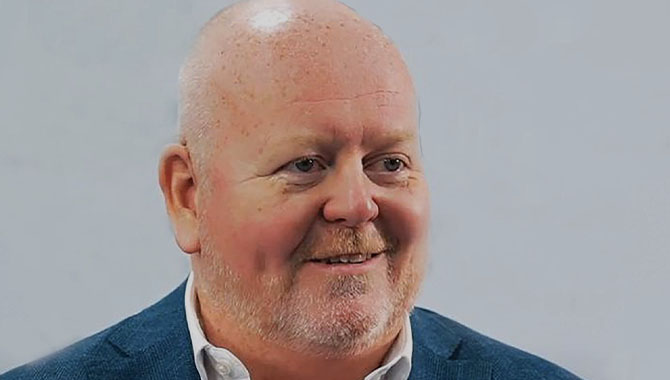
Paul Burns sits down with Will Underwood to discuss how his early passion for politics led him to Las Vegas, as well as the challenges – and privileges – of being the voice of the Canadian gaming industry.
As challenges go, pioneering a singular national voice for one of the fastest developing industries of the 20th century is one that certainly takes some rising to. Yet, when discussing the gaming industry with the Canadian Gaming Association’s (CGA) President & CEO, Paul Burns, you get the distinct feeling he was never destined for the industry, but rather, the industry was destined for him.
“I was born and raised in Toronto. My family has been here since the mid to late 1830s.” As a fourth generation Torontonian, Burns’ Canadian heritage lies deep and – by accident or design – his service to his city and country, alike, have manifested in his ability to provide almost 20 years’ worth of representation for Canada’s evolving gaming landscape. Burns’ formal education always remained close to home, culminating at the University of Guelph, located a little over an hour’s drive from downtown Toronto, from which he graduated with a degree in Political Science and Government.
Growing up in Midtown Toronto, a career in politics was the goal for Burns and, indeed, one he would go on to achieve. Following his Bachelor’s, burns dove headfirst into a career in Canadian politics, working as part of local staff, at municipal level and eventually federal level for party leaders and cabinet ministers over the years.
“My skill set wasn’t actually gaming operations. It was politics and public affairs, and stakeholder relations,” Burns reflects with Gaming America. These were traits he would learn to harness throughout his career, which would see him dip in and out of politics, gaming, real estate and, at times, a combination of all three. However, it was while working at municipal level that he would first come across gaming. “My way into gaming came through politics. I was in Ontario’s provincial government as a political staff member working for a Cabinet Minister; then I got handed the gaming file.”
From the cabinet to the casino
When explaining the nature of the Canadian gaming space, Burns underscores that, while the landscape has been subject to enormous change, the intertwined nature of administration in the industry remains. “Provincial governments are very involved in gaming in Canada,” he states – and, as detailed, provincial government was exactly where Burns was when the gaming file slid across his desk. “We in Ontario introduced casinos, with the first one opening in 1993. I wasn’t involved with this file until a little later in 1996/97, when we began the expansion of lots of racetracks and the expansion of what was then known as a charity casino model, a model to replace table games set up for charities to raise money. It was… kind of an awful system. That’s why we were looking to create more permanent facilities across the province.”
And there it was. Burns had made his first foray into gaming, “I worked on that file with the Government, launched that programme and subsequently decided that I liked the gaming business.” Burns then began working in real estate with Revenue Properties – who had expressed interest in obtaining gaming properties – while retaining his position in government.
“I ended up going to work with a real estate company that won the right to build six casinos in Ontario.” However, after spending 11 months working on the casino project, Burns experienced his first industry setback. “Unfortunately, the Government changed their mind. We were in talks with municipalities, asking if they would approve casino facilities in their communities. The province had promised them a share of revenue but hadn’t told them what it was – and so it was getting a little bumpy. Then the Government decided to go in a different direction. They gave all the casino business back to Ontario Lottery and Gaming Corporation (OLG).”
Though this was, indeed, a frustrating bump in the road, Burns would soon be moving forward with another exciting project. “At that time Revenue Properties, which is the Canadian real estate company I worked with, had also pursued a Nevada gaming license. They were partners in the PT’s Taverns chain in Las Vegas. In the late 1990s, Las Vegas was growing at an alarming rate, it was enormous. The city was growing at a rate of something like 5,000 people a month. It was just incredible because there were all these properties that needed mass amounts of employment – and it was just changing the face of Las Vegas. That was a fun time to be involved.”
Las Vegas to the Mayor’s office
It wouldn’t be long before Burns’ Revenue Properties days would be over, as the company was acquired at the turn of the millennium in a move that would take it out of the gambling space. According to Burns, the natural thing for him to do was to go back to working in politics, despite feeling as though his gaming ambitions had been left somewhat unfulfilled, “I always wanted to go back to gaming. It was whether I could find opportunities to do so.”
Through rugby, Burns found a connection which re-immersed him in the world of politics, this time with some real prior experience under his belt. He ended up running a campaign for the man who would go on to be the leader of the Progressive Conservative Party of Canada, Peter MacKay. Then, in 2003, Burns began working on campaigns for David Miller, including his successful campaign bid to become the Mayor of Burns’ hometown.
“Having grown up in Toronto, I thought it was a fun exercise to do and be a part of. Miller was single digits in the polls when I joined in the summer. We won in November. Then, I joined the mayor’s office. By that point, I had been able to work at all three levels of government in Canada. I did extend into the Federal Government in the early 1990s right out of university. I worked for the leader of the Conservative Party in Ontario. Then I went to Ottawa to work for a candidate in the leadership process to replace then Prime Minister, Brian Mulroney, who was retiring, before coming back and working in the position where I first came across those gaming files we were talking about.”
Back to gaming
“Working in the Mayor’s office was fun. I did that for a couple of years, particularly managing transit and economic development files from there. Then I got a call from the old CEO of RPC Gaming, as it was called then, who I’d worked with on the casino project and the PT’s stuff in Vegas. He said he had been asked to look at creating a Gaming Association for the industry in Canada. Just like that, the opportunity I was waiting for came along, because the industry was at that point where people were concerned nobody was speaking up for it yet. I joined the Association in the fall of 2005.”Of course, it wasn’t just Burns who had been invited to help spearhead this new industry vision; then-CEO of the Gaming Association, William Rutsey, had set out to recruit a number of leading gaming industry executives. Burns recalls, “That was the impetus. At that time, it was a gentleman named Duncan Brown, CEO of the OLG at the time; and a couple of other industry leaders in the country said, ‘I think it’s time we got together and created a voice for the industry.’”
Following its formation, the Canadian Gaming Association wasted no time establishing its presence in the gaming landscape, acquiring the Canadian Gaming Summit within its first year. Additionally, nine gambling companies in the country stepped forward as volunteers to be study members for the association. The acquisition of the Gaming Summit gave the Association somewhere to establish an on-the-ground presence. As Burns recalls, “We managed our first event in 2006 – and from there began to build the Association. It was a very interesting time. From the 2006-2008 period there was a lot of discussion about Video Lottery Terminals (VLTs) – or gaming machines – across bars and venues in Canada. There were eight provinces, all with room to grow and so we were looking for opportunities to build new casinos and grow the casino footprint.”
A major project was pending – and it inevitably came to the CGA when New Brunswick began working on its new Gaming Control Act. The Canandian Gaming Association worked with the provincial government closely, re-interpreting the criminal code as part of the development of the new act, which was released in 2008. Subsequently, the change in legislation saw the opening of the province’s first casino – Casino New Brunswick – in 2010.
Two decades of the CGA
By this point, Burns had been working with the Canadian Gaming Association for five years, making him part of the proverbial furniture. However, his CGA tenure was still in its fledgling stage. Today, Burns is closing in on celebrating 20 years with the organization. “Did I ever expect I would stay as long as I did? No. But what I’ve found about the industry is that there are always wonderful people, and I’ve always continued to learn. I always wanted gaming to be a technology product. Working to meet changing consumer choices, dealing with governments and dealing with new challenges, watching the industry’s growing commitments to responsible gaming and healthy play. It’s been a continuous evolution.”
Despite working for the Canadian Gaming Association for almost two decades, Burns has only held two roles. His impressive roster of prior experience in both gaming and politics, alongside joining mere months after the association’s inception, allowed him to hold the role of Vice President for just under 13 years. Then, in 2018, the time came for his predecessor – William Rutsey – to step down from his post as CEO. Thus, in July 2018, Burns stepped up to the top job.
the hot seat
Burns recalls that the changeover was not a snap decision, but rather something that had been in the pipeline for some time. “It was always something I knew he (William) had notionally talked about, but it was about knowing his timelines. Then, I was Acting CEO for a little while after Bill left, while the Board decided what they wanted to do. After a little while, they decided to make it official.”While the internal transition from VP to President & CEO was smooth for Burns, his introduction to life as the head of the organization was – to say the least – busy. A range of challenges, many of which were unbeknown to himself and the rest of the world, awaited Burns after he stepped into the role in 2018. For instance, an issue ongoing in Canada at the time was that of the copious amounts of money being laundered largely through casinos in British Columbia. Alarm bells were initially raised in the province around 2015, when large amounts of illegitimate funds began to surface
Measures were quickly introduced to reduce the amount of dirty money flowing through the casinos to good effect. However, in 2019 a report was released by the Government of British Columbia that estimated CA$7bn (US$5.16bn) was laundered in the province in 2018 – with CA$5.3bn flowing through the real estate market. on the housing and opioid crises in British Columbia was felt by local citizens; however Such was the prevalence of citizens in British Columbia exchanging large amounts of ill-acquired cash for chips in local casinos, only for them to place a few low-stakes bets and re-exchange the chips, effectively cleaning their money – the method was coined ‘The Vancouver Model.’ The subsequent effect of The Vancouver Model, Burns’ experience within gaming, politics and real estate placed him in a strong position to guide the CGA through the process of working with local and federal organizations to represent the industry the issue.
The great 2020 reset
What was turning out to be a fascinating initial phase as CEO for Burns was about to get all the more intriguing with the emergence of the Covid-19 pandemic in the latter stages of 2019 – around 18 months after he had stepped into his new role. “Well, I learned more about public health measures than I ever thought I would in my life!” he quips to Gaming America. Burns’ reflection on the pandemic is one that draws focus on the silver linings of what was inevitably an extremely strenuous moment for the industry and, of course, the people in it.
By no fault of its own, British Columbia was becoming something of a hotspot of issues for Canada at the turn of the decade, as the province also recorded Canada’s first case of Covid in January of 2020. By March, cases across all the nation’s provinces were recorded and, shortly after, the country followed the rest of the world into a full lockdown.
“The impact of the pandemic on the Canadian gaming industry was really significant. Properties were closed for months across the whole country. It was almost 17 months with either ridiculously limited capacity or closed completely. That was also tough for the association – because the industry was struggling and people were getting cut, or they weren’t making enough money and so on. Fortunately, the association itself was in a position financially to live off reserves and that’s what we did.
“We did everything we could to inform ourselves on how to re-open safely, so we could advocate to help governments see the light to, gradually, give casinos bigger capacities and open fully over a period of time. It was a challenging point.” While there is no right time for a global pandemic, the Covid-19 pandemic came just as Ontario was gearing up its plans to regulate online gaming and sports betting markets. This process was completely stopped in its tracks. Burns, however, has a knack for finding the silver lining, “For the Association, it was the perfect next project for us to lean in to.”
The Ontario project
“In the midst of the pandemic we started working on the Ontario bill. The province made the commitment, so we knew they were going to move forward. I got started on the policy process to build out the regulatory regime – and so that was a huge lifeline for the gaming industry in Canada. Of course, the whole time we were actively working on Bill C 218, we were doing lobbying efforts but not being able to go to Ottawa, because politicians were participating virtually, and no one was really around.
I guess it was the same for everyone, not a lot of face-to-face conversations during that time! There was a lot of Zoom lobbying going on in the House of Commons and in the Senate. Eventually, we were able to get everything over the finish line before Ontario opened their marketplace. In the end, it seemed a lot came together at the right time!”
Indeed, April 2022 saw the regulation of sports betting and online gaming in Ontario. It’s fair to say this market has seen resounding success. Operators from across the globe have flooded the region, which now boasts one of the most diverse markets in the world regarding. In June of 2024, official figures reported by Deloitte revealed that the market had contributed CA$2.7bn towards the province’s economy within its first two years – 92% of what was predicted for the first five years of regulation Covid, alongside the opening of the Ontarian market, have been huge turning points for the growth of the Canadian Gaming Association, too. “We’ve had such significant growth since the beginning of the pandemic – when we had somewhere around 20 to 30 member companies. Now, we have over 75. It’s been great to see the Association grow. I think people see the need and value. We continue our advocacy work on a range of fronts at federal level, because obviously the gaming legislature resides in the criminal code regarding anti-money laundering laws and working around things like that.”
a legacy
Burns’ contributions towards the Canadian gaming industry over the past two decades have earned him vast praise and recognition. Burns recalls that in the earlier days of his VP tenure at the CGA, the onus was on enhancing the sports betting sector in the nation. “The process of changing sports betting laws in Canada was, to say the least, a long one. Going back, the first conversations we started to have were in 2008. At the time, it was much more about putting sportsbooks in casinos than it was about online gaming. By the time we got to 2020-2021, it was as much about online gaming as it was about anything. That’s the way everything evolved in North America. However, yes, often in the early days everything was centered around casino sports books.
“During those early days I got to meet a lot of great folks in the sports betting business, predominantly in Las Vegas at that time, because that was the only jurisdiction North America where it occurred. Being inducted with some of those people who helped build the industry, that I had great memories of working with, was wonderful. These guys built that business in Las Vegas, and the stories and insights they had were invaluable to me.”
“I have one memory in particular with Michael Gaughan, who is the son of Jackie Gaughan. The Gaughan family is a legendary longtime Las Vegas casino family – and Michael hosted a dinner one night with a bunch of the sportsbook operators and people from El Cortez. Just listening to them tell stories around the table and offer their insights. It was amazing. As I said before, the gaming industry has a lot of wonderful people in it. Looking back on that evening, to learn from these legendary operators was an honor.”
An evolving landscape
Looking ahead, the Canadian gaming landscape remains as busy as ever. Busier even, with the imminent regulation of Alberta’s iGaming market right around the corner. This was a development that was in fact announced at the 18th CGA-operated Canadian Gaming Summit in June by Alberta’s Minister of Service and Red Tape Reduction, Dale Nally. The province is set to follow in Ontario’s footsteps, as its market is said to be using the roadmap set out by its provincial relative, with some minor tweaks.
Despite fluctuating between Ottawa and Las Vegas at points in his career, all roads seem to have led back to Toronto for Burns, who still resides in the city’s downtown district. Retaining a sense of home is a crucial component to adapting to changing circumstances and, after pushing for progression on numerous fronts for a number of years, Burns understands as well as anyone that gaming doesn’t require the same kind of push that it used to. Things are progressing rapidly, and the landscape is starting to change.
“These days, we try to play the role of educators. We want to help people understand how the industry is regulated, providing resources for companies, learning from other jurisdictions, particularly in Ontario right now, which is probably the best experience for Alberta. We don’t expect everyone to understand the nuances of how payment processing works, or how geolocation works, for example. We’re here for the people that need to learn, and we are trying to build a consensus on the more complex aspects of the industry. That’s important. I think it can help expediate the decision-making process, as well as assisting operators in keeping on top of complex issues.
“There’s a lot of community in our work, which I love. I talk to our regulatory counterparts and people like the Betting & Gaming Council, American Gaming Association or European Casino Association – and we have a lot of the same issues. There’s a lot we can all teach each other as well.“So now that’s the goal, to continue to be a resource for the government, and educate people – particularly ahead of iGaming opening in Alberta. The bottom line is creating opportunities for our members and operators from all over the world to do business in this country.”
My way into gaming came through politics.I was in Ontario’s provincial government as a political staff member working for a Cabinet Minister; then I got handed the gaming file.The bottom line is creating opportunities for our members and operators from all over the world to do business in this country. Did I ever expect I would stay as long as I did? No. But what I’ve found about the industry is that there are always wonderful people, and I’ve always continued to learn.I always wanted gaming to be a technology product.
Players trust our reporting due to our commitment to unbiased and professional evaluations of the iGaming sector. We track hundreds of platforms and industry updates daily to ensure our news feed and leaderboards reflect the most recent market shifts. With nearly two decades of experience within iGaming, our team provides a wealth of expert knowledge. This long-standing expertise enables us to deliver thorough, reliable news and guidance to our readers.
Latest News