Scotts Valley Band Sues DOI to Keep Casino Hopes Alive
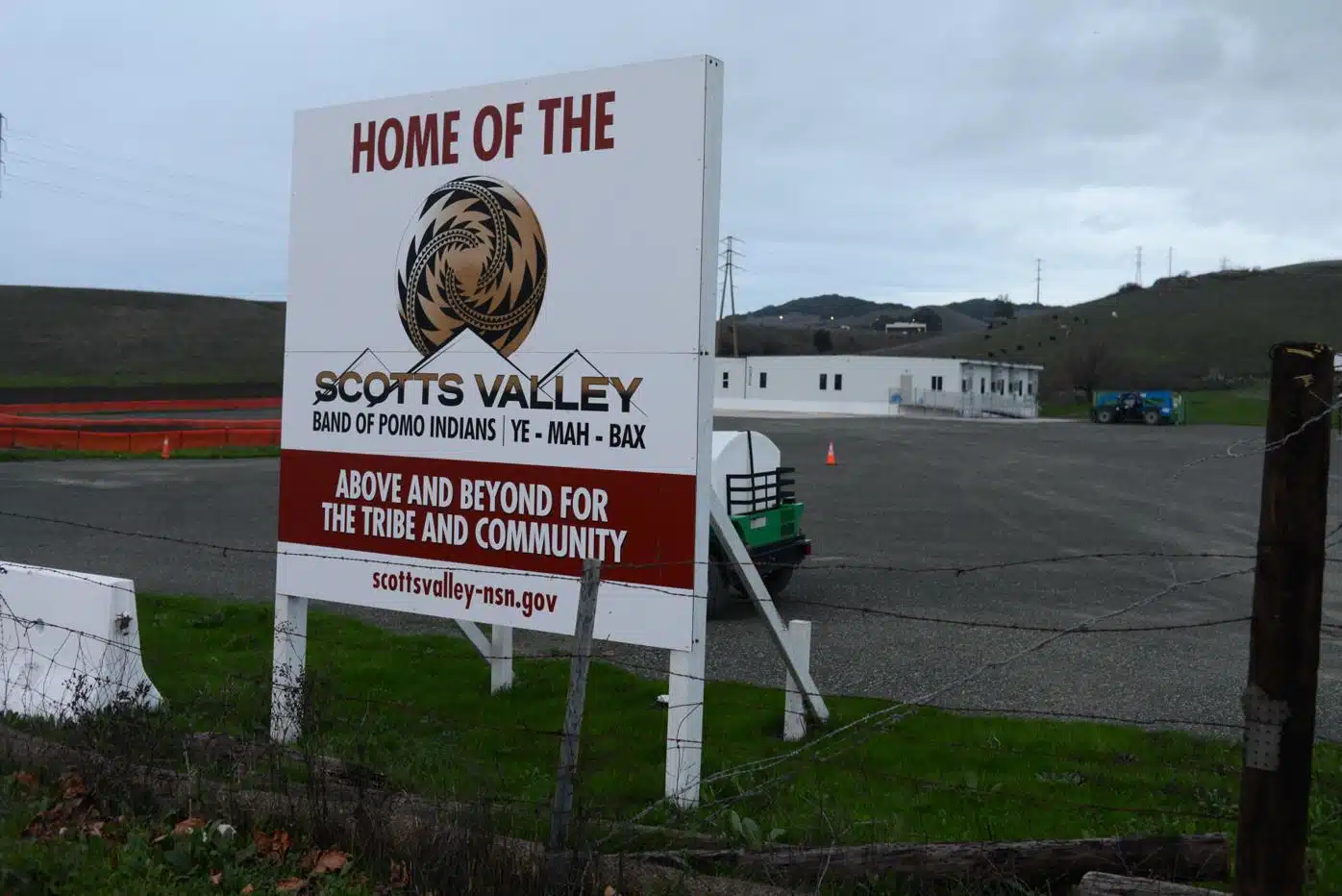
The Scotts Valley Band of Pomo Indians filed suit in the U.S. District Court for the District of Columbia on August 7.
The tribe is asking the court to vacate the Interior Department’s July 30 decision finding the Vallejo Site ineligible for gaming under IGRA and reinstate the January 2025 decision that had granted gaming eligibility. The casino opened on July 24, but the tribe closed it on July 31, the day it received the adverse ruling.
Seven days is how long the Scotts Valley Band operated its preview casino before the federal government reversed course again.
The lawsuit names Secretary Douglas Burgum and Assistant Secretary William Kirkland, along with the Department itself, challenges the July 30 decision as arbitrary, capricious, and contrary to prior court orders, and seeks a preliminary injunction to reopen the facility while the case proceeds.
A Saga Now in Its Fourth Legal Chapter
Understanding the latest move in this saga requires the full timeline.
The Scotts Valley Band applied for restored lands gaming eligibility in 2016, submitting more than 4,000 pages of historical, genealogical, and anthropological evidence. Interior denied the application in 2019. The U.S. District Court for D.C. found that the denial was arbitrary and capricious in 2022, ordering Interior to reevaluate the record using the Indian canon of construction and IGRA’s remedial purposes. On remand, Interior reversed course and granted gaming eligibility in January 2025.
The Trump administration rescinded that determination in March 2025 without giving the tribe notice or an opportunity to respond. The same court found that rescission violated the tribe’s due process rights in October 2025, reinstating gaming eligibility while allowing reconsideration to proceed. Interior completed that reconsideration and denied gaming eligibility again on July 30, 2026. The tribe opened its preview casino on July 24 and closed it seven days later.
The complaint’s central argument is that the July 30 decision does not apply the framework the court mandated in 2022. It applies the 2019 framework the court already found unlawful.
One Line Could Change Everything For Scotts Valley
The complaint identifies the most damning passage in the Interior decision at paragraph 103. In addressing the quality of the tribe’s historical evidence, the decision states that if the Band is to “attain a different result,” it should not have been so completely dispersed.
The complaint calls this mockery of the court’s 2022 remand order. That description is not a rhetorical overstatement. The 2022 decision in Scotts Valley I specifically held that Interior had improperly discounted the tribe’s evidence without accounting for “the historical circumstances that rendered the Band landless.” It ordered Interior to evaluate the record through the lens of historical disruption and federal responsibility. The January 2025 decision on remand did exactly that, finding gaming eligibility. The July 30 decision does the opposite: it treats the consequences of missionization, epidemic disease, forced labor, and dispossession as reasons to discount the tribe’s evidence, then suggests the tribe should have been less dispersed if it wanted to prove its case.
That reversal is the heart of the APA claim. Interior is not entitled to revisit a court-mandated analytical framework simply because a new administration prefers a different outcome.
The Royce Map Dispute is Pivotal
The complaint spends significant energy on Interior’s treatment of the Royce Area 296 map, a 19th-century federal depiction of territory the Band’s ancestors ceded under an 1851 treaty. The Vallejo Site sits within that territory. Interior had relied on the map as evidence of historical connection in both its 2012 decision on a separate Scotts Valley parcel and its January 2025 decision on Vallejo.
The July 30 decision rejects the map entirely, concluding the Vallejo Site lies outside territory the Band actually ceded. The complaint argues this reversal ignores the Indian treaty canon, fails to consider how the Band’s ancestors would have understood the ceded territory, and is barred by equitable estoppel.
Interior told the tribe in 2012 that a different parcel was ineligible precisely because it was outside Royce Area 296. The tribe then focused its efforts on a site within the area. Interior cannot now argue the map is unreliable as a basis for denial, having previously treated it as reliable as a basis for denial.
What the Tribe Built and Lost
The complaint is specific about reliance interests. The Band invested more than $10 million in the preview casino. It hired nine employees, all tribal members, and it established a Tribal Gaming Commission. The Band entered agreements with the City of Vallejo covering public safety services and utility connections, and it obtained NIGC approval of its gaming ordinance. It trained employees at a Nevada casino.
All of that happened in good-faith reliance on the January 2025 determination. The July 30 decision closed the facility without addressing those interests or considering less disruptive alternatives, such as defending the January 2025 decision in the three separate lawsuits the opposing tribes had already filed, rather than reversing it through administrative reconsideration.
As of now, the city of Vallejo loses the payments the tribe agreed to make for municipal services during operation. The tribe’s employees face furloughs, and the compact negotiations with California are disrupted. In what must be a wildly frustrating turn, a decade of administrative proceedings and litigation has produced seven days of gaming operations.
The Path Forward for the Scotts Valley Band
The complaint asks the D.C. court to declare the July 30 decision unlawful, reinstate the January 2025 determination, and issue a preliminary injunction allowing the preview casino to reopen while the case proceeds. The same judge who has overseen the prior Scotts Valley decisions will likely handle this one, giving the court the full procedural history.
The opposing tribes, Yocha Dehe Wintun Nation, United Auburn Indian Community, Lytton Rancheria, and Kletsel Dehe Wintun Nation, have their own pending lawsuits challenging the January 2025 decision. Those cases were stayed while Interior’s reconsideration proceeded. With the reconsideration complete, those cases may now resume on a parallel track, creating the possibility of conflicting orders from the same court depending on which challenge prevails.
Interior has now found the Vallejo Site ineligible for gaming twice. A federal court has found that denial arbitrary and capricious once. The same court will now decide whether the second denial repeats the same errors. Given the complaint’s detailed account of the analytical framework the July 30 decision was supposed to apply and manifestly did not, the Scotts Valley Band has made a credible case that history is repeating itself.
Players trust our reporting due to our commitment to unbiased and professional evaluations of the iGaming sector. We track hundreds of platforms and industry updates daily to ensure our news feed and leaderboards reflect the most recent market shifts. With nearly two decades of experience within iGaming, our team provides a wealth of expert knowledge. This long-standing expertise enables us to deliver thorough, reliable news and guidance to our readers.
Latest News