Federal Judge Denies CFTC Bid to Block New York Case, While Utah Hands Kalshi Its Strongest Defeat Yet

Two federal court decisions in the past 24 hours have significantly shifted the momentum in the prediction markets regulatory fight against Kalshi.
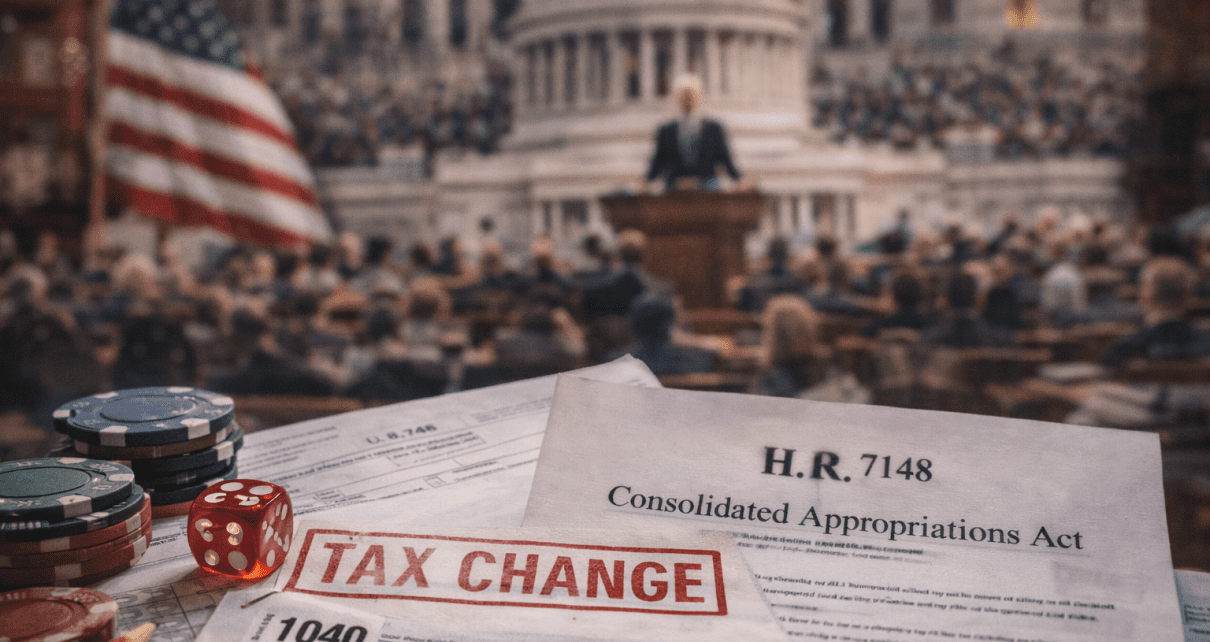
The result is an arrival at a moment when the legal map against the platform is expanding faster than at any point in its history. In New York, U.S. District Judge Jed Rakoff denied the CFTC’s emergency request for a temporary restraining order against the state’s $36 billion enforcement action, finding the agency had not shown a strong likelihood of success on the merits or the risk of irreparable harm. The denial was without prejudice, meaning the CFTC may renew its motion before the assigned judge, Victor Marrero, on August 7.
But as gaming attorney Daniel Wallach noted, the denial is not final precisely because Judge Marrero, who will ultimately decide the CFTC’s preliminary injunction motion, was unavailable for the emergency proceeding. Rakoff’s “not likely to succeed” finding applies to the CFTC’s attempt to block New York’s action, not to the underlying question of whether the CFTC’s preemption theory is correct on the merits.
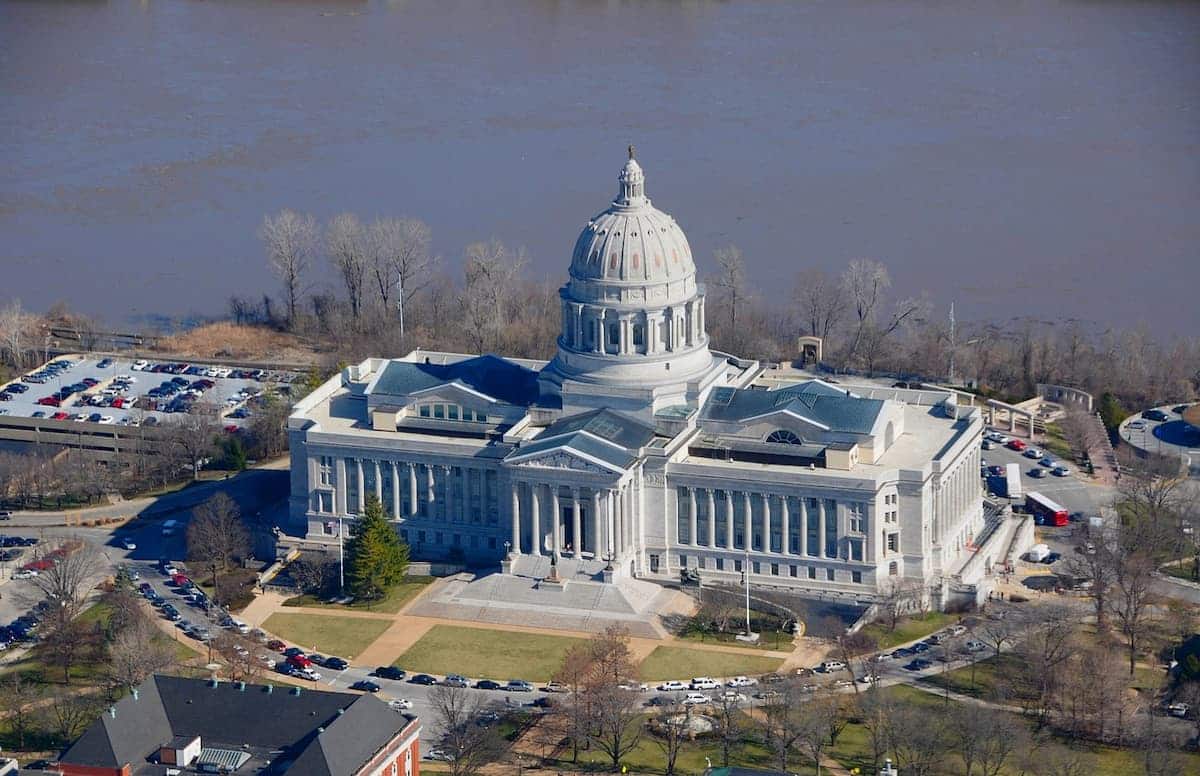
In Utah, U.S. District Judge Robert Shelby did not merely deny a preliminary injunction. He granted summary judgment for the state and ordered the case closed. “The court agrees that enforcement of state gambling laws is not inconsistent with the CFTC’s regulation and oversight of derivatives markets,” Shelby wrote, concluding that federal law does not preempt Utah’s ability to treat Kalshi’s sports betting contracts as gambling.
Utah Attorney General Derek Brown described the result directly: “You can’t rebrand illegal gambling as a federal commodity, and today a federal judge agreed with us. Kalshi bet that clever branding would beat Utah law. Kalshi lost, and Utah won.”
The CFTC and Kalshi Dealt Multiple Legal Blows in New York
The CFTC filed its New York TRO request on July 30, the same day the Second Circuit denied Kalshi’s final emergency motion to block New York enforcement. Attorney General James filed the state court action the following day, July 31. It would be quite the stretch to describe the overlap as coincidental.
The CFTC knew from the Second Circuit’s denial that every federal procedural avenue for Kalshi was exhausted in New York. With Kalshi’s preliminary injunction denied on July 7, its emergency Second Circuit motion denied on July 28, and its TRO pending appeal denied on July 30, the state court filing was the inevitable next step. The CFTC’s preemptive TRO request was an attempt to get ahead of that filing, to secure a federal order blocking the state action before it could generate its own procedural momentum.
That effort did not succeed for the CFTC. Rakoff found the CFTC had not demonstrated the threshold requirements for emergency relief, and the state court action is now proceeding on its own schedule. The August 7 hearing before Judge Marrero is the next significant moment in the New York proceedings.
The Decisive Ruling in Utah Will be Used in New York
Summary judgment is a different and stronger outcome than a preliminary injunction denial, and this marks a significant moment in Utah. A court granting summary judgment has concluded that, even viewing the facts in the light most favorable to the losing party, there is no genuine dispute of material fact and the winning side is entitled to judgment as a matter of law. Shelby did not say Kalshi had a weak but plausible argument. He ordered the case completely closed, delivering an ultimate blow.
Shelby’s reasoning tracked closely with the Michigan, Ohio, and Western District approach: the CEA’s framework and the history of state regulation of gambling do not produce a statute so pervasive that there is no room for states to supplement it. Federal commodities regulation and state gambling law can coexist. Kalshi’s federal registration does not immunize its contracts from state treatment as sports betting.
The New York AG moved immediately after Shelby’s ruling. Within hours, the New York Attorney General’s Office submitted the ruling as supplemental authority in its federal case against the CFTC’s preliminary injunction motion, citing it to buttress its opposition to the CFTC’s attempt to block the state action. A Utah federal court ruling granted summary judgment on the same day New York is fighting a CFTC preliminary injunction, creating a factual record that Judge Marrero cannot ignore on August 7.
The Circuit Map Is Becoming the Supreme Court Argument
Kalshi will appeal the Utah ruling to the Tenth Circuit. According to Wallach, that appeal would bring prediction market cases into seven of the thirteen federal circuits, with the Seventh and Eighth expected to follow soon. The Third Circuit has ruled in Kalshi’s favor on preemption, and the Sixth Circuit heard arguments last week in Cincinnati. The Second, Ninth, and now Tenth Circuits are all engaged as the legal battles intensify.
A case does not need to have formal circuit splits in every circuit to attract Supreme Court attention, but it certainly helps. The more circuits that weigh in with conflicting outcomes, the more urgently the Court needs to resolve the underlying question. The Third Circuit’s April ruling, which found sports event contracts are likely swaps preempted from state regulation, already conflicts with the reasoning in Ohio, Michigan, and now Utah. New Jersey’s August 4 certiorari petition deadline has now passed, and that petition is presumably filed.
The prediction markets preemption question is approaching a doctrinal breaking point. Courts in different circuits are applying the same statute, the Commodity Exchange Act, to the same product, sports event contracts, and reaching opposite conclusions. Some are finding Congress clearly intended federal exclusivity. Others are finding the statute leaves room for state gambling law to operate alongside federal commodities regulation. The Supreme Court has historically stepped in to resolve exactly this kind of fragmentation, and the fragmentation here is accelerating. An ultimate date in the Supreme Court has been where we believed this road was heading all along.
Today did not resolve the underlying legal question. It produced a summary judgment in Utah and a preliminary showing in New York that the CFTC’s argument is not self-evidently correct. Both outcomes advance the states’ position, and both will be appealed. They’re both important because both will eventually contribute to whatever the Supreme Court is asked to decide.
Players trust our reporting due to our commitment to unbiased and professional evaluations of the iGaming sector. We track hundreds of platforms and industry updates daily to ensure our news feed and leaderboards reflect the most recent market shifts. With nearly two decades of experience within iGaming, our team provides a wealth of expert knowledge. This long-standing expertise enables us to deliver thorough, reliable news and guidance to our readers.
Latest News