
Polymarket Wager Sparks Lawmaker Scrutiny Of Prediction Markets
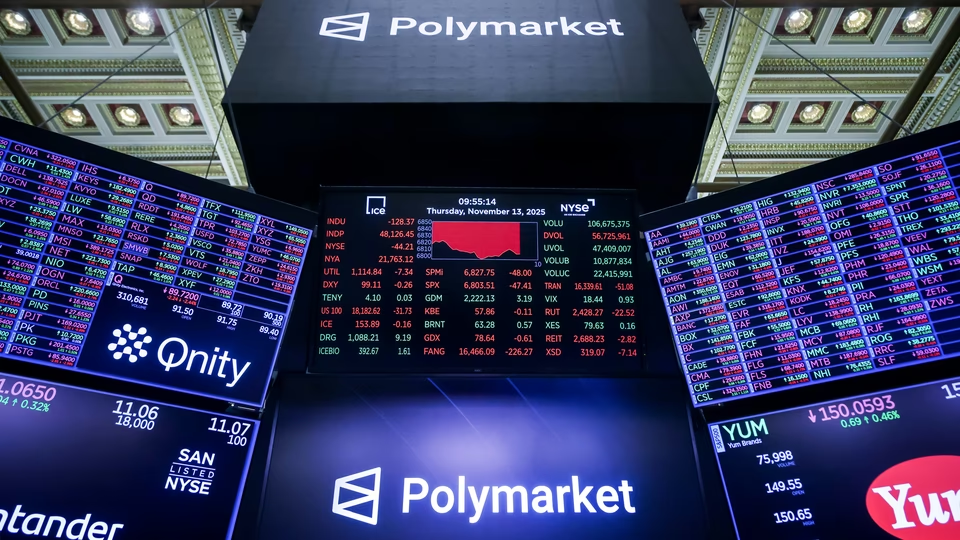
Democrats are escalating their crackdown on prediction markets after a controversial Polymarket trade tied to a U.S. military operation raised fresh concerns about insider trading, illegal gaming, and national security risks.
Sen. Catherine Cortez Masto (D-NV), joined by more than a dozen Democratic colleagues, has formally demanded answers from Commodity Futures Trading Commission Chair Michael Selig on how the agency plans to police fraud, manipulation, and insider trading in event-based markets. The letter, sent earlier this month, comes on the heels of reporting that trading activity around Venezuelan President Nicolás Maduro’s downfall surged just hours before his capture was publicly announced.
The Polymarket Trade That Changed the Conversation
According to the senators, a newly created Polymarket account wagered roughly $30,000 on Maduro being removed from power only six and a half hours before news broke that U.S. Special Operations Forces had detained him. The trade ultimately paid out more than $436,000. Even more alarming to lawmakers, Polymarket opened a new contract around 3 a.m. Saturday, roughly 90 minutes before President Trump’s official announcement, asking whether Maduro would be in U.S. custody by January 31. That market alone drew $1.3 million in volume.

To Democrats, it’s a flashing red warning light. In their letter, lawmakers argue the episode underscores how prediction markets can be exploited as vehicles for insider trading, particularly when contracts are tied to military operations or sensitive foreign policy developments. Those risks, they say, extend beyond gambling integrity and into national security territory, potentially exposing classified information to foreign adversaries like China or Russia.
Lawmakers were careful to contrast prediction markets with regulated sportsbooks, which operate under strict integrity monitoring requirements and routinely alert regulators to irregular betting patterns. Prediction markets, by comparison, lack those established safeguards. While some platforms claim to prohibit insider trading, Democrats argue enforcement remains unclear and inconsistent.
The senators also leaned heavily on existing law, noting that the CFTC is explicitly barred from allowing event contracts that constitute gaming. They cited the agency’s own interpretation of the Dodd-Frank Act, which states that Congress intended to prevent gambling through futures markets and protect the public interest from gaming activity. Allowing prediction markets to operate in a gray area, they argue, violates both the letter and spirit of the law.
Players trust our reporting due to our commitment to unbiased and professional evaluations of the iGaming sector. We track hundreds of platforms and industry updates daily to ensure our news feed and leaderboards reflect the most recent market shifts. With nearly two decades of experience within iGaming, our team provides a wealth of expert knowledge. This long-standing expertise enables us to deliver thorough, reliable news and guidance to our readers.
Latest News