New Virginia Bill Targets In-State College Sports Betting With Heavy Tax

Virginia lawmakers are once again reexamining the state’s sports betting framework, this time with a proposal that would fundamentally change how college sports wagering works inside the Commonwealth.
House Bill 1527 (HB 1527), introduced on January 29, would allow legal betting on in-state NCAA Division I college teams, carving out a narrow exception to Virginia’s long-standing prohibition. The bill is currently pending before the House General Laws Committee and remains early in the legislative process.
If passed, HB 1527 would place Virginia among a growing group of states allowing wagers on local college programs, though it does so under a uniquely aggressive tax model.
What HB 1527 Would Change for Virginia Bettors
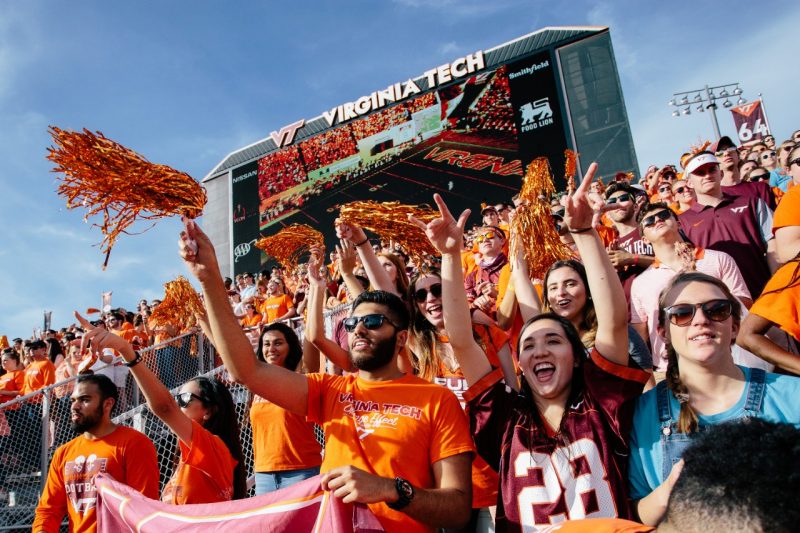
Under current law, Virginia prohibits wagering on in-state college teams, meaning bettors can’t legally wager on UVA, Virginia Tech, or VCU even in national tournaments.
HB 1527 would change that by allowing wagers on Virginia colleges competing in NCAA Division I, limited strictly to game-level bets:
- Moneylines
- Point spreads
- Game totals
Proposition bets remain fully banned. The bill explicitly states that “no person shall place or accept a proposition bet on college sports.” Bets on youth sports and non–Division I schools stay prohibited, with violations treated as a Class 1 misdemeanor.
The proposal also lets sports governing bodies request restrictions on wagers that present “significant and unreasonable integrity risk.”
A 50% Tax Rate That Changes the Conversation
What truly separates HB 1527 from other states’ policies is its high tax rate.
While Virginia’s current sports betting tax is 15%, the bill would impose a 50% tax on gross revenue from in-state Division I bets, one of the highest rates applied to any sportsbook market in the country.
Key financial provisions include:
- 50% tax on in-state Division I betting revenue
- 100% of that revenue directed to college athletics
- Creation of an NCAA Division I Sports Betting Fund
- Distribution based on how much each program generates
Supporters argue this structure reinvests directly into Virginia athletics. Critics warn the steep rate could discourage operator participation and reduce market competition.
Why the Bill’s Fate Depends on a Gaming Commission
Even if HB 1527 passes, it won’t take effect immediately. The legislation is contingent upon establishing a Virginia Gaming Commission or similar agency to oversee statewide gambling.
That requirement ties HB 1527 to broader reform measures already moving forward. Senate Bill 195, formed by merging SB 558, has advanced unanimously out of committee, while the House version, HB 271, remains in the General Laws subcommittee.
If enacted, a consolidated commission would take over responsibilities currently split between multiple agencies.
HB 1527 arrives as states reconsider college sports wagering amid increased pressure from the NCAA, which is pushing for limits on player prop bets after recent integrity concerns. The bill represents a middle-ground approach by expanding access to in-state college betting while keeping prop bet restrictions intact.
Players trust our reporting due to our commitment to unbiased and professional evaluations of the iGaming sector. We track hundreds of platforms and industry updates daily to ensure our news feed and leaderboards reflect the most recent market shifts. With nearly two decades of experience within iGaming, our team provides a wealth of expert knowledge. This long-standing expertise enables us to deliver thorough, reliable news and guidance to our readers.
Latest News