CEO Special: Dr Jennifer Shatley – Testing the limits

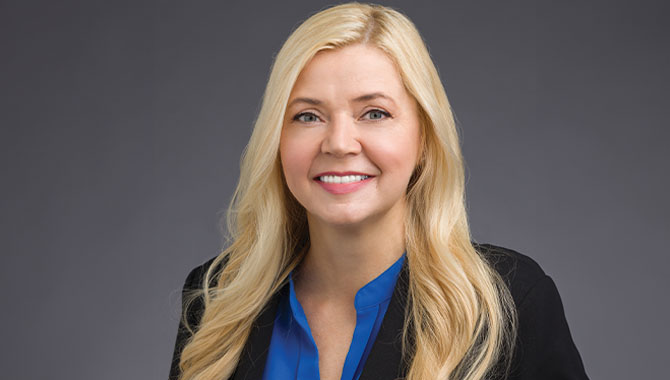
Executive Director of the Responsible Online Gaming Association, Dr Jennifer Shatley, also President of the Nevada Council on Problem Gambling, speaks to Gaming America about a career of firsts, her role in revolutionizing RG & what’s next for the field.
Growing up in a Tennessee town so small it only has one traffic light, Jennifer Shatley has gone on to trailblaze some of the most important initiatives in responsible gaming history. If that doesn’t scream the American dream, we don’t know what does! Now residing in Las Vegas for the past 25 years, Shatley is a long way from her southern roots – however, when discussing responsible gaming (RG), her disposition remains as energetic as the day she left home.
“Growing up in a very small town about an hour north of Memphis, life was very rural and agricultural. It was a nice place to grow up, but I had my sights set on something bigger,” she tells Gaming America. Like many others, Shatley didn’t find gaming as much as it found her.The summer before leaving for college, Shatley worked on a factory line for a company that pressed magazines – but she quickly moved on to study for her undergraduate degree in English Literature and then Pre-law. Looking back on her studies, Shatley recalls, “I had actually always thought I was going to be an attorney.”
Two truths and a lie…
Following her bachelor’s degree, Shatley’s law aspirations were well on track, as she was then accepted into Law School at Louisiana State University (LSU) in Baton Rouge. Though, her education came to an abrupt pause. “I was unfortunately the victim of an aggravated battery while I was at law school, which meant that I had to drop out of school.That essentially ended the law school career. My intent was, in fact, to sit out for a year and then go back to school and just start over. I had an agreement with LSU to do that based on the circumstances of what happened. Before I knew it, I moved back to rural Tennessee and the only job I could get was at a sausage factory where they actually make sausage!”
Discussing this challenging period, Shatley handles the subject with a smile and comedic grace, “It was tough at the time, but now when I play two truths and a lie, nobody ever believes that I lost teeth in a bar fight – or that I worked in a sausage factory…” She continues, “Still, I could not see myself doing that for a year before going back to law school. I ended up going to Knoxville to get a graduate degree in communications.Again, the course was writing intensive and very focused on research. Ultimately, all of that was what led me into my career. I graduated from Knoxville and was going to go back to law school. However, what actually happened was I moved to Memphis, and a friend of mine worked at Harrah’s, headquartered in Memphis – and I landed a research role.”
Bright lights, big city
Shatley worked in the research role at Harrah’s for two years before, in 1999, the company decided it was set to relocate to Las Vegas. “Honestly, I wasn’t sure about Vegas. I went for a visit. That was part of the package of trying to get people to move as they sort of had everybody go and experience it. I didn’t see myself here and I moved back to Louisiana.
I was, again, going back to law school but, when I got to Louisiana, I realized I didn’t really want to go back to law school. Harrah’s was calling me trying to get me to come back into the research role with a promotion that was too good to turn down, so I moved. I’ve been in Vegas for 24/25 years now and can’t imagine anywhere else.”This is how the Vegas story started for Shatley.
Shortly after her relocation, the research role she held at Harrah’s was altered by something that would go on to change the face of the industry forever. In 2000, Harrah’s developed something called a Code of Commitment – which was an ethical statement pertaining to gaming company operations. The operator also developed an entirely new role around the code – and duly offered it to Shatley.“Basically, the Code of Commitment was social responsibility back when social responsibility didn’t exist. It detailed commitments to our employees, to our customers, to our communities and to the environment. The new role was running all the aspects of that, and I think having a research background and being very data-driven made me the obvious choice. When I came into the role, I did a gap analysis to see where the opportunities were and where we could be doing more. Everything pointed towards responsible gaming. That’s what led us on this journey doing a lot of industry firsts in the area. We were just trying to expand our knowledge and looking at how we could approach responsible gaming better. Eventually, that’s how the role morphed specifically into responsible gaming.”
The early days of RG
Once Shatley stepped into her new research position, her work around the Code of Commitment began to change into a role that was purely centered around responsible gaming. This wound up being the position she would hold for the longest in her career to date. In her 13 years as VP of Responsible Gaming Policies and Compliance at Harrah’s (later Caesars), Shatley would launch the industry’s first-ever responsible gaming TV campaign, patent the industry’s first-ever enterprise-wide responsible gaming IT application and much more.
However, Shatley recalls that, at the beginning of the process, she didn’t have a whole lot of inspiration to work with. “Mostly what was being done across the industry was if someone said the magic words, ‘I have a gambling problem,’ you gave them a brochure, and that was all you did in the day because nobody really knew anything beyond that. The research was very young. Programs were very young. The first RG program in the industry was, actually, created by Harrah’s in 1989. All of the regulations that came after were based on that original program, but they weren’t really robust.
I think that considering there wasn’t much to work with at the start, I’m proud of being something of an innovator. However, I was also fortunate enough to work in a company that allowed me space to explore – especially in an area that wasn’t a revenue generator.” After stepping into the role around the turn of the millennia, Shatley and her team worked tirelessly on the development of new initiatives to introduce to the industry.
In 2003, however, when the initiatives were ready for implementation, they were met with disapproval from some. “Quite frankly, it was somewhat controversial at the time. We got pushback from operators and some others in the industry who thought it wasn’t appropriate. “I remember one campaign in particular – strangely – was that, at Caesars we had the World Series of Poker (WSOP). All the WSOP footage was broadcast all over ESPN and we wanted to run our RG ads during the series but the parent company, Disney, didn’t allow us to run our ads because they were gambling ads.
However, they were airing poker? So that was an interesting controversy, not being allowed to run RG advertisements because gambling ads weren’t allowed at a poker tournament…” Undeterred, Shatley pushed her initiatives through and began working on the idea that responsible gaming should be approached as part of the overall customer experience.“Something I also learned early on, which may seem obvious now, was the psychological nature of the whole issue. There was a fascinating project we did in which we had our CEO do a message around RG. We also then had different employees talk about why it was important to them and how it affected their roles – everybody was involved, from security to a dealer to a housekeeper.
Then, when we tested the card dealer’s ad with consumers, there was a split-second moment where he spread cards across the felt on the table. It was barely perceptible, the camera was on his face, and he just did it because he was doing his job. That second of footage, we found, took everybody in the focus group completely away from the RG message and made them think about gambling. From that point on, we knew how much we had to really draw focus on consumer behavior, too.”Then, in 2005, Harrah’s acquired Caesars Entertainment in what was, at the time, the gaming industry’s largest ever acquisition. The buyout was valued at around $9bn and later resulted in the complete re-branding of Harrah’s in 2010.
The birth of the RG Ambassador
Despite the enormous external change, business on the inside remained as innovative as usual – and the idea of integrating responsible gaming initiatives as part of general service birthed the idea of an RG Ambassador. “We thought that RG should just be a component of customer service. How you treat guests, how you take care of guests – responsible gaming should be part of that. The ambassadors were designed to check in with people and this initiative was really one of the first steps in what we would now call risk identification.”
2005 turned out to be a busy year in the history of Caesars, as the organization pioneered the first ever company-wide self-exclusion list, with Shatley at the helm and heart of the operation. “When we implemented the self-exclusion list, we had worked on technology that was not only designed to track concerning behaviors, but also to make sure that if someone was excluded, they were excluded across every brand we operated. That included any properties or brands we operated in the US or Canada. It was a very big undertaking.”
Dr Shatley’s influence
Shatley’s early years at Caesars/Harrah’s were hugely influential to the gaming industry – and an uncountable tally of individual lives. The issue of addiction, in all its forms, touches so many lives across the globe. Dr. Shatley took the opportunity to share how these issues have impacted her own life – and the influence behind some of her professional motivations.“When I was 13, my 17-year-old sister was killed by a drunk driver. Sadly, it wasn’t his first offense nor his last. Obviously, this experience had a profound effect on my life and, I think, influenced my career choices to try to be an advocate within the gaming industry; to promote responsible practices and provide protections and prevention measures. It’s also why I’m passionate about this field and find the work I do incredibly fulfilling.”
During her tenure at Caesars, Dr Shatley pioneered underage gambling prevention, responsible service of alcohol and unattended children initiatives. She launched the first-ever televised responsible gambling awareness campaign alongside the aforementioned responsible gaming IT identify, track and maintain company policy. Her responsible gaming training was received by over 100,000 employees and her brand-wide responsible gaming policies of enhanced identification and surveillance were implemented across 50+ Caesars properties globally. Between 2001 and 2013, Shatley also joined the Advisory Board of the National Council on Problem Gambling, Board of Directors of the Nevada State Council on Problem Gambling, Board of Directors for the National Center for Responsible Gaming, held multiple roles on state Problem Gambling Advisory Committees and more.
Life after Caesars
Moving on from her VP role at Caesars after 13 years in 2014, her work was far from finished. “When I left, I wanted to leverage all the expertise and experience I had gained from other companies and in other organizations. Caesars was a leader; we had done a lot of those things first, but I felt my expertise and that experience would benefit other organizations who were looking to expand their own RG programs. That’s really what I wanted to do.”
In 2013, Dr Shatley was also appointed as the President of the Nevada Council on Problem Gambling. Two years later, she also aided in the creation of Logan Avenue Consulting – a firm which serves purely as a responsible gaming advisor. “I was fortunate that I got to work with the AGA, I got to work with lots of other operators. I got to work with problem gaming councils, I got to work with research organizations. Overall, I got to do a wide variety of things. That was interesting to me.
The most exciting was leading the RG strategy in Japan for Caesars when they were interested in that market in around 2017; that was incredibly exciting. I did that for about 2.5 years, I was Vegas-based but I would go about every other month. It’s a beautiful country. I absolutely love it. “That experience was both interesting and important in particular because I was dealing with a lot of government officials in Japan. Subsequently, that really piqued my interest in public policy and especially around RG.
That’s what, in fact, led me back to academia. When I came back from the Japan role, I applied at the University of Nevada-Las Vegas (UNLV) to get my Doctorate in Public Policy.” Despite studying for her Doctorate, Shatley continued her RG advocacy work on a number of fronts. However, she also held the unique experience of studying through the Covid-19 pandemic. She reflects, “Actually, it was a good time to go to university. My business slowed down and I had the time to devote to it.
I also worked at the International Gaming Institute for the entire time I was at UNLV. I was their consulting lead for RG. That led to many interesting projects, the most interesting of which was working with a Tribal operator. We were looking at how you can culturally adapt RG programs for a tribal culture? That was fascinating.”
The Responsible Online Gaming Association
Now, with over 25 years’ worth of experience in RG innovation, Shatley has been selected to lead another unprecedented initiative as the Executive Director of the Responsible Online Gaming Association (ROGA). The Association’s initial member companies represent 85% of the legalized online sports betting and iGaming industry.Therefore, ROGA is a singular responsible gaming organization of an unprecedented scale and has brought together some of the largest players in the global gaming industry. Shatley said the Association’s formation prompted her to think about her early days in responsible gaming and exactly how far the sector had come.
“Thinking back to the ad campaign, it was the very first RG initiative with no marketing message at all – it was just saying, ‘if you’re not in control, don’t gamble and call someone for some help.’ Essentially, what it was saying was if you have a problem, this is what you should do about it. Nowadays, we’re seeing ads that are very clever and will have celebrity athletes talking about how to utilize the tools and they’re talking about preventative self-measures as they should be.
I think what we’re going to hopefully see moving forward is a more holistic view of the customer across different platforms. We want to see the industry work together and help promote responsible gaming, to help push initiatives forward.” With such an extensive array of experience, being asked to pick a singular moment she remembers fondly is always going to be a difficult question to answer. Shatley takes her time – and her conclusion is a definitive two-pronged approach.
“I think the creation of the RG ambassadors was truly fascinating because, quite frankly, it was so hard to know how to operationalize that. It’s one thing to theorize a professional who goes around talking to guests, to try and motivate behavioral change. Actually, operationalizing it? That was difficult. The idea that we truly relied on and, in the end, rightfully so, was the idea that hospitality employees are simply very good at customer service. We wanted to tie the idea of RG ambassadors in with the skills they already had – and it was quite effective.
“The other thing I’m always excited about is technology. Especially within such a large- scale operation like Caesars, we had to constantly integrate new technology just to maintain the enterprise solution we had built that housed all of the RG data, as well as then integrating that data into every single system. What was great was that we were able to achieve that on a large scale because we were a huge company. To be part of operationalizing that across statewide and even international jurisdictions, it was quite a feat.”In March of this year, the Responsible Online Gaming Association was founded with Shatley at the helm. The Association looks to explore a variety of initiatives around responsible gaming in the modern technological industry. It is still early days, but six months on from its formation the future is looking bright.
The wish list for today
An inherent feature of the gaming industry is continuous evolution. The responsible gaming sub-sector is no different. The face of responsible practices, how they are promoted, perceived and received within the industry is almost unrecognizable when compared to 25 years ago – when Shatley first began her advocacy work in the area. Her role within this evolution has been pivotal. In many ways, addressing responsible gaming in the modern technological landscape is sure to be an entirely different ball game to what it may have been in the 2000s. However, some of Shatley’s earliest initiatives remain in the works today.
“When we started working on the self- exclusion list at Caesars, we immediately recognized how great it would be if we could take it one step further. Now, we’ve long talked about a self-exclusion list being across both national jurisdictions in the States and international jurisdictions across the globe. Nobody has successfully gotten there on a large scale. That’s very much on the wish list for today.
“That, then, is one thing I’m really excited and proud about working on with ROGA. It is one of the first things we are looking to do with the data clearing house: to share the self-exclusion lists across all our member companies – BetMGM, bet365, DraftKings, Fanatics, FanDuel, Bally’s, Hard Rock and Penn. With such influential companies on board, we can start working towards that goal.” The Responsible Online Gaming Assocation is keeping Shatley as busy as ever and, from the outside, looks to be representative of the desire to further responsible gambling’s progress.
“We’re now in the phase where we’re close to launching initiatives that were named as our key pillars of focus. Fortunately, they are coinciding with Responsible Gaming Education Month in September. We’re looking forward to pushing those forward. From the start, it’s been collaborative; our operator members are very supportive. They’re interested in learning more; they’re interested in evolving our programs. There’s been an overwhelming response to the organization and a lot of excitement about how we’re going to move things forward. That’s what excites me the most, pushing the boundaries of where we can take RG next. Testing limits, that’s what we’re here to do.”
I think that considering there wasn’t much to work with at the start, I’m proud of being something of an innovator.Disney didn’t allow us to run our ads because they were gambling ads, However, they were airing poker? So that was an interesting controversy…Mostly what was being done across the industry was if someone said the magic words, ‘I have a gambling problem,’ you gave them a brochure, and that was all you did…
Players trust our reporting due to our commitment to unbiased and professional evaluations of the iGaming sector. We track hundreds of platforms and industry updates daily to ensure our news feed and leaderboards reflect the most recent market shifts. With nearly two decades of experience within iGaming, our team provides a wealth of expert knowledge. This long-standing expertise enables us to deliver thorough, reliable news and guidance to our readers.
Latest News