Kalshi Plans to Pry Into Users’ Professional Lives at the Risk of Alienating Its Core Users
Kalshi wants to know where its traders work. Its crypto-native user base may have strong feelings about that.
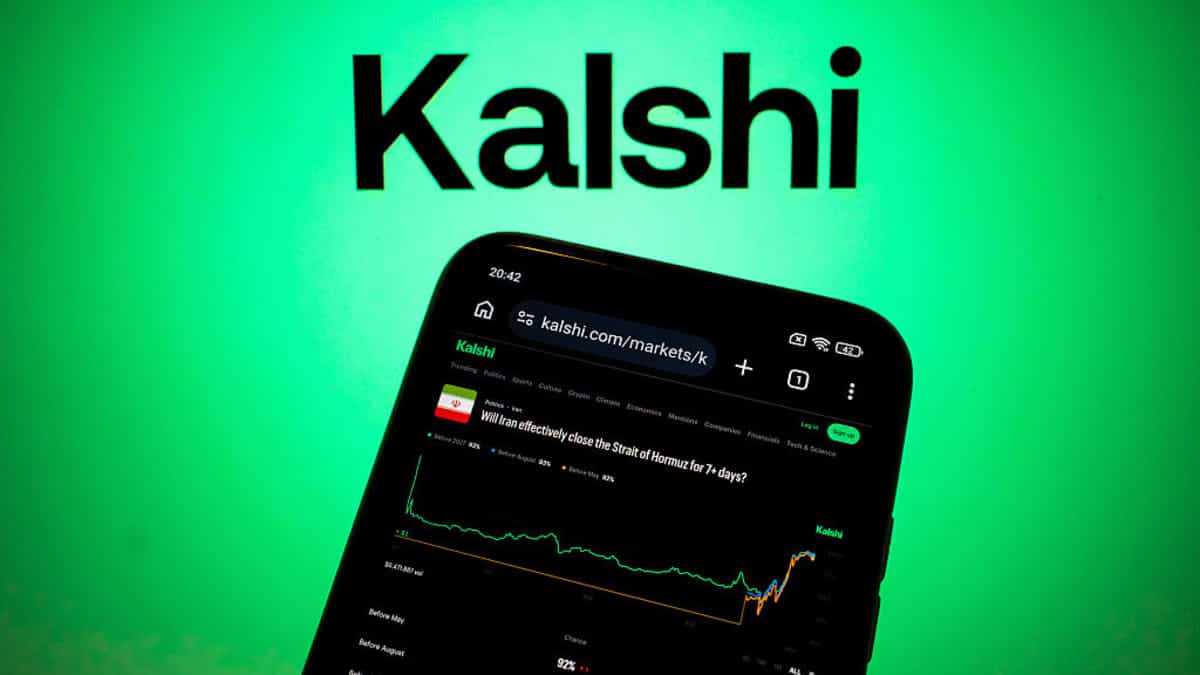
Kalshi announced Tuesday a set of market integrity measures that represent the most significant expansion of its compliance infrastructure since the platform launched. The changes include a risk-scoring system assigned to every proposed market before listing, employment-verification requirements for traders in markets with elevated insider-trading risk, and enhanced whistleblower tools that allow users to report suspicious activity directly from individual market pages. Prediction Market compliance continues to tighten, and this is the latest move in the chess match.
In Q1 alone, Kalshi opened more than 150 investigations, blocked more than 100 potential insider trades, and referred more than 20 cases to law enforcement. The measures are a reasonable response to a genuine problem.
Prediction markets have had an insider trading issue since the moment they became large enough to attract serious money, and the Santos case made that problem impossible to ignore at the political level. Kalshi is doing what a regulated exchange is supposed to do when regulators and Congress start paying attention. But these specific measures, which will request information about users’ personal lives, may alienate its core user base.
Prediction Markets’ Core Culture Aligns More With Decentralized Activity
The employment verification requirement means traders in certain high-risk markets must submit information about their employers before placing orders. Kalshi says it won’t cross-check submitted employment data unless a probe is opened, but a trader’s workplace could entirely disqualify them from participating in a given contract. A Google employee wanting to trade on a Google-related market is the example the company offered. The logic is clean, and with a very specific recent headline that mimics this, it’s not entirely off the wall. The execution requires handing a federally regulated platform information about where you work, which the CFTC can request at any time.
One significant issue here is that prediction markets substantially grew their user base through the crypto community. That overlap is not incidental and remains prevalent. The same appetite for decentralized, disintermediated financial activity that drove people into Bitcoin and Ethereum also made Polymarket and Kalshi attractive. Crypto culture is, among other things, a culture organized around the principle that financial activity should be private, permissionless, and insulated from government reach. The idea that you might need to tell a CFTC-regulated exchange where you work before placing a trade is almost a parody of what that community signed up to avoid.
Kalshi is not Polymarket when it comes to regulation. It has always been the more-regulated, compliance-forward platform, the one that fought for CFTC licensing precisely because it wanted to operate inside the system rather than around it. Its user base presumably knew that going in. But knowing a platform is regulated and being asked to submit employer data are different things, and the gap between them may produce some friction.
The Santos Case Made This Type of Regulation Politically Unavoidable
The immediate catalyst for Tuesday’s announcement is not hard to identify. Kalshi flagged and froze George Santos’ account after detecting suspicious bets tied to whether he would attend Trump’s State of the Union address in February. Santos had publicly announced he would attend, while allegedly betting he would not. He did not attend, and the trades moved in his favor. Kalshi referred the matter to the DOJ and the CFTC.
Santos was, at the time, working in an influencer capacity for Polymarket, having been released from federal prison after Trump commuted his sentence on fraud charges. Trump Jr. is listed as a strategic advisor to Kalshi and has invested in Polymarket through his venture capital firm.
The political geometry here is awkward in ways that compound quickly. The CFTC under the Trump administration has been an aggressive advocate for prediction markets, suing states that tried to block them and treating Kalshi’s federal licensing as a shield against state interference.
That same CFTC is now investigating a Trump ally for insider trading on the platform its political principals have championed. The agency’s enforcement director has said insider trading in prediction markets is the CFTC’s top priority, that the myth it is permissible is “wrong,” and that the agency will pursue it vigorously. That pledge sits uncomfortably alongside an administration whose political identity is substantially built around the people most likely to test its limits.
The CFTC is Attempting to Fight for Prediction Markets While Policing Them
There is a broader tension underneath all of this that the Santos case brings into focus. The Trump coalition has two competing impulses that prediction markets expose directly. One is the laissez-faire instinct: markets should be free, regulators should get out of the way, and financial activity should be permissionless. The other is the loyalty enforcement instinct: the apparatus of government should protect allies and pursue enemies. Those two things cannot coexist cleanly on a prediction market platform, where the market’s integrity depends precisely on its indifference to political relationships.
For now, the CFTC is trying to hold both positions simultaneously. It champions Kalshi’s right to operate free from state interference while prosecuting insider trading cases on the same platform, as it seeks to gain legitimacy. That balance probably holds as long as the cases stay relatively small and the political embarrassment stays manageable. The Santos investigation is not small, but it is not yet the kind of episode that would force a sudden policy reversal. Another added layer to this is Trump’s DOJ and how hard they’ll come down on a Trump ally, one who Trump has already gotten out of prison once before.
The prediction markets industry has been operating in something close to a regulatory golden age: a sympathetic federal regulator, a hostile posture toward state-level interference, and a political tailwind from an administration with financial ties to the major platforms. Kalshi’s new compliance infrastructure is, among other things, an attempt to extend that golden age by demonstrating that the industry can police itself before Congress or the CFTC is compelled to do so.
The Santos case is unlikely to be the last time a politically connected figure turns up in a prediction market integrity investigation. Each time it happens, the contradiction between the administration’s two impulses gets a little harder to manage. Kalshi is building surveillance infrastructure to get ahead of that problem. Its crypto-native users are now being asked to fund that infrastructure with their employment data. How that trade-off lands inside a community that has always valued privacy over compliance is a question the platform has not yet had to answer at scale, but the wheels are certainly in motion.
Players trust our reporting due to our commitment to unbiased and professional evaluations of the iGaming sector. We track hundreds of platforms and industry updates daily to ensure our news feed and leaderboards reflect the most recent market shifts. With nearly two decades of experience within iGaming, our team provides a wealth of expert knowledge. This long-standing expertise enables us to deliver thorough, reliable news and guidance to our readers.
Latest News