

Opinion: Kalshi Asked Its Influencers to Delete Election Fraud Posts, And That Admission May Cost More Than the Posts Did
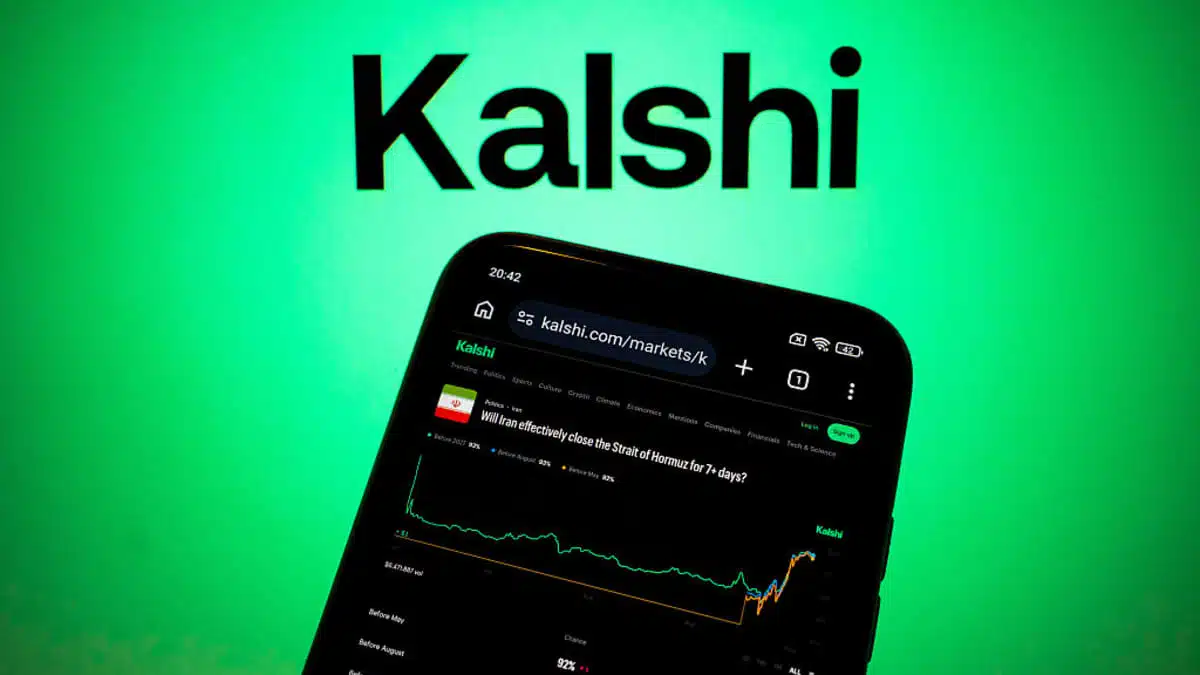
Kalshi asked its influencers to delete the posts. That decision may have revealed more than the posts themselves did.
The Los Angeles mayoral primary generated more than $40 million in trading volume on Kalshi before polls closed on June 3, making it the largest local political market in the platform’s history. Most of that volume was driven by traders backing Spencer Pratt, the former reality TV star whose celebrity candidacy attracted a level of speculative interest that had no real precedent in municipal politics. By any commercial measure, the race was a significant success for Kalshi.
Then some of its paid influencers started posting election fraud conspiracy theories while labeled as paid partners, and Kalshi had to ask them to take the posts down.
Gunther Eagleman, a right-wing influencer with 1.7 million followers on X, published multiple posts claiming the Los Angeles mayoral election was being stolen from Spencer Pratt, embedding Kalshi prediction market odds alongside questions like “Is CA cheating to get Spencer Pratt out?” The posts were labeled as paid partnerships with Kalshi. They were seen by hundreds of thousands of users. Kalshi subsequently told Semafor it had asked the users, including Eagleman, to remove the posts, and when Semafor checked, all three were gone.
Kalshi did the right thing by pulling them. That part is not really in dispute. The larger point in play is what the act of pulling them reveals and says about Kalshi as a neutral exchange.
Neutral Exchanges Don’t Have Editorial Standards And Kalshi Just Crossed That Line
Kalshi’s central regulatory argument, the one underlying its lawsuits against state attorneys general and the CFTC’s suits on its behalf against Illinois, Arizona, and Connecticut, is that it is a federally regulated financial exchange that accepts trades on event contracts. It provides price discovery, and it is simply infrastructure, not a publisher, not a sportsbook, not a media company with opinions about what its distribution partners should say. That argument is easier to make when you are not asking influencers to delete posts.
Kalshi’s request that influencers remove the posts confirms that the platform retains editorial control over paid political messaging it previously disclaimed. A neutral exchange does not curate its promotional content and certainly does not maintain a network of hundreds of paid social media partners, then selectively enforces standards on what those partners can say while carrying its branding. Those are things that publishers do. Media companies do them. Platforms with reputational skin in the game do them.
None of this means Kalshi was wrong to build an influencer program, or wrong to pull the posts. The problem is the contradiction between the two positions it needs to hold simultaneously: that it is a passive market infrastructure for regulatory purposes, and an active, managed promotional operation for growth purposes.
The Influencer Program Is the Marketing Growth Strategy, It Could Also Be a Major Issue
Kalshi and Polymarket have enlisted hundreds of paid influencers to share odds, stirring up interest in trading on outcomes ranging from sporting events to political races to odds on public figures saying certain words. This is not incidental to how prediction markets have grown. It is substantially how they have grown.
The LA mayoral market is a useful case study in why. Our earlier coverage found that the bulk of the $40 million in trading volume was concentrated on Pratt specifically, driven in large part by the same right-leaning media ecosystem that made him a celebrity candidate in the first place. Pratt’s campaign attracted national conservative attention, which flowed through influencer networks, and Kalshi’s paid presence in those networks converted some of that attention into trading volume. The influencer machine worked as intended.
Until it produced content that Kalshi could not stand behind. When the vote count started shifting away from Pratt as mail ballots came in, the same influencer pipeline that had been amplifying Pratt’s odds started amplifying claims that the election was being stolen. Those posts were branded with Kalshi’s name. That is when the editorial function that Kalshi officially lacks became necessary.
Will Regulators Notice or Care that Kalshi Isn’t Operating as 100% Neutral?
This episode probably will not change the outcome of any pending litigation on its own. The preemption fights in federal court turn on the Commodity Exchange Act, not on influencer marketing practices.
But it does add texture to the broader argument opponents of prediction markets have been making: that these platforms are not the neutral, information-producing markets they describe themselves as. They are commercial operations with significant financial interests in driving engagement, and the influencer programs are evidence of that. A platform paying right-wing media figures to promote its odds on a local political race, during that race, is doing something more active than price discovery.
Republicans looked dominant in early election night results in the LA mayoral primary because voting patterns tend to have ballots counted first, and Pratt’s odds reflected that early. When the picture shifted, the influencer’s content shifted with it, in the worst possible direction. Kalshi caught it, asked for the deletes, and moved on. Gavin Newsom’s office criticized prediction markets for the episode anyway.
The platforms will argue, not unreasonably, that they cannot control every post from every partner in a network of hundreds. That is probably true, but it’s also self-created. It is also, in a roundabout way, an argument that a network of hundreds of paid political influencers is too large to supervise. Regulators and legislators who were already skeptical of prediction markets’ self-description as neutral financial infrastructure now have a concrete example of what happens when the growth strategy and the regulatory posture pull in opposite directions.
Kalshi handled the immediate problem. The larger question of whether a platform can be both a passive exchange and an active promotional machine remains open. This week did not help answer it in Kalshi’s favor.
Players trust our reporting due to our commitment to unbiased and professional evaluations of the iGaming sector. We track hundreds of platforms and industry updates daily to ensure our news feed and leaderboards reflect the most recent market shifts. With nearly two decades of experience within iGaming, our team provides a wealth of expert knowledge. This long-standing expertise enables us to deliver thorough, reliable news and guidance to our readers.
Latest News