Political Clash Deepens as Minnesota Pushes Prediction Markets Ban Despite Federal Threat
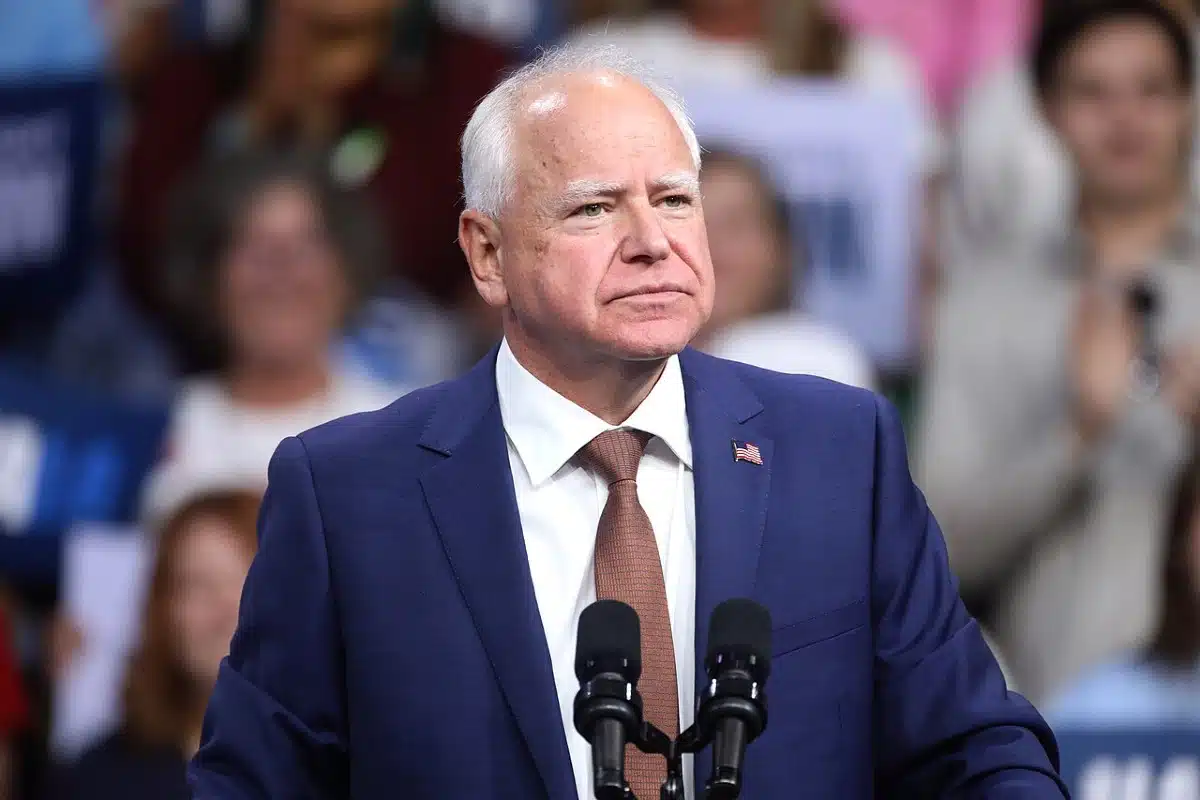
Tim Walz. Credit: Gage Skidmore/Wikimedia Commons
Minnesota’s Senate Commerce Committee voted this week to advance SF 4511, a bill that would make operating prediction markets in the state a felony punishable by up to five years in prison, a $10,000 fine, or both.
The bill directly targets operators like Kalshi and Polymarket, which have become extremely popular over the past year. State Sen. John Marty authored the legislation and stated during Tuesday’s hearing that he believes prediction markets are for sports betting, not financial instruments. He told the committee that if prediction market platforms want to legalize what they’re offering, “they should come in here and propose what kind of protocols they want.”
Minnesota lawmakers aren’t operating in a vacuum. A couple of weeks before the committee vote, the CFTC filed simultaneous lawsuits against Arizona, Nevada, and Illinois. These are three states that have issued cease-and-desist orders to prediction market operators.
Two weeks ago, the federal government took states to court over prediction markets for the first time. It sends a strong message to every other state watching the situation unfold. They know that if they pass a ban, then they’ll hear from the CFTC. Minnesota’s lawmakers decided to advance SF 4511 despite this looming and implicit threat.
The Federal Argument for Prediction Markets
The CFTC is on record as saying that the Commodity Exchange Act gives the agency exclusive authority over event contracts that trade on CFTC-registered designated contract markets. CFTC Chair Michael Selig has argued that state gambling statutes are invalid.
Courts have delivered mixed opinions on this argument.
The fact that Donald Trump Jr. serves as a strategic adviser to both Polymarket and Kalshi complicates the issue. Several committee members and opponents of the platforms use this to claim that the federal intervention relates to political favoritism.
“The Trump administration is recycling industry arguments that have been rejected in district courts across the country,” Connecticut Attorney General William Tong said.
Minnesota’s Argument
The committee heard on Tuesday about Kalshi’s advertising in Minnesota, which states that it’s the “first app for legal sports betting in all 50 states,” which contrasts to their claim that they’re not gambling operations at all, despite advertising themselves as sportsbooks.
State Sen. Jordan Rasmusson said that their marketing department disagrees with their legal department. He went on to say that, using the legal department’s logic, “they could set up a roulette table and have a prediction market on red or black.”
The bill in Minnesota is deliberately broad, covering bets on athletic events, elections, deaths, acts of war, legal proceedings, weather, and certain words that a public person might say.
The bill also creates strict liability for both the platform operators and anyone facilitating a prediction market. This would include listing event contracts, processing payments, providing data or verification services, or advertising these platforms.
A Senate counsel summary is careful to note what the bill doesn’t do. It preserves existing exceptions for legitimate securities and commodity futures contracts, as well as a carveout for insurance contracts.
The Walz Factor
Minnesota has spent the better part of the past year in a political confrontation with the Trump administration, most of which has nothing to do with gambling regulation.
Gov. Tim Walz called the flooding of the state with federal immigration agents “a war that’s being waged against Minnesota.” He likened Immigration and Customs Enforcement (ICE) to “Trump’s modern-day Gestapo.”
The White House, Department of Homeland Security, and congressional Republicans responded with hearings, subpoenas, and escalating rhetoric.
Walz didn’t back down and refused to apologize for his Gestapo comparison. That political climate is relevant for SF 4511. Minnesotans have watched the clash between Gov. Walz and the Trump administration.
Polling shows that Democratic voters view standing firm against federal overreach as welcome. State senators voting to advance a prediction markets ban, despite the threat of a federal lawsuit, could be seen as a badge of honor.
They decided to advance the bill and refer it to the Senate Finance Committee, knowing the potential consequences. It’s unclear which way the full House and Senate might go if SF 4511 makes it out of the Senate Finance Committee.
Image credit: Gage Skidmore/Wikimedia Commons (license)
Players trust our reporting due to our commitment to unbiased and professional evaluations of the iGaming sector. We track hundreds of platforms and industry updates daily to ensure our news feed and leaderboards reflect the most recent market shifts. With nearly two decades of experience within iGaming, our team provides a wealth of expert knowledge. This long-standing expertise enables us to deliver thorough, reliable news and guidance to our readers.
Latest News