From the top: Crossing the wire
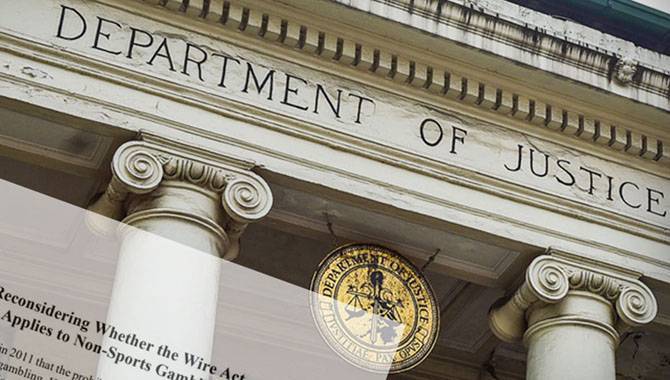
Tim Poole explains the DOJ’s Wire Act opinion reversal in layman’s terms
Plenty was said about the Federal Wire Act in January. Since the US Department of Justice (DoJ) reversed its opinion on the law, there’s been an array of analysis, some overreaction and some sheer misreporting.
What is the Wire Act?
The Wire Act was formed in 1961 and outlawed all interstate wagers placed – or information passed on pertaining to wagers – via telephone or wired communication facility. It was designed, first and foremost, to prevent match-fixing and collusion. John F. Kennedy was US President at the time and aimed to help the DoJ tackle organised crime and trafficking. Match-fixing, of course, is an issue North America’s major sports leagues are still nervous about in light of the repeal of the Professional and Amateur Sports Protection Act (PASPA).
In September 2011, the DoJ revisited the Wire Act and interpreted it as legislation which only applies to sports betting. But in its new opinion, issued on 2 November 2018 and made public last month, the DoJ revised that outlook, judging the law as applicable to all forms of gambling – including online casino, poker and lottery.
An excerpt from the original law shows why there is still lingering doubt as to what its language actually conveys:
“Whoever being engaged in the business of betting or wagering knowingly uses a wire communication facility for the transmission in interstate or foreign commerce of bets or wagers or information assisting in the placing of bets or wagers on any sporting event or contest, or for the transmission of a wire communication which entitles the recipient to receive money or credit as a result of bets or wagers, or for information assisting in the placing of bets or wagers, shall be fined under this title or imprisoned not more than two years, or both.”
In other words, it’s not exactly bedtime reading material.
How does this impact the PASPA repeal?
While the announcement has triggered a variety of different responses, the first note to emphasise is that the Wire Act focuses on interstate communications. That means gaming conducted within individual states, in theory, remains unaffected – as does sports betting within individual states.
The fact sports wagering was already covered by the Wire Act is the best example of this: states are free to legalise sports betting and will continue to be. As the DoJ deliberates over the Wire Act, the American Gaming Association (AGA) estimates as many as 15 states are getting closer to legalising sports betting. AGA-commissioned research also suggested $6bn would be wagered on this year’s Super Bowl.
What is affected?
Some analysts, meanwhile, claim there is nothing more to the DoJ’s new view except a moral victory for casino owner Sheldon Adelson and the Coalition to Stop Internet Gambling
Some analysts, meanwhile, claim there is nothing more to the DoJ’s new view except a moral victory for casino owner Sheldon Adelson and the Coalition to Stop Internet Gambling
Explore Our Trusted Gambling Resources
Discover essential guides to casino sites, betting platforms, and crypto casinos – updated for 2026.
Players trust our reporting due to our commitment to unbiased and professional evaluations of the iGaming sector. We track hundreds of platforms and industry updates daily to ensure our news feed and leaderboards reflect the most recent market shifts. With nearly two decades of experience within iGaming, our team provides a wealth of expert knowledge. This long-standing expertise enables us to deliver thorough, reliable news and guidance to our readers.
Latest News