
Why Mexican gaming is at a legal crossroads
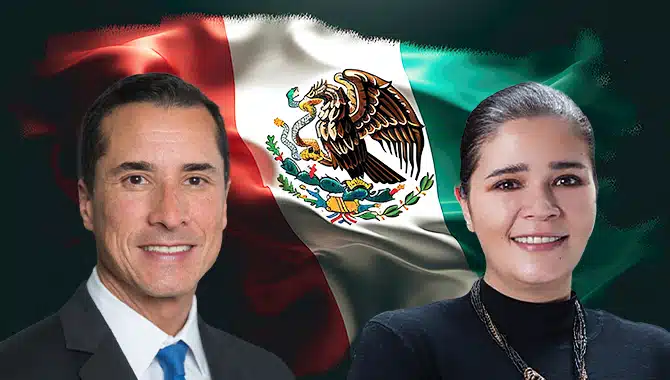
Alfredo Lazcano and Andrea Avedillo, of the Lazcano Sámano law firm, discuss recent intentions from the Mexican Government to potentially alter the nation’s gaming framework.
Less than a year into Claudia Sheinbaum’s Presidential term, the gaming industry finds itself in a state of anticipation once again. Like her predecessor, Andrés Manuel López Obrador, Sheinbaum has upheld the federal policy of not issuing new licenses for casinos and betting centers. However, she has respected the legal authority of the Ministry of the Interior to regulate, control and oversee games with bets in Mexico, which is now taking a more active stance. After years of legal ambiguity, uneven enforcement and a fragmented regulatory framework, there are growing indications that the Government may be preparing to redefine its role in the sector.
On May 20, 2025, Rosa Icela Rodríguez, Head of the Secretariat of the Interior (SEGOB), made a brief yet telling appearance during President Sheinbaum’s daily press conference. Her comments were significant for those following the regulatory evolution of gambling in Mexico, assuring that no new permits will be granted in the short term, and that authorities have been meeting with a group of casino owners to, among others, review the current legal framework.
While the announcement did not provide precise legal details, it marked a notable shift in tone. Rodríguez mentioned that a “proposal” – it was unclear if this would be in the form of a new law, an amendment or other administrative provisions – could be introduced as early as “September or October” of this year.
These statements, though high-level, suggest the beginning of a more structured and centralized effort to reform gaming regulation in Mexico. Whether this effort will translate into comprehensive legislative change or simply increased administrative oversight remains to be seen.
Is SEGOB stepping forward?
The apparent regulatory shift is reinforced by structural changes within SEGOB itself. On March 21 2025, the Office of the Presidency published a new version of SEGOB’s Internal Regulations in the Official Gazette of the Federation. The most consequential update for the gaming industry lies in the reorganization of the General Directorate of Games and Drawings, which is the specialized office inside SEGOB that issues permits, and the key authority responsible for overseeing gaming and drawings within Mexican territory.
Under the new regulations, the Dirección General de Juegos y Sorteos (DGJS) has been moved out of the “Undersecretariat of Government” and placed under the “Undersecretariat of Peacebuilding, Social Participation and Religious Affairs,” a subtle yet politically symbolic change, as the Government appears to be reframing gaming activities not merely as administrative or legal matter, but as part of a broader social agenda. By placing the DGJS under a branch focused on peacebuilding and citizen engagement, the shift suggests a recognition of gaming’s societal impact – noticeably, within the scope of public health, social cohesion or community wellbeing – and could signal an intention to adopt a more holistic, policy-driven approach to its regulation.
Moreover, the DGJS has been granted wider and more clearly defined powers under the regulations, of which some warrant mention herein:
i) The authority to propose to the head of the Undersecretariat for Peacebuilding, Social Participation and Religious Affairs the creation or amendment of legal instruments related to gambling and drawings.
ii) The coordination of efforts with other government authorities on matters concerning gambling and drawings, with an explicit emphasis on contributing to peacebuilding strategies.
iii) The analysis of technical or legal opinions issued by auxiliary or advisory bodies, within the framework of applicable gambling legislation.
These enhancements go beyond mere administrative updates as they reflect an institutional effort to professionalize the DGJS and reposition its role within a more policy-oriented and socially conscious regulatory framework. In particular, these changes could suggest that gaming is no longer perceived solely as a commercial activity requiring oversight, but rather as a public policy issue with implications for social order, interagency cooperation and legal harmonization.
On the other hand, it is worth mentioning that the regulations seem to be introducing a new legal terminology, for instance, the “digital platforms,” which is a term that is not defined either in the regulation itself or in the Federal Law on Games and Drawings and its regulations. However, let us not lose sight that this omission could mean some future updates to the regulatory provisions or criteria governing online gambling.
Optimism and skepticism
The changes may have sparked cautious optimism. For years, industry players have operated under outdated laws (notably the old standing 1947 Gaming Law and its regulations enacted in 2004) and administrative criteria that varied depending on political winds. The promise of modernization, transparency and alignment with international best practices is both welcome and necessary.
Yet the path forward is far from clear. Several pressing questions remain unanswered: Will the Government favor a full legislative overhaul or opt for piecemeal reforms through lower-level or secondary regulations? How will the existing operators be impacted? Will there be meaningful and open consultation with a wide diversity of stakeholders in our industry or only with a select few? In a country where rule of law and regulatory certainty are not always guaranteed, stakeholders have good reason to remain vigilant.
Industry at a crossroads
Mexico’s gaming sector stands at a crossroads. On one hand, there is an opportunity for overdue reform: An initiative that could foster sustained and clear public policies, fair competition, responsible gaming programs, an effective tax system, a culture of compliance and transparency, technological innovation and best industry practices in general. On the other hand, the threat of vague and contradictory announcements, limited transparency and inconsistent application of the law still looms. What remains essential is for the gaming industry to stay alert, organized and actively engaged in dialogue with policymakers. The months leading up to the potential September/October announcement will be critical.
In the meantime, we think that businesses should continue monitoring updates to the regulations, potential shifts in enforcement practices by the DGJS and any additional public statements from SEGOB and/or key lawmakers. Preparing compliance strategies, documenting operational best practices and reinforcing internal controls may prove to be not only prudent but vital.
A moment worth watching
While it is still too early to assume a comprehensive regulatory reform will occur, something is undoubtedly moving beneath the surface. The Government’s rhetoric, combined with concrete changes in SEGOB’s institutional structure, indicate that a reform is no longer a question of if, but how. Mexico’s gambling sector is not unfamiliar with ambiguity. But perhaps this time the winds of change will bring more than mere political intent and may carry the seeds of a modern, enforceable and balanced regulatory framework.
Until then, cautious optimism is the best position to adopt. And above all, vigilance. Even though those recent developments may suggest the Federal Government is finally taking steps to modernize and clarify its role within gaming regulation, history has shown that political will can be fleeting and that regulatory momentum often loses steam amid competing policy priorities. The sector must remain alert. Not only to seize opportunities as they arise, but to ensure any future reforms are implemented transparently, inclusively and with a genuine commitment to long-term institutional strengthening.
LATAM News Sponsored By
Players trust our reporting due to our commitment to unbiased and professional evaluations of the iGaming sector. We track hundreds of platforms and industry updates daily to ensure our news feed and leaderboards reflect the most recent market shifts. With nearly two decades of experience within iGaming, our team provides a wealth of expert knowledge. This long-standing expertise enables us to deliver thorough, reliable news and guidance to our readers.
Latest News