Las Vegas: Everything is terrible… or have we never had it so good?

Gaming America regular contributor and Denstone Group CEO Oliver Lovat investigates how to transition Vegas for the next generation.
It depends on who you talk to, or what day of the week it is, or what social media you follow; Las Vegas is either done, or things have never been better.
One thing is true, something has changed in recent years, but there is nothing new in that.
Elvis plays Vegas
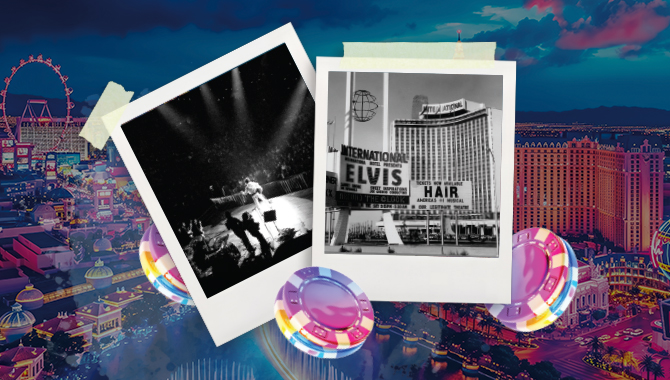
On July 31, 1969, Elvis Presley first took to the stage at the showroom of The International. Kirk Kerkorian’s Las Vegas casino resort was the largest in the world, and one fit for a king. Not even “old blue eyes” could put on a show like Elvis, who introduced a new generation of visitors to Las Vegas.
Those familiar with the resorts of the 1950s weren’t convinced. The property was too big, customers too young and the dress code too casual. The personal touch had gone. It just wasn’t Las Vegas anymore.
In 2016, I authored the paper, ‘Elvis Who? A strategic approach to understanding, attracting and retaining the next generation of Las Vegas customers.’ This wasn’t to diminish Elvis’ legacy, it was to underline that if you had been 21 at Elvis’ final Vegas show, by 2020 you would be most likely collecting your pension – but with some great stories to tell your grandchildren!
Armed with this data and strong hypothesis, I approached the subject of developing programming for Millennial and Gen Z demographics with a (now-departed) senior casino executive. Based on customer lifetime value and loyalty drivers, we could develop engagement and begin the relationship. I was rebuked, with the memorable response that “young people don’t gamble.”
The 2024 LVCVA visitor profile makes for interesting reading. Gen Z (aged 21-27) make up 7% of visitors and Millennials (aged 28-43) are 46%. These two (once dismissed) demographics now comprise a majority of Las Vegas’ visitors. Among those that gambled, Gen Z had an average gaming spend of $575 and Millennials $767. In 2017 only 20% of all visitors gambled over $600. Gen Z spent $541 per person and Millennials spent $636 on food and beverage compared to the average of $376 in 2017. Millennials paid on average $191 per night for accommodation, compared to the average of $114 only seven years prior.
Gen X (aged 44-59) – and all still too young to have seen Elvis – comprise of 38% of visitors, gaming spend was at $873 and $616 per person on F+B. 91% were return visitors. 84% paid for their rooms.
Not only have the properties that have actively programmed for the next generation of customers succeeded in attracting them, but they have also been the beneficiaries of these trends. Moreover, the spending behaviors – and expectations – of this next generation of customer are different from their parents. There are less comps demanded and are prepared for pricing to be comparable to other major experiential destination markets, if not that of Las Vegas a generation ago.
Performance
My former colleague Ed Burrows, who runs Hotel Analytica, undertook a detailed analysis of Las Vegas operator performance. Of the three publicly listed gaming operators on the Strip, MGM, Caesars and Wynn, there are some interesting findings.
In 2024, MGM’s Las Vegas (gaming and non-gaming) properties generated $8.82bn. Its portfolio stretches across all segments and demographics from the budget-friendly Excalibur to Cosmopolitan and Bellagio. Across the portfolio, casino generated 22%, rooms 33%, F+B 27% and 15% other. The overall EBITDAR margin was 35.2%. By comparison, Caesars’ portfolio produced revenues of $4.27bn, 23% from casino, 33% from rooms, 27% from F+B and 14% other. Its EBITDAR margin was 44.6%. Wynn and Encore’s performance was $2.75bn, with 23% from casino, 33% from rooms, 30% F+B and 14% from other.
The Strip properties differ significantly from other listed gaming companies; Red Rock and Boyd, both of whom operate off-Strip and, in locals markets, generated 66% and 71% of their revenues from the casino, respectively.
Extrapolating data (where available) Burrows notes that, across the portfolio, MGM achieved a citywide ADR of $260 and Wynn $555, compared to the market average of $206 (data unavailable for Caesars) with REVPAR of $245 at MGM and $494 at Wynn, both of which are record levels. The market average REVPAR was $178. In 2017 REVPAR was $124.
In total, 89% of Las Vegas’ domestic visitors are repeat customers, compared to 67% of international visitors, with 48% of domestic primarily coming for vacation/pleasure and 79% of international for the same purpose. This illustrates the global range of visitors and highlights the evolving rationale of visitation. In 2016 we noted that nearly 50% of under 40s that have been to Las Vegas have done so over eight times.
The inflection point has passed
For those of us that monitor the evolution of the market, we note the layering of Las Vegas, cumulatively adding to the gambling destination with entertainment spectacle, Sin City, convention destination, luxury resorts, sports, experiences and global events, all of which build a compelling case for repeat visitation. In recent years, I commented that Las Vegas was at an inflection point, where the customer, the programming and business model required review, because of the aging boomer demographic, proliferation of regional gaming and wider economic change. In November 2020, in this magazine, I cautioned the industry on making the mistakes of the 1980s which turned to discounting to keep visitor and occupation levels high.
The pandemic catalyzed the change. The inflationary confluence of rising labor rates, increased pricing for goods and services, and the sharp spike in energy, significantly increased operating costs for Las Vegas operators. Like many businesses, to remain profitable, these costs were passed on to the customers and attempts to discount were short-lived.
Strategy 101
In managing a business in challenging times, there are several strategic approaches.The first is segmentation, seen in the luxury resorts with high service standards, elevated experiences and market-leading pricing. These attract either aspirational or genuinely wealthy patrons. As such, the pricing is aligned to expectations and, as seen above, the performance and EBITDAR margins realized are consistent.
For the value-driven strategy in an inflationary period, to deliver the same margins across the portfolio, a cost-leadership approach is required. This may be found in reduced service levels, lower human to human contact (fewer table games to slot ratios) and a cost focus throughout the business.
The other practical tactic employed to increase profitability is to reduce costs while raising prices. This may achieve increased operating margins but risks customer dissatisfaction, unless the value proposition remains apparent. In the case of ever-increasing parking and resort fees – where there is no additional benefit or value gained – for some customers it seems that this is eroding trust and the entire proposition.
It remains true that better, profitable gaming customers still receive benefits and perks; these have been reduced for more moderate players (save those that are offered discounted room product to meet slack inventory).
Those that remember the ‘old’ Las Vegas are somewhat shocked by this alteration to the business model. For them, visitation to Las Vegas is less frequent and changes to past behaviors are evident.
Adele plays Vegas
On November 18, 2022, Adele Atkins first took to the stage at the Colosseum at Ceasars Palace. Jay Sarno’s first Las Vegas casino resort was the most famous in the world, and the showroom built for Celine Dion is famed for legendary performers, identifiable by their first name alone. Not even Celine could generate the excitement of the best-selling artist of the 21st century welcoming a new generation of visitors to Las Vegas.

Adele, like Elvis, was aged 34 at the time of commencing her engagement. However, where Elvis’ tickets ranged from $12-$27 in price, Adele’s commanded sums from hundreds to tens of thousands of dollars. The commercial reality and spending power of the next generation of Las Vegas visitors had become apparent. Millennial and Gen Z visitors do not have the same expectations as older customers.
“Las Vegas… acts as an ‘escape’ from their normal routine for short and regular periods. The geography and the infrastructure of Las Vegas lends itself to accessibility; it is close by car or air travel to many of the key markets that this customer reside. Repeat visitation is uniquely high and is across all relationship demographics and especially high as a group activity. (This) group are not opposed to gaming. Indeed, it remains an aspirational activity and as budgets and visitation increase, the next generation of visitors are more likely to gamble… Over 75% indicate that they are prepared to spend more on food and beverage when in Las Vegas… This customer is not motivated by transactional (loyalty) methods, (player’s cards and incremental benefits). However, other aspects of functional loyalty, such as environment and community may indeed be the best method of retention. We find that customers that visit more often both spend more on both gaming and on non-gaming and are the most loyal.” – Lovat, 2016
Using data from 2017, combining total spend, frequency of visit and taking a 10-year period, the value of an average single repeat customer was approximately $26,000. The same customer based on the 2024 data is valued at over $51,000.
Identifying younger, global, affluent and experience hungry customers, has been good business and in many cases, Las Vegas casino resorts have successfully repositioned, by replacing one customer profile with another.
My late father-in-law regularly observed that anyone can walk into The Ritz, but not everyone can stay there. Las Vegas casino operators are under no requirement to ensure that their businesses are open or affordable to everyone, rather their obligations are to ensure that their stakeholders (customers, employees and shareholders) are best served.
Casino resorts, like any business, have no right to be successful. Their sustainability is assured by identifying a customer and meeting their needs. The market is big enough for multiple operators and strategies. As a customer, if your needs are not being met, you do have the right to migrate to a business that does. Times change. Customers change. Properties change. Or they close. Many resorts have closed in the past, more will close in the future, but in 2024, Las Vegas did pretty well. Not only was financial performance strong, the market transitioned to the next generation of customer and will continue to attract younger visitors, who will begin their own journeys and make memories, and in many ways, this group are better customers than previously.
What’s next? I am not certain, but Las Vegas is not as it was.
Oliver Lovat is the CEO of The Denstone Group, that offers strategic consultancy in resort development. His research topics are Las Vegas Customer Behavior and Strategic Positioning of Casino Resorts.
Players trust our reporting due to our commitment to unbiased and professional evaluations of the iGaming sector. We track hundreds of platforms and industry updates daily to ensure our news feed and leaderboards reflect the most recent market shifts. With nearly two decades of experience within iGaming, our team provides a wealth of expert knowledge. This long-standing expertise enables us to deliver thorough, reliable news and guidance to our readers.
Latest News