Pennsylvania’s New Skill Games Bill Is the VGT Framework Without the Tax Rate
Pennsylvania’s HB2557 would regulate skill games like VGTs, but leaves the tax rate for a separate bill. The strategy is deliberate.
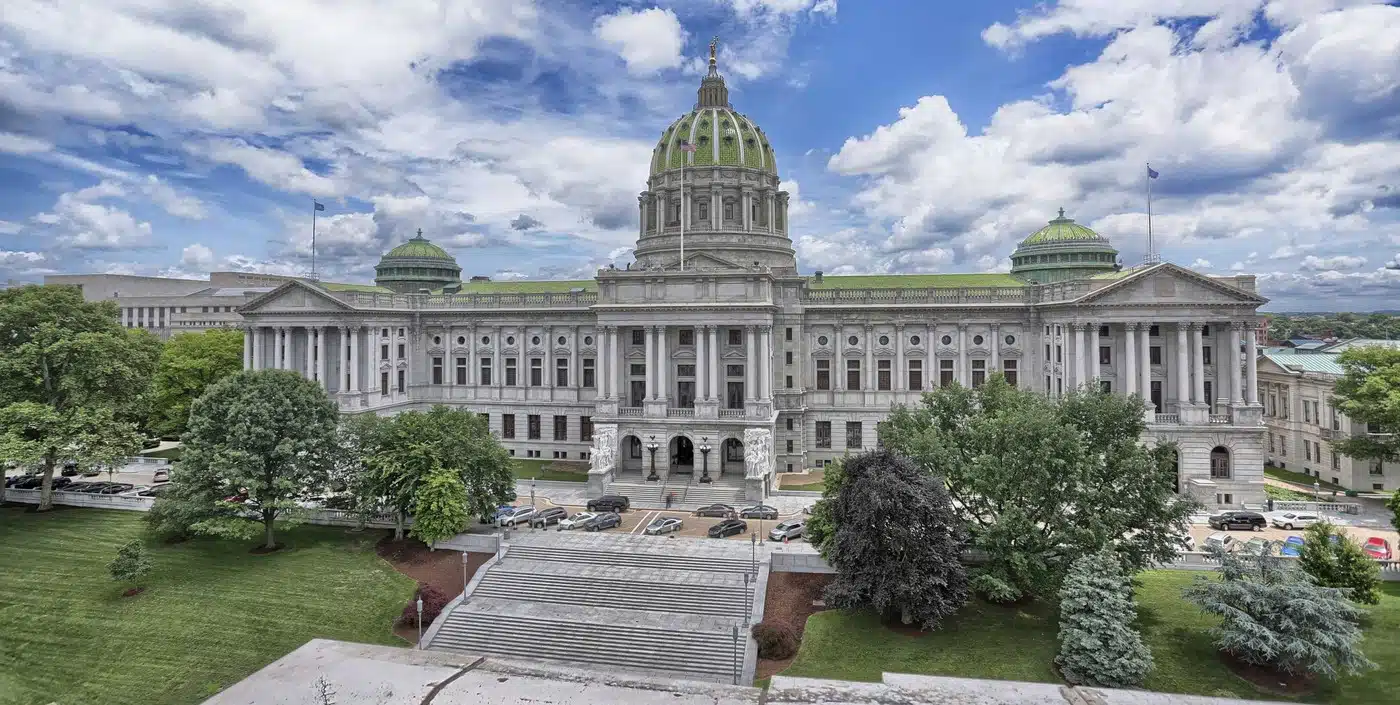
Pennsylvania Rep. Ben Waxman introduced HB2557, the Skill Game Consumer Protection Act, on Monday, which would bring the estimated 80,000 unregulated skill game machines operating across the commonwealth under the oversight of the Pennsylvania Gaming Control Board. The bill was referred to the House Gaming Oversight Committee. Waxman, a Philadelphia Democrat, has 10 Democratic co-sponsors. No Republican has signed on yet.
The bill is the latest in a string of attempts to regulate skill games that have failed to clear the legislature since 2022. Governor Josh Shapiro has proposed a 52% tax on skill games in his last two budgets. Sen. Gene Yaw’s SB 626 proposed a 16% tax aimed at small businesses. Sen. Chris Gebhard’s SB 756 proposed 35% as a middle-ground option. Rep. Danilo Burgos’s HB 2046 proposed operator fees rather than a tax. Each previous attempt sought to combine a regulatory framework and a tax rate into a single bill. Each one died on the tax rate.
Waxman’s bill takes a different approach. The regulatory framework is comprehensive and aligned closely with how Pennsylvania already regulates Video Gaming Terminals at truck stops. The tax rate is left for a separate piece of legislation. The bill mentions that 3% of revenue should go to problem gambling but explicitly contemplates the actual tax structure being enacted elsewhere.
HB2557 Looks Very Similar to the Video Gaming Terminals Act
Pennsylvania already has a regulated category of slot-equivalent machines outside of casinos. Video Gaming Terminals were legalized by Act 42 of 2017 and confined to approved diesel fuel truck stops. Each truck stop can operate up to five machines. As of early 2025, there are roughly 74 approved VGT locations operating about 370 machines total. VGTs are taxed at 52% of gross revenue and regulated by the Pennsylvania Gaming Control Board with rules substantively identical to those that apply to casino slots. The minimum return-to-player is 85%. All machines connect to a centralized monitoring system. Operators are licensed.
HB2557’s regulatory structure adopts this framework essentially and applies it to skill games. The bill limits locations to five terminals each. It requires a connection to a centralized monitoring system overseen by the PGCB. It mandates a minimum RTP of 85%. The bill also sets bet and payout limits to $5 and $1,000, respectively. HB2557 imposes a 30-second timeout every 15 minutes of play, a daily loss limit, and integration with the state’s existing self-exclusion program. The bill requires age verification before any play.
HB2557 also bans skill games from operating in gas stations and convenience stores, where most of them currently operate. It allows municipalities to prohibit them locally. And lastly, HB2557 empowers the PGCB to license, audit, and shut down non-compliant operators.
In structural terms, the bill says that skill games should be regulated the same way VGTs are, with the same player protections, operator obligations, and regulatory oversight. The only meaningful difference is where the machines can go. VGTs are restricted to truck stops. Under HB2557, skill games could continue to operate in bars, restaurants, and fraternal clubs, subject to the new terminal cap and consumer protection requirements.
Politically, Leaving the Tax Rate Out of This Bill Makes Sense
The political logic of leaving the tax rate out is straightforward. Every previous skill games regulation bill has failed because the stakeholders cannot agree on the tax rate. The casino lobby insists that skill games should be taxed at the same rate as VGTs and casino slots, which is between 52% and 54%. The skill games industry argues that their products are fundamentally different and would not be viable under a slot-equivalent tax. The small-business owners and fraternal clubs that host the machines have lobbied for the lowest possible rate. Each of those positions has had legislative champions, resulting in gridlock.
By separating the tax question and addressing only the regulatory structure, Waxman creates the possibility of a bill that can pass on its own merits while the tax fight continues separately, which looks like the simplest path. The reason it looks like the simplest path is that there is a precedent of a similar effect in Pennsylvania. This mirrors the regulatory approach that led to VGT legalization in 2017, where the broader gambling expansion package established the framework, while the rate was negotiated separately. The current bill leaves a hook for a follow-up tax bill, mentioning the 3% problem-gambling earmark in a way that assumes an as-yet-undefined revenue base.
If HB2557 passes with VGT-equivalent regulatory provisions, the skill game industry’s argument that their products are categorically different from slot machines becomes much harder to make. The regulatory structure would already say they are the same kind of product. The remaining question is the tax rate, and in that regard, the precedent of VGTs being taxed at 52% is the natural reference point. Skill games taxed substantially below the VGT rate would create an explicit two-tier system for products that the law now treats as regulatory equivalents.
This Bill Still Does Not Answer the Skill Game Gambling Question
The proposal does not resolve the underlying legal question about whether skill games are gambling. The Pennsylvania Supreme Court is currently reviewing the Commonwealth Court’s December 2023 ruling that skill games are legal games of skill rather than gambling devices. If the Supreme Court reverses that decision and rules that skill games constitute illegal gambling under existing law, HB2557 becomes a legalization bill rather than a regulation bill. If the Supreme Court affirms, the bill operates within the existing framework as a regulatory overlay.
The bill also does not address whether the existing 80,000 machines would need to be removed from non-compliant locations before being relicensed in compliant locations. The transition mechanics are largely left to the PGCB through rulemaking. A strict reading of the bill would require removing every machine currently operating at a gas station or convenience store before any could be relicensed elsewhere. The economic effect on small businesses currently hosting the machines is substantial and largely unaddressed.
There is also the question of where the political alignment stands now. The February 2026 guilty plea by a former Pace-O-Matic executive on kickback and money-laundering charges has shifted the political environment. Attorney General Dave Sunday has publicly called the current skill-games environment “disorganized and problematic.” That posture makes it easier to support regulation, even among legislators who have historically aligned with the skill games industry. Whether that political shift translates into a bill the casino lobby and POM can both live with remains an open question.
One thing is certain: the bill is currently in committee, and the legislative session continues through the summer. Whether HB2557 advances to the floor will tell you whether the leave-out-the-tax approach actually solves the political problem or just postpones it.
Players trust our reporting due to our commitment to unbiased and professional evaluations of the iGaming sector. We track hundreds of platforms and industry updates daily to ensure our news feed and leaderboards reflect the most recent market shifts. With nearly two decades of experience within iGaming, our team provides a wealth of expert knowledge. This long-standing expertise enables us to deliver thorough, reliable news and guidance to our readers.
Latest News