

Key Dates Ahead in Pennsylvania ‘Skill Games’ Debate as Political Spending Intensifies
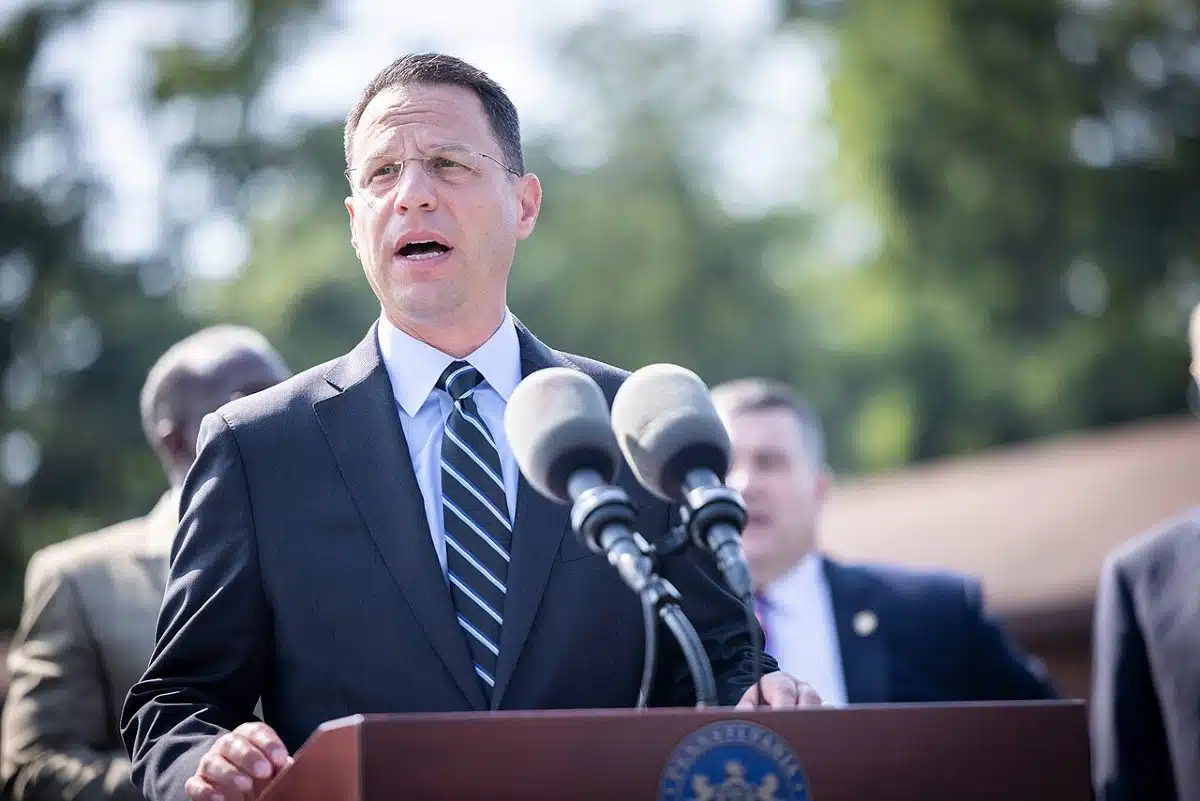
Pennsylvania Gov. Josh Shapiro (Credit: Governor Tom Wolf/Wikimedia Commons)
Millions of dollars are pouring into Pennsylvania political races, pitting ‘skill games’ backers against powerful gambling lobbies such as online sportsbooks and casinos. The issue may come to a head as key dates approach.
The issue of so-called skill games in Pennsylvania is a years-long battle. They’re functionally similar to video gaming terminals (VGTs), which are legal and regulated gambling products in the state, usually found at places like convenience stores, truck stops, and restaurants. A key difference is the purported skill element, which theoretically gives the player some control over the outcome. Whether that’s actually true is the subject of ongoing debate.
Proponents say they’re not gambling because of the skill element and that they provide key revenue to establishments that house them.
Skill game terminals are currently considered to be in a legal gray area. The Pennsylvania court system is working on deciding the issue.
As they continue to exist and rake in money, they have created some powerful enemies. Politics can make strange bedfellows, as the saying goes. And in this case, online sportsbooks and retail casinos, which compete for some of the same dollars in the gambling economy, are united in their front against skill games.
Skill Games Appear to be Outgunned by Casinos, Sportsbooks
According to Spotlight PA, gambling-related interests have spent $8.1 million and counting on local political races beginning with the upcoming primary on May 26. And the backers of skill games are looking at a massive spending deficit relative to their opponents.
Skill-game manufacturer Pace-O-Matic has spent about $1.5 million on lobbying.
By contrast, a political action committee funded by online sportsbooks has spent about $5 million. Gaming America has previously reported on the tens of millions of dollars spent by the super PAC, Win For America. It funneled $3 million into Pennsylvania in the first quarter of 2026 alone, a hefty chunk of its $33.4 million in total spending.
The Spotlight PA story didn’t specify spending by casino lobbies. However, they have an obvious interest in legislation that limits or bans skill games. Since the products are functionally similar to slot machines, they may draw potential customers away from the casino, especially those who are not physically near a property.
The skill games have a massive competitive edge since they don’t pay taxes on revenue, while the casinos fork over hundreds of millions in tax dollars per year.
Skill game backers are also swimming uphill in a sense, since their spending has attacked incumbent Republican candidates. Incumbents generally have an advantage in most races due to bigger budgets and established recognition. Money behind the skill games looks to reset the political landscape by putting more politicians in power who will either keep the status quo or institute favorable tax frameworks well below some of the proposed rates north of 50%.
Pennsylvania Budget Deadline Approaching
Pennsylvania’s fiscal year begins on July 1. That means the budget deadline is June 30. So, not long after the primaries, the state government must finalize a tax decision regarding skill games for the coming year.
Gov. Josh Shapiro included a tax framework in his proposed budget for 2026-27. Shapiro wants to tax the games at a 52% clip while capping the total number of machines (including VGTs) at 40,000 statewide and five per establishment. His budget projects more than $2 billion in annual tax revenue from the machines.
Skill games backers aren’t on board with Shapiro’s proposal. State Republicans in rural areas where the machines are popular say the number is too high. Competing proposals have included rates as low as 16% or per-month, per-machine flat fees.
Pennsylvania legislators have yet to approve Shapiro’s budget. As debate continues there, the future of skill games in Pennsylvania remains up in the air. Both the primaries and the November general election will likely provide further clarity, if the budget doesn’t do so in between.
Image credit: Governor Tom Wolf/Wikimedia Commons (license)
Players trust our reporting due to our commitment to unbiased and professional evaluations of the iGaming sector. We track hundreds of platforms and industry updates daily to ensure our news feed and leaderboards reflect the most recent market shifts. With nearly two decades of experience within iGaming, our team provides a wealth of expert knowledge. This long-standing expertise enables us to deliver thorough, reliable news and guidance to our readers.
Latest News