An Astrodome Casino Has Been a Houston Daydream for Years And Now It Has Fertitta’s Name on It
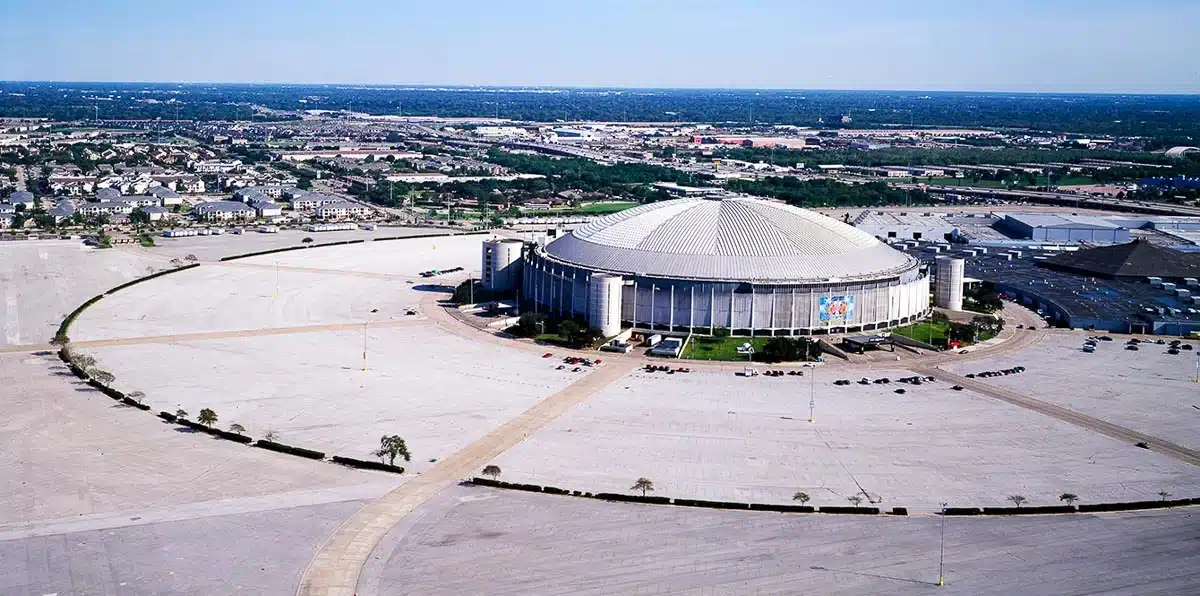
A former Houston mayor floated the idea of a Fertitta-built Astrodome casino. His recent moves suggest she’s not bluffing.
Annise Parker, the former Houston mayor now running for Harris County judge, made some news this week by suggesting Tilman Fertitta would put “the world’s biggest casino” in the Astrodome the moment Texas legalized commercial gaming. The line was delivered at an event hosted by the Houston Association of Black Journalists, picked up by the Houston Chronicle, and within 24 hours had bounced through most of the gambling trade press.
On its face, it’s the kind of thing a politician says at a panel. Parker is no longer mayor, the Astrodome has been closed for 17 years, and Texas remains one of the most prohibitionist gambling states in the country. It’s easy to dismiss as a hypothetical layered atop another hypothetical.
But if you spend a few minutes lining up what Fertitta has actually been doing over the past two years, Parker starts to sound less like she’s speculating and more like she’s reading the dots that are already on the board.
Fertitta Already Owns Most of the Pieces
Fertitta is the chairman and CEO of Landry’s, which owns the Golden Nugget casino brand. He also owns the Houston Rockets. His family recently purchased the WNBA’s Connecticut Sun and is relocating the franchise to Houston, a move that was widely read at the time as a Texas-gambling positioning play. He owns the San Luis Resort in Galveston, which has long been rumored as a potential Texas casino site, if and when the state ever legalizes casinos. And as of last month, he’s in exclusive talks to acquire Caesars Entertainment in a deal with a total enterprise value of around $18 billion.
That last one is the variable that changes everything. Regional casino magnate is one profile. The owner of Caesars, the largest US-based gaming operator by property count, with a 65-million-member loyalty database, is another entirely. If Fertitta closes the Caesars deal, he becomes one of the two or three most consequential casino operators in the country, and one with unusually deep Houston roots.
Add the basketball team, the WNBA team, the convention-grade resort in Galveston, the existing restaurant footprint, and you have someone who has been quietly assembling the exact business mix a destination casino resort requires.
The Astrodome Itself Is the Other Half
The venue Parker named is also more available than it sounds. The Astrodome is owned by Harris County, has been closed to events since 2009, and has gone through more than a decade of failed redevelopment proposals. The Astrodome Conservancy’s own list of past concepts includes a hotel, a convention center, a theme park, a movie studio, a museum, a disaster relief center, and demolition.
Unfortunately, it has not been profitable for quite some time. The county has spent roughly $35 million keeping the structure on life support. Every plan that requires public money has died in committee. Every plan that requires private investment has needed an anchor tenant that doesn’t exist or fails to fully step up.
At one million square feet, the Astrodome is also genuinely the largest indoor space in the country that could plausibly be converted into a casino. WinStar in Oklahoma, currently the largest casino in the world, is around 600,000 square feet. Parker’s claim that an Astrodome casino would be the biggest in the world is, weirdly, the most defensible part of what she said.
Texas Is the Hurdle, but the Hurdle Is Moving
The reason none of this is officially put into motion in the coming days is the Texas Legislature. Lt. Gov. Dan Patrick controls the Senate’s agenda and has consistently blocked casino bills. Las Vegas Sands has spent enormous sums lobbying for expansion and has nothing to show for it. The constitutional amendment required to authorize commercial casinos would need a two-thirds vote in both chambers and a statewide referendum. None of that seems very close to happening as we currently stand.
Parker named Patrick directly in her remarks, telling the audience that voters could “get rid of” him as a path to making casino gaming possible. That’s the kind of thing you say when you’re running for office, and it’s also true that the move would be a critical step to legalization.
What seems to be happening now is that the prohibitionist wall in Texas is already being picked apart from the other side. The Alabama-Coushatta Tribe is opening a 300-machine bingo casino in Leggett this summer, with a permanent resort breaking ground in June, all under federal authority that bypasses the state legislature entirely. Houston-area gambling demand will start flowing somewhere. The only question is whether Austin lets the commercial side compete.
What Would The Astrodome Casino Actually Be?
If it ever happens, an Astrodome casino is the kind of project you’d think Texas would rally around if statewide legalization is passed. A one-million-square-foot resort built around continuous engagement, with the Caesars loyalty database feeding into it, in a metro of seven million people with no other commercial casino within a four-hour drive. The economics and logistics write themselves. So does the political case for keeping Houston’s gambling dollars from continuing to flow into Louisiana.
The politics will probably decide it long before anything else does. But it’s worth noting that the most plausible private-sector solution to a problem the public sector has spent fifteen years failing to solve is also a textbook example of the high-volume gambling model that creates the most harm. An Astrodome Casio is exactly what Texas has been saying will never exist in Texas for decades. Parker didn’t address that part. Almost no one in this conversation does.
Whether or not Texas ever gets there, Fertitta is positioning himself for the moment it does. Parker just said the quiet part out loud.
Players trust our reporting due to our commitment to unbiased and professional evaluations of the iGaming sector. We track hundreds of platforms and industry updates daily to ensure our news feed and leaderboards reflect the most recent market shifts. With nearly two decades of experience within iGaming, our team provides a wealth of expert knowledge. This long-standing expertise enables us to deliver thorough, reliable news and guidance to our readers.
Latest News