Iowa Is Taking Two Very Different Approaches to Gambling’s Newest Problems
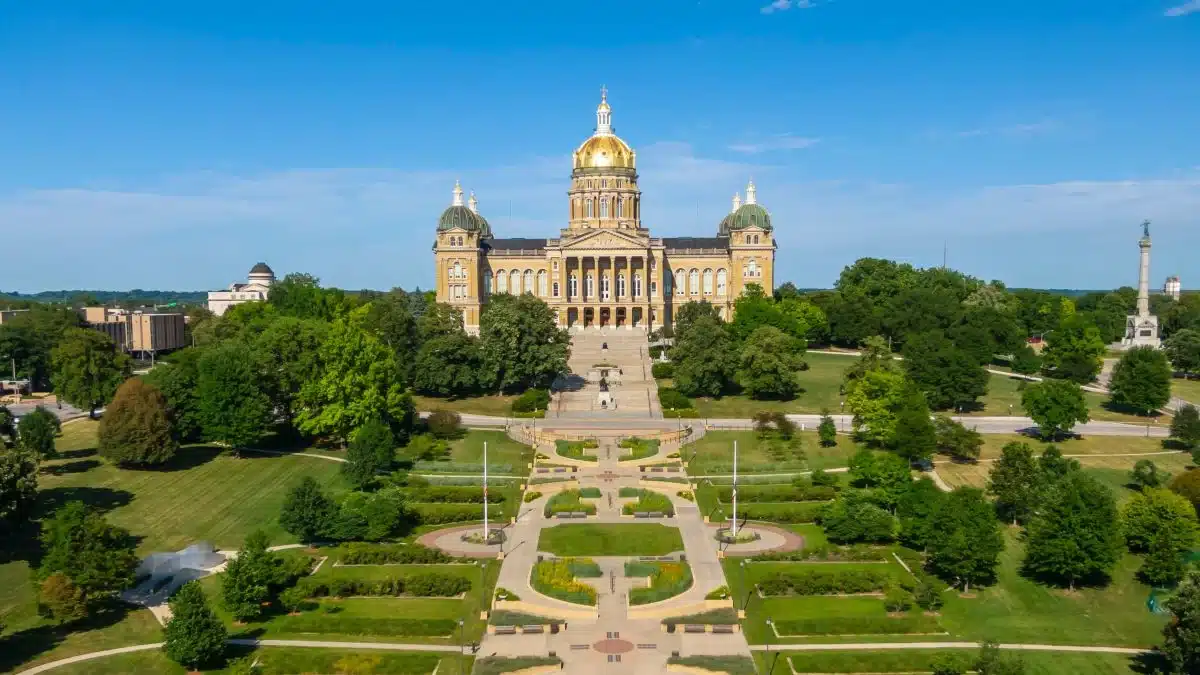
Iowa’s legislature has advanced two separate bills taking divergent approaches to the gambling industry’s newest challenges.
Most states dealing with unlicensed gambling operators and prediction markets have chosen a side: ban them, or leave them alone and wait for the courts to sort it out.
Iowa is doing something more interesting. In the final days of its legislative session, the state has advanced one bill that gives regulators new teeth to crack down on sweepstakes casinos and unlicensed operators, and a separate bill that would tax and license prediction markets rather than prohibit them. The two approaches reflect genuinely different theories of how to handle products that the existing law was never written to address.
SF 2289: Giving the Regulator a Bite to Match Its Bark
Senate File 2289 passed both chambers of the Iowa legislature unanimously and now awaits final enrollment and transmission to the governor. The bill grants the Iowa Racing and Gaming Commission the authority it has notably lacked: the ability to issue cease-and-desist orders and seek injunctive relief against operators offering gambling products without a state license.
The gap this fills is not minor. IRGC Administrator Tina Eck told Iowa Capital Dispatch that under current law, the agency’s only real option against unlicensed operators is to issue public warnings and urge residents to steer clear of sites it considers risky or illegitimate. The most common offenders it encounters are scam websites that mimic legitimate casinos, offshore sportsbooks such as MyBookie and Bovada, and crypto-based sweepstakes platforms.
SF 2289 changes that calculus. Unlicensed operators offering games of chance, sports wagering, or what the bill explicitly calls “illegal sweepstakes” can now face formal enforcement action rather than a strongly worded press release. Violators face Class D felony charges, and repeat offenders can be banned from participating in regulated gaming in the state entirely.
It is worth being precise about what the bill does and does not do. SF 2289 does not officially outlaw sweepstakes casinos. It gives the IRGC the power to draw a line in the sand and let sweepstakes operators make a decision in response. That is a meaningful distinction. Indiana and Maine have enacted outright bans. Louisiana is pursuing a racketeering theory. Iowa’s approach is more measured: it arms the regulator to act when it chooses, rather than mandating that it do so.
Whether the IRGC uses those new powers aggressively or sparingly will depend on how the commission interprets its mandate and how much appetite Iowa’s governor has for the legal fight that a cease-and-desist against a major sweepstakes platform would almost certainly trigger.
SF 2470: Regulate, Don’t Prohibit
The prediction market bill represents a genuinely different philosophy. Iowa’s Senate passed SF 2470 by a 45 to 1 vote, making Iowa the first state legislative chamber to pass a bill specifically designed to regulate rather than ban prediction markets. The House subcommittee has advanced it, though a full committee hearing and floor vote remain ahead, and the legislature’s overtime period makes the timing uncertain.
The bill defines event-driven contracts as financial derivatives with a fixed binary payout based on the occurrence of a specific future event, covering outcomes tied to sporting activities, elections, legislative actions, and economic indicators. Operators seeking to offer these contracts in Iowa would face a $20 million initial licensing fee and a $100,000 annual renewal fee, plus a 20% tax on adjusted net revenue. State analysts estimate the structure could generate approximately $40 million for Iowa’s general fund in fiscal year 2027, though projections decline in subsequent years once the initial licensing payments are absorbed.
The bill includes an unusual provision worth noting: it establishes a temporary framework that applies only until courts determine whether event contracts fall under Iowa’s existing gambling laws. That self-limiting language is an acknowledgment of the central legal uncertainty the entire country is navigating. Iowa is not claiming to have resolved the federal-versus-state jurisdiction question. It is building a regulatory framework in the interim, collecting revenue while the courts catch up.
Two Products, Two Theories
The contrast between how Iowa is handling sweepstakes casinos and prediction markets reflects a genuine policy distinction, not inconsistency. Sweepstakes casinos have no federal preemption argument available to them. They operate under state sweepstakes law, and states are free to define and limit what qualifies. The IRGC can issue a cease-and-desist against a sweepstakes platform without triggering a federal jurisdictional fight.
Prediction markets are different. Kalshi and its competitors are regulated by the CFTC as designated contract markets. Their legal argument that the Commodity Exchange Act preempts state gambling laws has succeeded in federal courts in Tennessee and New Jersey but has failed in state courts in Massachusetts and Ohio. Iowa’s decision to tax and license prediction markets rather than ban them is, among other things, a pragmatic recognition that any outright prohibition would immediately face a federal preemption challenge that the state might lose. Collecting $20 million in initial licensing fees from operators who want access to Iowa’s market is a more durable strategy than spending years in litigation trying to keep them out.
The federal protections available to prediction market operators are considerably stronger than those available to sweepstakes casinos, which is precisely why states have moved more aggressively against sweeps while approaching prediction markets more cautiously or, as Iowa is doing, trying to capture them through licensing rather than exclude them through prohibition.
The Overtime Problem
Iowa’s legislature has passed its traditional 100-day session target and has entered an overtime period, during which attention typically shifts to budget negotiations and priority legislation. SF 2289 is essentially done, needing only the governor’s signature. SF 2470 has more runway to cover. It needs a full committee hearing and a House floor vote before it can reach the governor, and the overtime calendar is crowded.
Iowa would not be the first state to get this close to a prediction market regulatory framework only to watch it stall in the final days of a session. Kentucky has taken a similar path. The policy logic behind the bill is sound. Whether the political will to push it across the finish line survives the budget negotiations will determine whether Iowa becomes the first state to actually license prediction market operators, a distinction that would put it well ahead of the federal rulemaking process, which the CFTC has only barely begun.
Players trust our reporting due to our commitment to unbiased and professional evaluations of the iGaming sector. We track hundreds of platforms and industry updates daily to ensure our news feed and leaderboards reflect the most recent market shifts. With nearly two decades of experience within iGaming, our team provides a wealth of expert knowledge. This long-standing expertise enables us to deliver thorough, reliable news and guidance to our readers.
Latest News