

California Tribal Casino Projects Advance Despite Legal Controversies
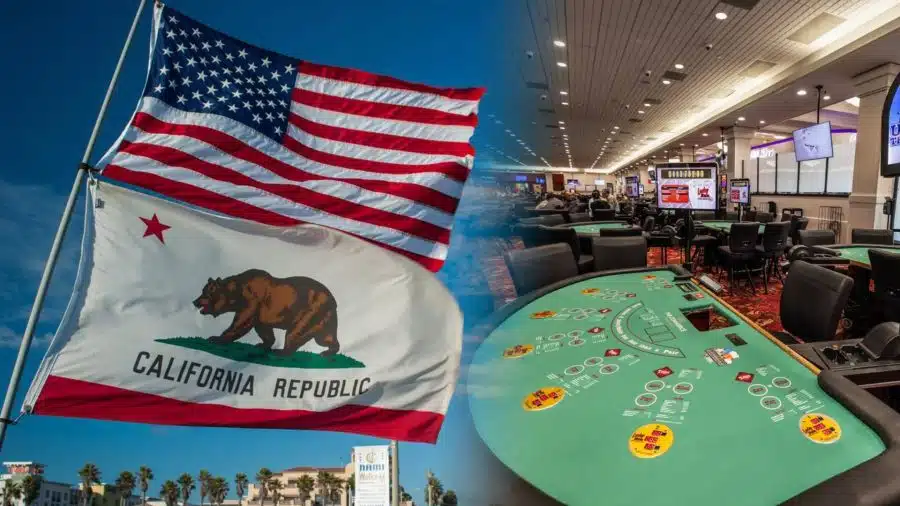
In California, a major Tribal casino project has advanced despite a variety of legal controversies.
The Scotts Valley Band of Pomo Indians moved closer to opening a preview casino in Vallejo after two significant developments this month. The Vallejo City Council voted to approve a temporary memorandum of understanding with the tribe on April 14, clearing a path for near-term construction on the site. It’s been an ongoing legal battle for this casino project, but it continues advancing despite multiple roadblocks.
That vote came shortly after a federal judge agreed to pause related litigation while appeals proceed, adding another layer to a dispute that has been moving simultaneously through federal courts, the Department of the Interior, and now City Hall.
The $700 million full casino and resort project that sits behind all of this remains in federal limbo. But on the ground in Vallejo, things are moving.
What the Council Approved
After several hours of heated debate and public comment, the council voted 3-2 to enter the temporary MOU. The agreement governs the tribe’s use of its trust land near Interstate 80 and Columbus Parkway as it prepares to open a preview casino and tribal offices. The MOU was amended during deliberations to include more robust community engagement requirements, a mandate that 15% of hires come from Vallejo residents, and a contribution toward the cleanup of the White Slough environmental site.
Under the terms of the agreement, the tribe must pay for and maintain 24-hour on-site security, including a full-time police officer, cover the cost of paid fire mitigation services, pay monthly commercial rates for water, and install FLOCK license plate reader cameras and a security tower camera at tribal expense.
Scotts Valley Tribal Chairman Shawn Davis framed the development in terms of homecoming rather than commerce. “We feel that Vallejo is not just a project site, it is our homeland,” he said. “We are developing the land with a preview casino to help build stability and opportunity for our families and to provide benefits to the city and Vallejo community.”
Council members Alexander Matias and Tonia Lediju voted no. Matias said the agreement in its current form did not deliver the benefits the city could reasonably expect, even on a temporary basis. Lediju said her concern was not whether to partner with the tribe but whether the MOU was structured to fully protect Vallejo and its residents. A motion by Matias to give Scotts Valley 30 days to return with a revised proposal failed, with only Lediju supporting it.
California State Senator Bill Dodd, who represents Vallejo, spoke in support of the agreement during the hearing. Members of the North Coast States Carpenters Union also backed it, citing local employment and service contributions the preview casino would generate.
The Litigation in Parallel
The MOU vote took place against a backdrop of active and paused federal litigation. A federal judge recently agreed to stay related lawsuit proceedings while appeals work their way through the courts. That pause does not resolve the underlying questions but does reduce the immediate pressure of active trial-level litigation running concurrently with the DOI’s own review process.
The core legal history is complex. The Biden administration placed 160 acres of land in Vallejo into trust for Scotts Valley in January 2025 and granted gaming eligibility. Within weeks, four opposing tribes filed lawsuits challenging that determination. The DOI, under the Trump administration, rescinded its gaming eligibility finding in March 2025, acknowledging that the original approval may have constituted a legal error. Scotts Valley sued in response.
US District Judge Trevor McFadden of the District of Columbia ruled in October 2025 that the DOI had violated the tribe’s due process rights by rescinding gaming eligibility without adequate notice. He vacated that rescission but made it clear that his ruling did not bar the DOI from completing its reconsideration process or ultimately revoking eligibility through proper procedure. McFadden cautioned directly that Scotts Valley would be “ill-served” by relying on the restored eligibility while that reconsideration remained underway.
A final ruling from the DOI on the tribe’s gaming eligibility is expected this summer.
The Opposition and What’s at Stake
Neighboring tribes have been consistent and vocal in their opposition throughout. The Yocha Dehe Wintun Nation, which operates Cache Creek Casino in Yolo County and holds ancestral ties to the Vallejo area as a Patwin tribe, has led the resistance.
Yocha Dehe Chairman Anthony Roberts has argued that the Scotts Valley Band’s tribal headquarters in Lake County, roughly 100 miles from Vallejo, reflects the absence of any legitimate ancestral connection to the land. He has pointed to what he describes as the burial grounds of Patwin ancestors on the site as a resource deserving of protection.
At the April 14 council meeting, Andy Mejia, chairman of Lytton Rancheria, urged the council to hold off on any agreement until the federal process reached its conclusion. “To do so will simply waste the time and resources of the city when a few months of patience would go a long way,” Mejia said. He added that if Vallejo moved forward, Lytton Rancheria would litigate.
Scotts Valley has characterized the opposition as economically motivated. Davis said there was no objection when other developments went up across the street from the site. Only a casino announcement drew resistance.
What Comes Next in California
The MOU approval now moves the project to the next administrative step: approval of an encroachment permit. Once that is in place, construction of the preview casino, which will operate out of existing modular buildings on the site, is expected to begin.
The preview facility will run Class II gaming machines, which operate similarly to electronic bingo and are federally approved for tribal use independent of the DOI’s full gaming eligibility review.
The larger question of whether the $700 million casino resort will ever be built remains entirely contingent on the DOI’s forthcoming ruling and the outcome of federal litigation. Vallejo has positioned itself to benefit from the preview casino regardless of how those larger questions resolve, while the city says it will continue analyzing the full project’s impacts in preparation for whichever direction the federal process goes.
Players trust our reporting due to our commitment to unbiased and professional evaluations of the iGaming sector. We track hundreds of platforms and industry updates daily to ensure our news feed and leaderboards reflect the most recent market shifts. With nearly two decades of experience within iGaming, our team provides a wealth of expert knowledge. This long-standing expertise enables us to deliver thorough, reliable news and guidance to our readers.
Latest News