Washington DC Bill Would Legalize Online Casinos and Ban Sweepstakes Gaming
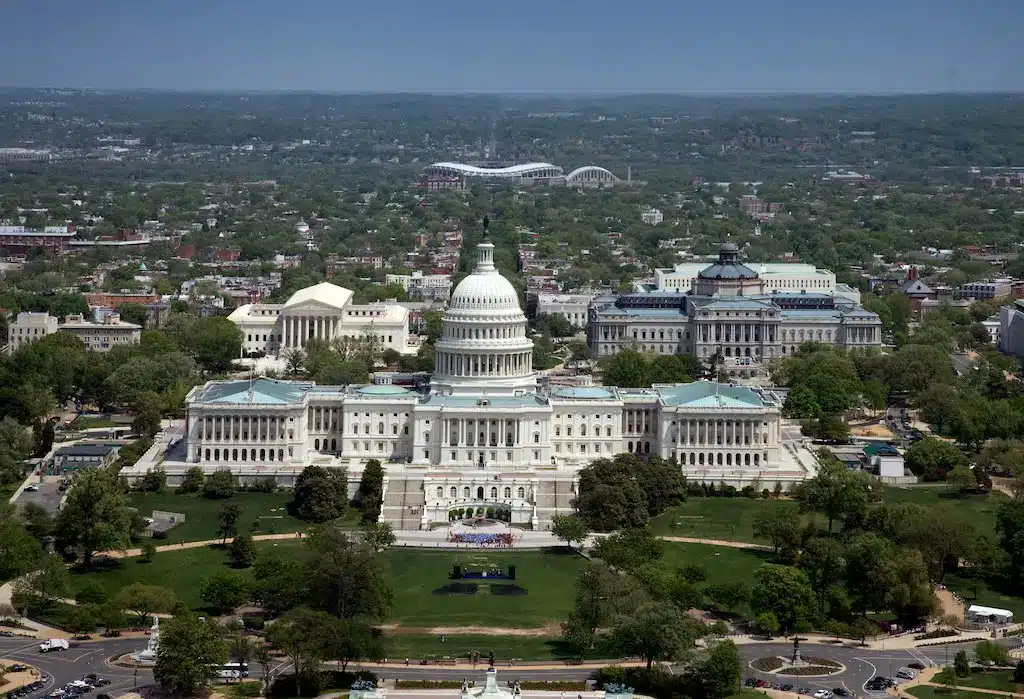
DC Councilmember Wendell Felder has introduced legislation that would authorize online slots, poker, and table games in the nation’s capital while explicitly banning the sweepstakes dual-currency model.
Washington DC could become the ninth US jurisdiction to legalize online casino gaming. Councilmember Wendell Felder introduced the Internet Gaming and Consumer Protection Act of 2026 to the DC Council on April 9. A public hearing is scheduled for May 4. The bill would authorize online slots, table games, and poker in the District while simultaneously imposing an outright ban on sweepstakes platforms.
The two-pronged approach reflects a growing trend in state and local policy: legalize the regulated product, eliminate the unregulated substitute.
Why DC Is Moving Now
The case for legalization starts with a number that makes the status quo difficult to defend. Felder’s introductory letter cites estimates showing DC residents wagered approximately $700 million on unlicensed platforms in 2024. That spending leaves the local economy without tax revenue, consumer protections, or regulatory oversight.
The District already regulates sports betting and operates a lottery under the Office of Lottery and Gaming. Felder designed the iGaming bill to integrate with those existing programs, adding online casino as a licensed category under the OLG’s authority rather than creating an entirely new regulatory structure.
License Structure and Tax Rate
Approved operators would pay $2 million for a five-year internet gaming license, with a $500,000 renewal fee. Each license holder may operate up to two internet gaming brands, with the OLG retaining discretion to authorize additional brands.
The total effective tax rate on adjusted gross gaming revenue is 29%. That breaks down as 25% monthly tax to the District Treasurer, a 2% regulatory assessment for administrative costs, and a 2% community impact assessment.
The bill also requires operators to direct at least 35% of their DC-related operating budget to local small businesses through Certified Business Enterprise participation contracts. Suppliers of game content, geolocation services, payment processing, and random number generators must obtain a separate supplier license at a $50,000 application fee.
Who Benefits First
Operators holding existing DC sports betting licenses would receive expedited review for iGaming applications. That gives FanDuel, DraftKings, BetMGM, Caesars, Fanatics, and theScore a meaningful first-mover advantage if the bill passes.
The minimum age for online casino play would be 21, stricter than the 18-year threshold for sports betting. Operators must verify both age and identity before accepting bets from new users. iGaming would not be available on federal land, including the National Mall, mirroring the existing restriction on sports wagering.
Responsible gambling requirements are comprehensive. Operators must offer loss limits, session time limits, self-exclusion, and cool-off periods. Default limits apply automatically to new accounts and can only be adjusted after users acknowledge responsible gambling information.
The Sweepstakes Crackdown
The bill’s treatment of sweepstakes gaming is among the most aggressive anywhere in the country. It defines sweepstakes gaming broadly as any game, promotional contest, or scheme in which a person can play casino-style games and win a prize, directly or indirectly. That language directly targets the dual-currency model used by platforms like Chumba Casino and LuckyLand, which allow players to earn Sweepstakes Coins that can be redeemed for cash or gift cards.
Those platforms have long argued that because Sweepstakes Coins can technically be obtained for free, their products do not constitute gambling. That argument is losing ground nationally. Indiana, California, New York, and several other states have already banned or restricted the dual-currency model. DC’s bill would join that list with particularly sharp enforcement teeth.
Under the legislation, operating or marketing sweepstakes gaming without a license constitutes a civil violation. Each day of non-compliance counts as a separate offense. The OLG can issue cease-and-desist orders, and the DC Attorney General can pursue civil action seeking injunctive relief and disgorgement of profits.
The only path for sweepstakes operators to remain in DC would be to obtain a standard iGaming license, accept the $2 million fee, and submit to the 29% revenue tax. That model is not viable for most sweepstakes operators.
What Comes Next
The bill moved quickly after its introduction. Filed at the Office of the Secretary on April 8, the Committee on Human Services issued a public hearing notice just four days later, scheduling the hearing for May 4.
The legislative path remains long. Council approval and the mayor’s signature would trigger a mandatory 60-day Congressional review period before the bill can take effect. The OLG would then have 90 days to issue proposed rules and 180 days to authorize the market launch.
If DC legalizes iGaming, it would join eight existing jurisdictions: Delaware, New Jersey, Michigan, Pennsylvania, West Virginia, Connecticut, Rhode Island, and Maine, whose law was enacted earlier this year and currently faces a federal legal challenge. Efforts to pass iGaming in neighboring Virginia failed this session. Similar legislation in Maryland appears likely to stall as well, making DC’s bill a notable exception to the regional pattern.
Players trust our reporting due to our commitment to unbiased and professional evaluations of the iGaming sector. We track hundreds of platforms and industry updates daily to ensure our news feed and leaderboards reflect the most recent market shifts. With nearly two decades of experience within iGaming, our team provides a wealth of expert knowledge. This long-standing expertise enables us to deliver thorough, reliable news and guidance to our readers.
Latest News