Why the White House Blocked Kalshi and Polymarket on Its WiFi

President Donald Trump holds a press conference with Attorney General Pam Bondi and Deputy Attorney General Todd Blanche in the James S. Brady Press Briefing Room on Friday, June 27, 2025. (Official White House Photo by Abe McNatt)
Prediction markets were supposed to be about forecasting the future, not gaming the present. But as platforms like Kalshi and Polymarket push further into the political mainstream, the line between information, influence, and outright exploitation is getting harder to ignore.
Kalshi and Polymarket Quietly Blocked on White House and House Networks
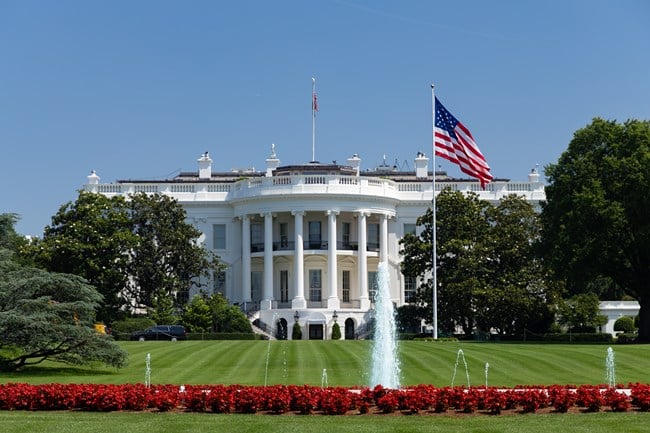
That tension is now playing out inside Washington itself. Both Kalshi and Polymarket have been blocked on White House Press WiFi and the House of Representatives’ network, a quiet but telling move aimed at stopping real-time betting on press briefings, speeches, and government activity. The Senate’s network, notably, remains unrestricted.
The decision comes as prediction markets increasingly zero in on the smaller details of American politics. Users aren’t just betting on elections or policy outcomes anymore. They’re wagering on how long a press briefing will last, when it will start, and whether specific words or phrases will be said. Markets exist for mentions of “ICE,” “Biden,” “fake news,” and other political buzzwords that can be easily included, or deliberately avoided.
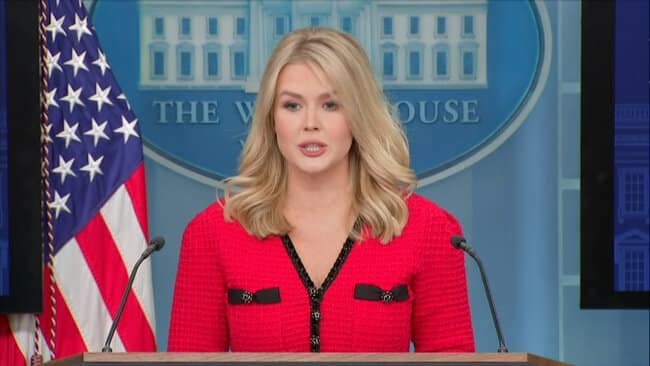
That reality came into sharp focus earlier this month when White House Press Secretary Karoline Leavitt ended a briefing seconds before it crossed the 65-minute threshold. On prediction markets, the “over” had been priced at a 98% likelihood. Instead, the under hit. The clip quickly went viral, with critics accusing the system of enabling a form of insider trading.
Concerns around insider trading have been building for months. Lawmakers were already on edge after an anonymous Polymarket user made more than $400,000 by correctly predicting the downfall of Venezuelan President Nicolás Maduro hours before the news became public. That trade triggered alarms on Capitol Hill and renewed scrutiny of whether people with access to private information are quietly profiting from it.
Insider Trading Fears Grow as Prediction Markets Zero In on Government Activity
Prediction market operators insist they’re not gambling companies. Kalshi frames its platform as a regulated futures exchange, arguing that users trade contracts, not bets. Polymarket has gone further, with leadership suggesting insider trading can actually improve market accuracy. That argument has only fueled skepticism among regulators and ethics experts.
Federal rules already prohibit government employees from gambling on government property or using confidential information for personal gain. But prediction markets exist in a gray area, actively fighting in court to avoid being regulated like sportsbooks.
Lawmakers have responded with proposed legislation aimed at barring government officials and staff from trading on prediction markets tied to government activity. Legal experts say enforcement, not new laws, may be the bigger issue.
Meanwhile, the industry continues to explode. Prediction markets have expanded beyond politics into culture, entertainment, and even hypothetical events, drawing billions of dollars in volume and partnerships with major media outlets. What was once niche now sits at the center of the information ecosystem.
Players trust our reporting due to our commitment to unbiased and professional evaluations of the iGaming sector. We track hundreds of platforms and industry updates daily to ensure our news feed and leaderboards reflect the most recent market shifts. With nearly two decades of experience within iGaming, our team provides a wealth of expert knowledge. This long-standing expertise enables us to deliver thorough, reliable news and guidance to our readers.
Latest News