
Michigan Gambling Tax Increase Included in Whitmer Budget Plan
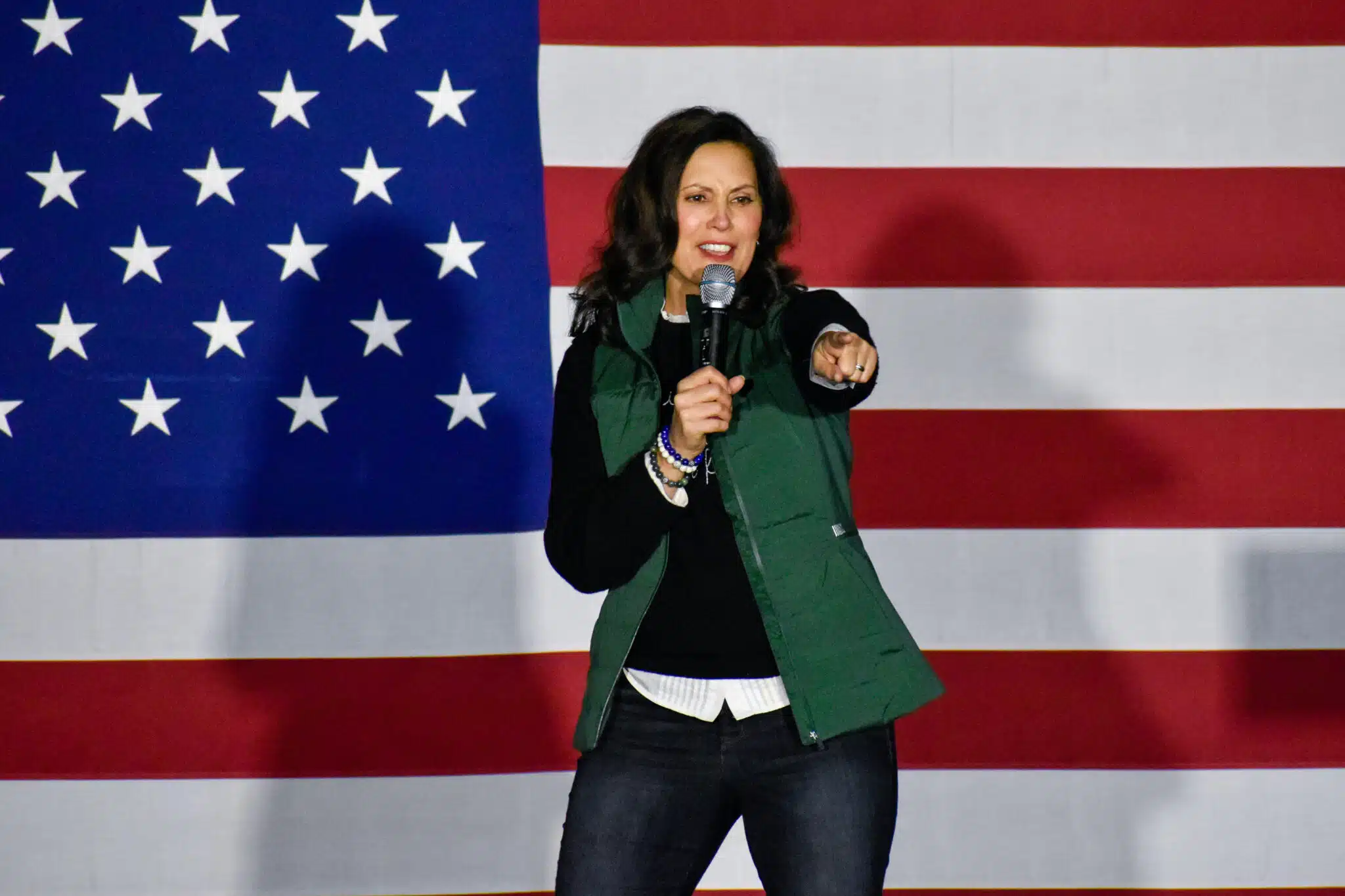
Gov. Gretchen Whitmer speaks in East Lansing during the final rally of her re-election campaign on Nov. 7, 2022. (Andrew Roth/Michigan Advance)
Michigan’s next state budget is about more than literacy and tax relief. A major piece of Gov. Gretchen Whitmer’s FY2027 proposal centers on raising roughly $800 million in new revenue by targeting nicotine products, gambling, and advertising.
The $88.1 billion executive budget frames the move as a way to fund education priorities while keeping broader taxes stable. But the mechanism matters. Instead of across-the-board increases, Whitmer is aiming squarely at specific industries tied to public health and consumer spending.
Whitmer Budget 2027 Seeks $800 Million in New Revenue
The administration estimates that changes to nicotine taxation, gambling-related revenue, and advertising streams could generate about $800 million.
That money would help support expanded literacy funding, continued school aid increases, and other core services outlined in the proposal.
According to the official announcement from the governor’s office, the broader goal is to improve reading outcomes and protect essential services without cutting existing programs.
For a state that legalized online wagering only a few years ago, the industry has matured quickly. Lawmakers will now weigh whether higher tax burdens risk slowing growth or whether the market can absorb the increase.
Michigan Gambling Tax Revenue Expansion
Gambling represents a major target for Gov. Whitmer. Michigan already collects significant revenue from casinos and online sports betting. The new budget proposal looks to increase that intake.
Online gaming and sports betting have become reliable contributors to the state’s coffers. Adjustments to tax structures or fee arrangements could push that figure higher.
For a state that legalized online wagering only a few years ago, the industry has matured quickly. Lawmakers will now weigh whether higher tax burdens risk slowing growth or whether the market can absorb the increase.
Michigan Nicotine Tax Changes Target Vapes and Tobacco
Another key revenue stream involves higher taxes on nicotine products, including vaping devices and traditional tobacco.
States across the country have increased excise taxes on nicotine in recent years, often tying the policy to public health goals. Michigan’s proposal follows that model. The idea is to reduce youth usage while also creating a predictable funding source.
Critics typically argue that excise taxes can disproportionately impact lower-income consumers. Supporters counter that higher prices discourage long-term use and offset public health costs.
Advertising Taxes and Fee Adjustments in Michigan Budget
The third piece involves advertising-related revenue. While details will be hammered out during legislative debate, the framework points toward raising additional funds through ad-based channels.
Advertising taxes have sparked debate in other states, especially when digital platforms are involved. Businesses often argue the costs get passed on to consumers. Proponents say large-scale advertising markets can contribute more without disrupting daily life for residents.
How the $800 Million Would Be Spent
The revenue push ties directly to Whitmer’s headline education investment. The budget includes a $625 million literacy package, described as the largest in state history.
Funds would support early childhood programs, high-impact tutoring, teacher training aligned with reading science, and district-level literacy grants.
Base per-pupil funding would also rise to about $10,300, continuing the upward trend in school aid.
By linking new revenue to specific education outcomes, the administration is attempting to frame the tax changes as targeted and purposeful rather than broad-based increases.
Political Debate Ahead in Lansing
The proposal now moves to the Michigan Legislature, where negotiations will determine how much of the $800 million plan survives intact.
Industry groups tied to nicotine, gaming, and advertising are likely to push back. Lawmakers from both parties will weigh economic impact against funding stability.
At its core, the budget presents a trade-off. Higher targeted taxes in exchange for expanded education investment and maintained services. Whether that equation holds through the legislative process will shape Michigan’s fiscal direction heading into 2027.
Players trust our reporting due to our commitment to unbiased and professional evaluations of the iGaming sector. We track hundreds of platforms and industry updates daily to ensure our news feed and leaderboards reflect the most recent market shifts. With nearly two decades of experience within iGaming, our team provides a wealth of expert knowledge. This long-standing expertise enables us to deliver thorough, reliable news and guidance to our readers.
Latest News