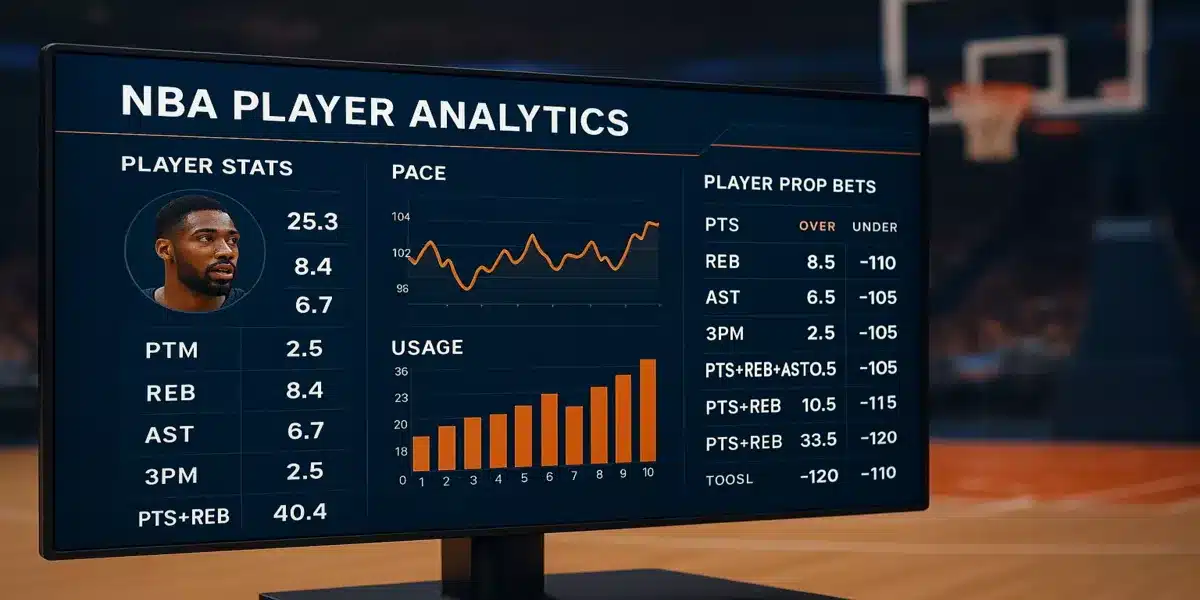
NBA Veteran Malik Beasley Faces Federal Charges After Allegedly Manipulating His Own Performance for Prop Bets
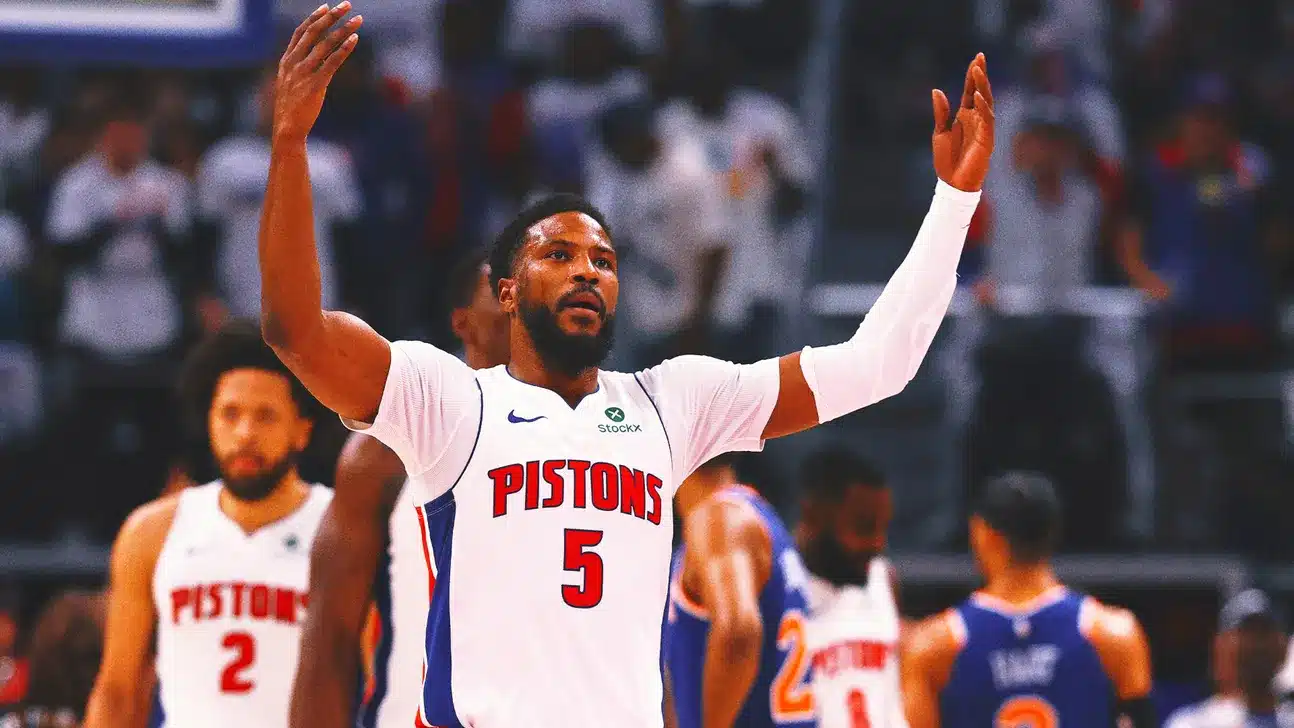
Nine-year NBA veteran Malik Beasley has been indicted on federal charges related to a sports betting scheme involving point shaving and prop bets.
Beasley’s attorney Steve Haney confirmed the indictment to ESPN on Monday. The government is coordinating Beasley’s voluntary surrender this week. The charges are more serious than the gambling violations that have defined the NBA’s recent integrity problems. This is not a player who bet on games, shared injury information with gamblers, or wagered on his own team’s outcomes.
According to The Athletic, Beasley and former NBA player Ed Davis were indicted after allegedly working together to manipulate Beasley’s performance four separate times during the 2023-24 season, when Beasley was a member of the Milwaukee Bucks. A player deliberately underperforming to cash prop bets, with an external co-conspirator coordinating the scheme, is the most serious category of sports integrity violation short of fixing an entire game’s outcome. It is closer to what Tim Donaghy did in 2007 than to what Jontay Porter did in 2024, though it shares structural similarities with both.
The Investigation Cost Beasely a New Contract and Ironically a Big Pay Day
The NBA launched its investigation after a sportsbook detected unusual betting interest on Beasley’s statistical lines in January 2024. That detail matters beyond the mechanics of this specific case. It is the integrity monitoring system working as designed: a regulated sportsbook flagging anomalous activity, notifying the appropriate authorities, and triggering a federal investigation that has now produced a criminal indictment more than two years later. The same infrastructure that critics argue creates the conditions for corruption also detected this particular instance of it, and many have used this as a reason not to ban prop betting across multiple sports.
The investigation’s timeline cost Beasley considerably. Coming off a breakout season with Detroit in which he averaged 16.3 points in all 82 games and set a Pistons franchise record with 319 made three-pointers, he was reportedly in line for a three-year, $42 million contract to remain in Detroit. The investigation froze those discussions. No NBA team would sign him while federal exposure and possible prosecution remained unclear. He eventually signed with the Cangrejeros de Santurce in Puerto Rico to keep playing, before being released in May. The voluntary surrender this week ends a year of professional limbo.
Punishments Are Evolving From League Discipline to Federal Prison Possibilities
The Beasley indictment is not the NBA’s first encounter with this specific category of manipulation. In 2024, Toronto Raptors guard Jontay Porter received a lifetime ban for betting on games, sharing confidential information with bettors, and intentionally limiting his own participation to affect prop-bet outcomes. Porter’s scheme involved exiting games early with fabricated physical complaints to affect over-under markets on his playing time and statistical totals. Beasley’s alleged scheme, based on what has been reported, involved actively underperforming within games rather than removing himself from them, but the underlying mechanic is identical: a player using his agency over his own performance as a tool to manipulate a prop market.
The Porter case resulted in a lifetime ban from the NBA. The Beasley case involves federal criminal charges, which represent an escalation in how authorities are treating this category of conduct. Porter faced league discipline, but Beasley now faces a federal prosecutor.
That escalation reflects something the industry has been absorbing slowly: prop bet manipulation by players is not merely a league integrity problem amenable to administrative punishment. It is potentially a federal crime, prosecutable under wire fraud and sports bribery statutes that carry meaningful prison exposure. The financial scale required to make the scheme worth the risk, and the involvement of an external co-conspirator in Ed Davis, pushed this case beyond what a league investigation and suspension could address.
The NBA Gambling Scandal Roots Are Growing Deeper
Beasley’s case was connected to the same federal investigation that led to the arrests of Terry Rozier and Chauncey Billups in October 2025. That investigation’s scope, reaching from active players to former players to a prominent coach, suggests a network of gambling-adjacent conduct inside professional basketball that extends well beyond any individual case. Each indictment reveals another node.
The NBA’s gambling problem has accumulated enough cases now that the pattern is legible if not obvious. The sport legalized sports betting partnerships, embedded sportsbook integrations into its broadcast and arena infrastructure, and built a commercial relationship with an industry whose products create financial incentives for the athletes at the center of every transaction. The Porter case showed that player prop markets were exploitable. The Rozier and Billups arrests showed that the network was broader than a single player. The Beasley indictment shows the conduct extended into active performance manipulation during games, coordinated with outside parties, across multiple games in a single season.
To date, the NFL has yet to deal with a comparable gambling scandal involving active manipulation of performance. MLB has an odd history of gambling scandals that dates back almost 100 years, and most recently, Emanuel Clase was involved in prop-bet manipulation in Cleveland. Clearly, MLB leadership is taking it seriously, as it is considering banning player prop bets to prevent such events from happening again. Whether the NFL’s ability to avoid gambling scandals in the headlines reflects stronger institutional controls, better luck, or simply a longer fuse on an investigation that has not yet surfaced is a question the NBA’s integrity office is presumably asking itself today.
Players trust our reporting due to our commitment to unbiased and professional evaluations of the iGaming sector. We track hundreds of platforms and industry updates daily to ensure our news feed and leaderboards reflect the most recent market shifts. With nearly two decades of experience within iGaming, our team provides a wealth of expert knowledge. This long-standing expertise enables us to deliver thorough, reliable news and guidance to our readers.
Latest News