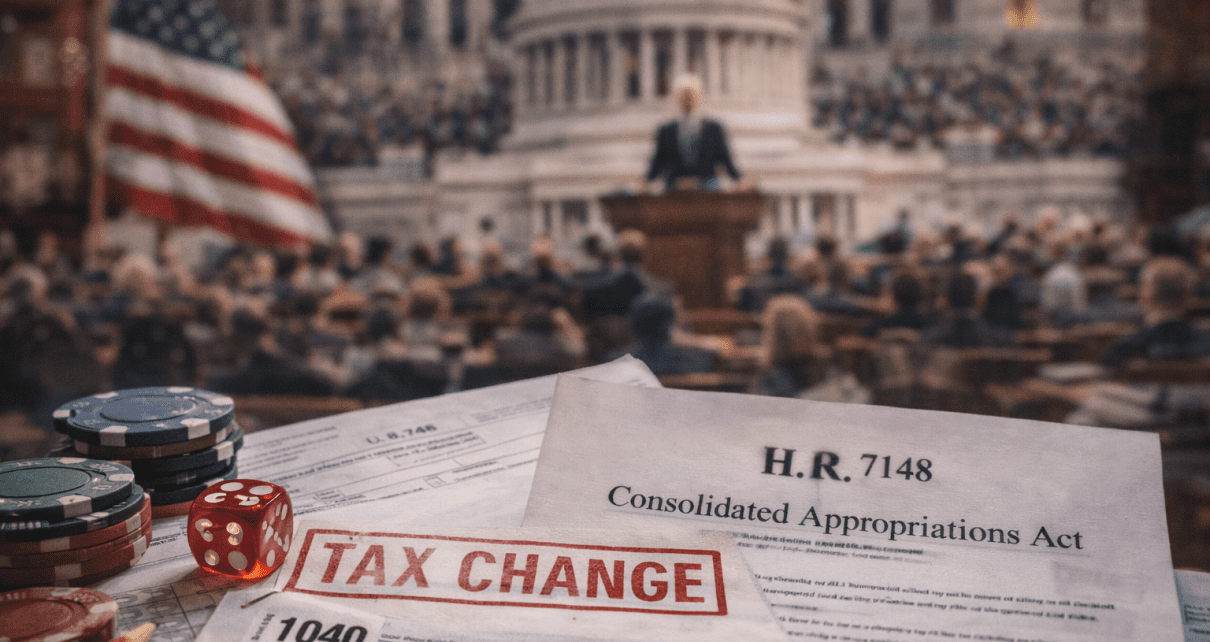
MLBPA Proposes Banning Player Prop Bets. The Logical Question That Raises Goes Well Beyond Baseball
The Major League Baseball Players Association proposed, as part of ongoing collective bargaining negotiations with MLB, a ban on all prop betting on individual players across sportsbooks, daily fantasy operators, and prediction markets.
The proposal covers all player-specific bets placed before or during a game, including popular markets such as home run odds, and would extend to event contracts on prediction market platforms centered on individual player performance.
The MLBPA also asked for clarification that players remain free to pursue endorsement and sponsorship deals with legal betting operators, which is the kind of detail that tells you the proposal is about protecting players from harassment rather than distancing the sport from gambling entirely. The union wants to remove one product category while preserving the financial relationships that have become routine across professional sports.
Player prop bets can account for 20 to 30 percent of the total amount wagered on a given game, which makes this a commercially significant proposal rather than a symbolic one. If the MLBPA and MLB pursue the joint lobbying effort described in the proposal, and if regulators or legislators respond, the financial impact on sportsbooks could be substantial, and the industry would strongly push back.
Player Harassment and Game Integrity Stand as the MLBPA’s Pillars for Making Changes
The case for banning player props rests on at least two distinct arguments that are worth separating. The first and most obvious is harassment. Players have documented a direct connection between individual prop markets and abusive behavior from losing bettors: a player who fails to hit a home run in a game becomes the direct object of someone’s financial loss in a way that a team outcome does not.
Prop bets transform human beings into the dice on the craps table. A losing gambler can sometimes come off as completely deranged, screaming at the dice for not landing correctly. It is less unreasonable, but still unreasonable, to direct that vitriol at the player who failed to hit a home run. Less unreasonable is not unreasonable enough, and players have decided they do not want to absorb it.
The second argument is game integrity, which the MLB has already addressed in a major way. A player who knows a prop bet on his own strikeout total is heavily traded has a financial incentive, or a susceptibility to corruption, that does not exist when only team outcomes are on the board. The case involving Guardians closer Emanuel Clase is a prime example of what the MLB wants nothing to do with in its game.
Finding Differences between Player Prop Bets and Individual Athlete Sport Bets, Like Tennis and Golf
If the reasoning behind banning individual player props is that players should not be subject to gambling markets tied to their specific performance in ways that invite harassment or create integrity risks, then individual sports have a problem. In tennis, there is no team outcome to bet on. Every bet is, in some sense, an individual player prop. The same goes for golf. You can bet on a player to win a tournament, finish in the top 20, or finish above another golfer outright. The bet is on the individual, which one could argue is just a player prop bet.
In tennis, a wager on a match winner is a bet on whether Jannik Sinner or Carlos Alcaraz specifically performs well enough to win a set of games. A bet on games won in a set is a player performance prop by any reasonable definition. If the MLBPA’s logic applies consistently, tennis betting should face the same scrutiny.
The honest answer is that sports betting regulation has never been fully consistent on this question, and probably cannot be, for reasons that are more pragmatic than principled. Tennis and the PGA Tour have no team structure to fall back on. Banning individual player props in sports where every competitive unit is an individual player is functionally equivalent to banning betting on the sport entirely. Most jurisdictions have implicitly accepted that tradeoff as too costly to impose on tennis and golf fans and each sport’s respective commercial ecosystem.
Baseball, by contrast, has an enormous betting market built primarily around team outcomes. Removing player props from the menu leaves a substantial product intact. The commercial disruption is real, the 20-30% handle reduction is significant, but the sport remains fully bettable. The MLBPA’s proposal is possible in a way that a comparable proposal from the ATP, WTA, or PGA would not be.
That pragmatic distinction may be the right answer even if it is not a logically clean one. One version of the tennis framework that might satisfy the harassment concern without eliminating the sport from sportsbook menus is match betting without props, allowing wagering on who wins a match or set, while banning markets on specific performance metrics such as aces, double faults, or games won. That preserves the product while removing the granular, player-specific markets most susceptible to the harassment dynamic. Whether tennis governing bodies would pursue something like this is unclear, but it is a more coherent position than simply treating individual sports as exempt from the same logic that the MLBPA is now applying to baseball.
The CFTC May Have Added Another Layer of Complexity if its Proposed Rules on Prediction Markets Gains Traction
The MLBPA’s proposal is a negotiating position in an active CBA fight, not a policy outcome. The current CBA expires on December 1, 2026, and both sides remain far apart on multiple issues, including a hard salary cap that the league has proposed and the union has long opposed. The prop bet ban is one item in a complex negotiation, and MLB’s response to the full package has not yet been delivered.
Even if MLB and the MLBPA agree on a joint lobbying position, converting that into actual regulatory change would require either state-by-state legislative action or federal intervention, neither of which happens quickly or easily. Sportsbooks would contest any ban with the same vigor they have brought to every other challenge to their product menus. The commercial stakes are large enough that the industry would not accept a 20-30% reduction in baseball handle without exhausting every available avenue of resistance.
Another layer of complexity is introduced by the CFTC’s newly proposed rules for prediction markets, which claim prediction markets should allow only team bets and leave prop bets to sportsbooks. If that somehow happened and the MLBPA got its way on player prop bets, sportsbooks would be getting the short end of the stick vs. prediction markets. It just adds another layer of complexity to this entire situation.
The more immediate effect may be on the CBA negotiation itself. The MLBPA has clearly signaled that the expansion of gambling into player-specific markets is now a labor issue, not just a public relations concern. That framing is new, and it is likely to persist regardless of how this particular round of negotiations resolves.
Players trust our reporting due to our commitment to unbiased and professional evaluations of the iGaming sector. We track hundreds of platforms and industry updates daily to ensure our news feed and leaderboards reflect the most recent market shifts. With nearly two decades of experience within iGaming, our team provides a wealth of expert knowledge. This long-standing expertise enables us to deliver thorough, reliable news and guidance to our readers.
Latest News