From Indiana to MLB, Everyone Is Fighting Over Player Prop Bets, and Nobody Agrees on the Fix
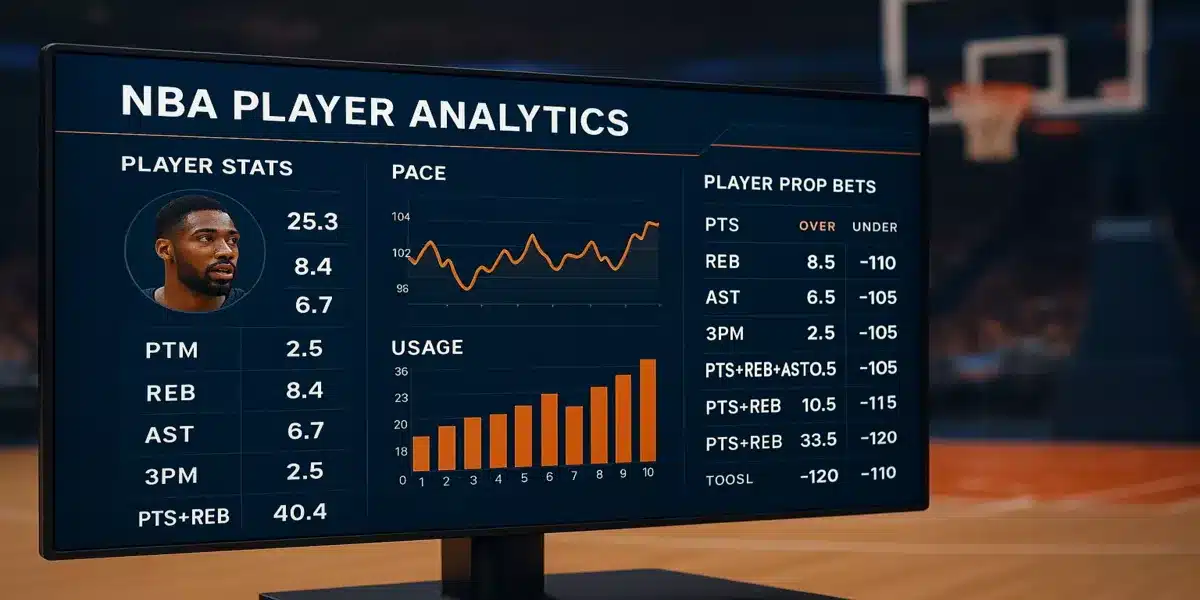
The Indiana Gaming Commission voted Thursday to table a request from the NCAA to ban college player prop bets, giving itself until September to study the issue.
The commission was short-handed, with two new members and no chairman, and the decision to delay was framed as a matter of prudence rather than paralysis. “There’s a delicate balance between the interests of the NCAA and the Sports Betting Alliance, and I don’t think it would be prudent that we should make a decision in a rush,” said commissioner L. Scott Pejic.
Indiana’s three-month window is not a large amount of time to resolve a fight that has been building across multiple institutions simultaneously. Within the same week, the MLBPA proposed banning all MLB player props across sportsbooks, daily fantasy operators, and prediction markets as part of its CBA negotiations with the league. The CFTC’s proposed rulemaking signaled that granular, play-level props are likely off-limits for prediction markets going forward. And the Sorsby case, which began in Indiana and ended in a Texas courtroom, sits in the background of nearly every conversation about what individual player markets actually cost the sport.
Player prop bets have never had more institutional enemies. They have also never been more legally complicated to remove.
Four Institutions with Four Different Concerns Regarding Player Prop Betting
The pressure on player props is real, but the actors applying it are not aligned on what they want or why, and that disagreement is part of why Indiana’s commissioners found the issue difficult to resolve in a single meeting.
The NCAA’s argument is primarily about harassment. Clint Hangebrauck, the NCAA’s managing director of enterprise risk management, told the Indiana Gaming Commission that the organization has identified thousands of threats targeting players stemming from prop-bet losses during the NCAA Men’s basketball tournament alone, including death threats that required law enforcement involvement and additional event security. Ohio responded to that argument in February 2024, becoming the first state to ban college player props. Louisiana, Maryland, and Vermont have since followed. Indiana has not, and its commission spent more than an hour Thursday hearing both sides without reaching a conclusion.
The MLBPA’s argument runs parallel to but is not identical to the situation in Indiana. Professional players are not subject to the same eligibility rules as college athletes, and the financial stakes of losing a prop bet on a major league player are higher for bettors than those on a college freshman. The harassment dynamic is the same; the specific vulnerability is different. The union proposed a ban on Thursday covering all player-specific bets placed before or during a game, including popular markets such as home run odds, and extending to event contracts on prediction-market platforms focused on individual player performance.
The CFTC’s concern is neither harassment nor integrity in the conventional sense. Its proposed rulemaking signals that microbets and granular in-game props are too gambling-like to qualify as legitimate price-discovery instruments for federally regulated prediction markets. The concern is product classification, not player welfare. The effect, if the NPRM becomes final, would be to reserve those products for state-licensed sportsbooks rather than eliminating them from the market.
Sportsbooks Brought in Former Regulators Turned Operator Executives, and They Delivered a Compelling Counter-Argument
Indiana’s commission heard more than an hour of pushback from sportsbook representatives, including two former state gaming commission executives now working for operators. Their argument was not that player harassment is acceptable. It was that banning props is the wrong solution to a social media problem.
Sara Tait, a former Indiana Gaming Commission executive director now at Fanatics, argued that college sports fans will remain on social media regardless of any regulatory action, and that the harassment originates there rather than in the betting product itself. Louis Trombetta, FanDuel’s director of government relations and former executive director of the Florida Gaming Control Commission, said his approach in Florida had been to support law enforcement tools to respond to threatening behavior rather than restricting the wager that triggered it.
The second sportsbook argument is less obvious but arguably more important for long-term sports integrity. Prop markets generate the granular, real-time betting data that integrity monitoring systems use to detect suspicious activity. A sudden surge in bets on a pitcher’s strikeout total, or an unusual volume of wagers on a specific player’s performance metric, can flag a potential corruption attempt before it affects a game outcome. Because there are so many player prop options in any given game, no one prop should have massive action and handle without putting up a red flag to be monitored. Remove those markets, and you remove a monitoring layer that has been used to identify integrity violations before they become public scandals.
Scott Dolson, Indiana University’s athletics director, made the counterargument directly: prop bets on individual college athletes may lead those athletes to bet on themselves, creating eligibility violations like those that defined the Sorsby case. Sorsby bet on props involving his own teammates while at Indiana. Three individual player prop bets on his teammates were part of the conduct that led to his permanent ban and, eventually, to the Texas courtroom injunction that became a national story. Indiana, more than most states, has seen exactly what the NCAA’s concern looks like in practice.
The CFTC Wants to Hand Sportsbooks a Product Option With Serious Political and Regulatory Baggage
The federal regulatory layer adds a dimension that the state-level debate has not fully absorbed. If the CFTC’s proposed framework is finalized in something close to its current form, player props on prediction markets would be prohibited not because they harm players but because they are insufficiently distinct from gambling to qualify as legitimate derivatives. That prohibition would benefit sportsbooks, which would retain exclusive access to the product.
The irony is layered here. The CFTC is drawing a regulatory fence around a product that the MLBPA wants eliminated entirely, that the NCAA wants banned at the college level, and that four states have already removed from their markets. The federal government would be handing sportsbooks exclusive ownership of something that multiple other institutions believe should not exist at all. Sportsbooks would win the jurisdictional fight and inherit the political one.
Whether any of the pending efforts to restrict or ban player props actually clear the legislative, regulatory, and labor agreement hurdles they each face is genuinely uncertain. The MLBPA proposal still needs MLB’s agreement and then a successful joint lobbying campaign. State-level college prop bans require individual regulatory or legislative action in each jurisdiction. The CFTC rulemaking is months from finalization. Indiana’s commission now has until September to decide on its position on prop betting.
What is clear is that the debate has reached a critical mass that it did not have two years ago. Indiana’s three-month delay was described as time to consult other state regulators and gather more information. The reality is that the information is already out there. What Indiana is really waiting for is clarity on which way the broader institutional consensus is moving, so it does not have to be the state that gets the answer wrong.
Players trust our reporting due to our commitment to unbiased and professional evaluations of the iGaming sector. We track hundreds of platforms and industry updates daily to ensure our news feed and leaderboards reflect the most recent market shifts. With nearly two decades of experience within iGaming, our team provides a wealth of expert knowledge. This long-standing expertise enables us to deliver thorough, reliable news and guidance to our readers.
Latest News