Eight Plead Guilty on Conspiracy and Racketeering Charges in New Jersey Mob Gambling Case

Eight people and three companies admitted their roles Tuesday in a racketeering, gambling, and money laundering operation tied to the Lucchese crime family.
All eight have entered pleas of guilty before Superior Court Judge Ralph E. Amirata in Morris County. The pleas bring the total number of defendants who have admitted guilt in the case to 35, out of 42 people indicted since the initial arrests in April 2025 following a two-year investigation.
Three of those pleading guilty, George Zappola, Joseph R. Perna, and John G. Perna, are described by authorities as high-level managers of the enterprise and alleged members of the Lucchese crime family. All three pleaded guilty to second-degree racketeering in exchange for recommended sentences of seven years in state prison. Michael P. Frasso, 48, of Cedar Grove, a sportsbook agent, pleaded guilty to racketeering, failure to pay income tax, and corporate misconduct, with prosecutors recommending an aggregate sentence of 15 years.
Investigators identified approximately $4.79 million in suspected criminal proceeds generated through the operation. Seven defendants remain with charges pending.
Three Companies Alongside the Individuals Were Also Charged With Various Crimes
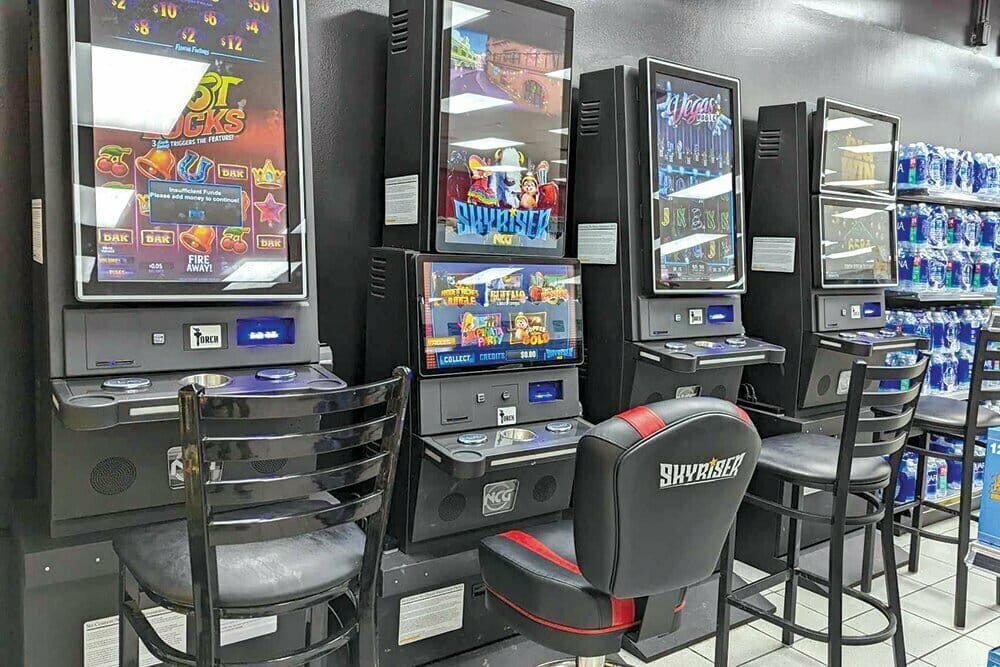
The enterprise ran on two parallel tracks, driving revenue. Social clubs in northern New Jersey housed live poker games and gambling machines, with poker club managers collecting payments from hosts and overseeing day-to-day operations. Separately, the enterprise operated an extensive online sportsbook through websites based outside the United States, using agents and sub-agents who managed groups of bettors and passed a portion of the proceeds up the chain to higher-level managers.
Joseph R. Perna had been separately charged in a sports betting operation that prosecutors said targeted younger gamblers and student athletes through a network of family members and friends, generating more than $2 million in illegal betting activities spanning multiple states. That detail places the enterprise in a category of organized crime gambling operations that law enforcement has increasingly prioritized, those using offshore sportsbook infrastructure to reach bettors who might otherwise use licensed platforms, particularly younger customers.
Three companies also pleaded guilty alongside the individuals. Café Gio, used by poker club manager Frank Imparato to facilitate illegal gambling, pleaded guilty to second-degree conspiracy. Frasso Trucking, used by Michael and Gerard Frasso to conceal gambling proceeds, pleaded guilty to second-degree conspiracy for anti-money laundering profiteering. CJW Development and Consulting, used by Lucchese associate Wayne Cross to conceal criminal proceeds, also pleaded guilty to second-degree conspiracy for anti-money laundering profiteering. Each company faces a $250,000 penalty.
Authorities Are Cracking Down on Offshore Sportsbook Operations
The most commercially relevant aspect of the case for the gaming industry is the offshore sportsbook operation, which represents the modern infrastructure of illegal sports betting: websites based outside the United States, an agent network that recruits and manages bettors domestically, and a hierarchy that funnels proceeds upward through layers of the enterprise. This model is not unique to organized crime, but organized crime has adopted it because it mirrors the structure of legitimate offshore sportsbook operations that have operated in a gray area for decades.
The legal sports betting market in New Jersey is among the most mature and competitive in the country, with licensed operators generating billions in annual handle. The persistence of illegal offshore operations alongside that licensed market reflects a dynamic the industry has long acknowledged: offshore books can offer better lines, higher limits, and looser credit arrangements than regulated platforms, and for certain bettors, particularly high-volume or credit-dependent players, those advantages outweigh the legal risk. The Lucchese operation was not competing with FanDuel for casual bettors. It was serving an entirely different segment of the market. But it’s been a focus for authorities at both the local and federal levels, especially in this part of the country.
Attorney General Jennifer Davenport said the guilty pleas represent another important step in dismantling a criminal enterprise that caused significant harm to individuals and communities, adding that organized crime has no place in New Jersey. The investigation involved the FBI’s Newark and Red Bank offices, the FBI in New York City, the U.S. Marshals, Federal Probation, and the Department of Corrections Special Operations Group, alongside state law enforcement, reflecting the breadth of coordination the two-year investigation required.
Seven defendants still face pending charges as the case moves toward its conclusion.
Players trust our reporting due to our commitment to unbiased and professional evaluations of the iGaming sector. We track hundreds of platforms and industry updates daily to ensure our news feed and leaderboards reflect the most recent market shifts. With nearly two decades of experience within iGaming, our team provides a wealth of expert knowledge. This long-standing expertise enables us to deliver thorough, reliable news and guidance to our readers.
Latest News