

Missouri Business Fights Back Against Crackdown, Says ‘No-Chance’ Devices Aren’t Gambling
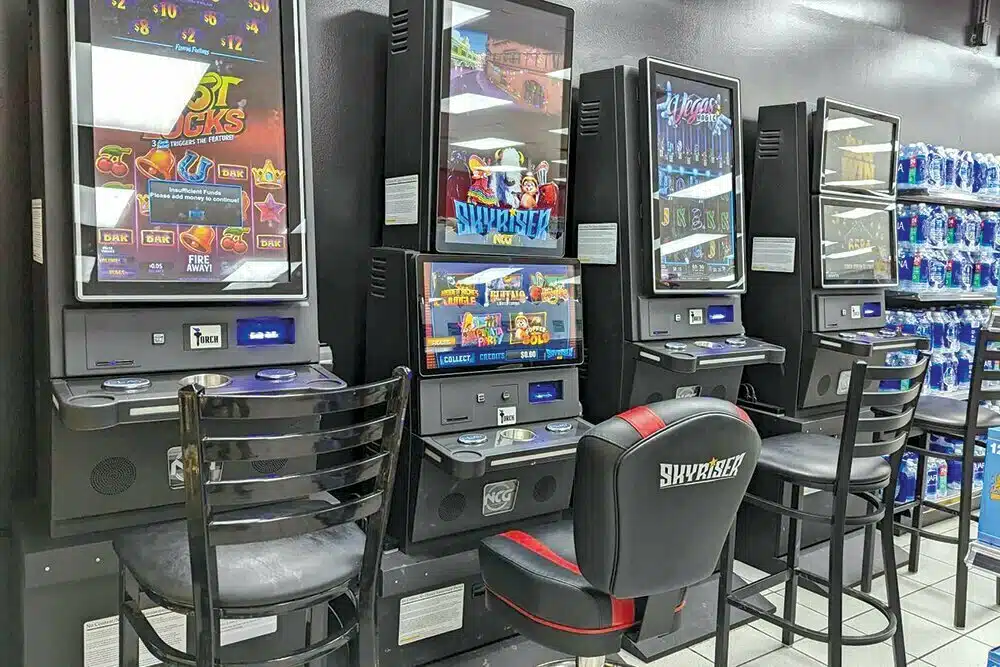
A St. Charles bar filed suit in Missouri state court this week seeking to block Attorney General Catherine Hanaway’s enforcement campaign against no-chance gaming devices.
The bar is arguing that the machines being targeted are not gambling devices and that Hanaway lacks the authority to criminalize conduct without legislative action from the General Assembly. The lawsuit, filed by Tuners Bar and Grill and its owner, Schappe Inc., challenges the state’s classification of pre-reveal gaming devices as illegal slot machines and asks the court to issue a declaratory judgment that state gambling laws do not apply to what the plaintiffs call “electronic amusement devices.”
The suit is a direct counterattack against an enforcement push that has been building since February, when a federal judge handed Hanaway’s office the clearest legal foundation it has had in years for the crackdown.
A Previous Judgement Ruled Against Specific Machines, But Not All Machines
No-chance gaming devices have occupied a legal gray zone in Missouri for the better part of a decade. The machines look, sound, and operate similarly to slot machines found in the state’s 13 licensed riverboat casinos, but differ in one key respect: the outcome of the next play is displayed to the player before any money is wagered.
Supporters of the machines have argued that because the result is already determined and visible before a bet is placed, no element of chance is involved, and therefore, Missouri’s gambling statute, which requires a “stake or risk upon the outcome of a contest of chance or a future contingent event,” does not apply.
That argument had kept the machines operating in bars, convenience stores, and gas stations across Missouri for years, generating significant revenue. One business owner testified before the Missouri Senate Select Committee on Gaming that her company operates machines in 18 locations and banked more than $1.5 million in profits in 2025 alone. Estimates of the total number of machines operating statewide have ranged from 30,000 to 40,000.
In February 2026, U.S. District Judge John Ross issued a declaratory judgment in TNT Amusements v. Torch Electronics, finding that no-chance devices manufactured by Torch Electronics, the most prominent operator in the state, “meet the statutory definition of ‘gambling device’ and are therefore illegal under Missouri law when played outside a licensed casino.” Ross grounded his ruling in the October 2023 jury verdict that had already found Torch liable for competitive harm, concluding the legal question had remained unresolved at the state level long enough, and that ongoing uncertainty was no longer acceptable.
Hanaway moved quickly following the ruling. Her office filed civil lawsuits and felony gambling charges against convenience store owners in Greene and Dunklin counties, and announced she was assisting with a federal investigation involving money laundering and banking questions tied to the machines. Torch Electronics, facing both state enforcement and federal criminal exposure, suspended operations in April 2026, telling retailers that criminal proceedings create real uncertainty and real risk for the businesses that had hosted its machines. But not all machines in Missouri are manufactured by Torch Electronics, and that is where it gets interesting.
The Argument is Less About the Previous Ruling and More about the AG’s Authority
Tuners Bar and Grill is not arguing that Torch Electronics was right and the federal judge was wrong. The lawsuit makes a narrower, more surgical, and slightly clever claim: that the devices being targeted in the current enforcement sweep are not the same as Torch’s machines, that they operate differently, and that lumping all pre-reveal devices together as illegal gambling equipment misstates both the technology and the law.
The lawsuit reads: “The devices at issue in this lawsuit do not function as slot machines.” The plaintiffs argue that some machines subject to enforcement are, instead, legal electronic amusement devices under Missouri law, and that Hanaway’s office has overreached by treating all pre-reveal devices as equivalent to the machines that Judge Ross addressed.
The second argument cuts deeper and holds more judicial weight. The lawsuit alleges that Hanaway lacks the authority to criminalize conduct through enforcement policy without legislative action from the Missouri General Assembly. In other words, even if some machines are gambling devices, the power to define and prohibit gambling is the legislature’s, not the attorney general’s, and Hanaway’s enforcement campaign amounts to unilateral lawmaking by a prosecutorial office. That separation-of-powers argument, if it gains traction, would complicate the entire enforcement architecture that Hanaway has been building since the February ruling.
Missouri Extends the Nationwide Struggle to Identify and Define Gambling
The Missouri fight lands in the middle of a definitional debate we have covered in a different context. The Texas attorney general’s “any chance” test for gambling, which we examined when analyzing the Paxton skill game opinion, creates the same interpretive pressure from the opposite direction: when a machine reveals its outcome before money is wagered, has chance been eliminated entirely, or merely deferred to an earlier stage of the transaction?
Missouri courts have not reached a clean answer. The federal ruling in Ross’s court addressed Torch’s specific machines on specific facts. It did not establish a universal rule about pre-reveal gaming. The plaintiffs in Tuners Bar and Grill are betting that the distinction between their devices and Torch’s is legally meaningful, and that Missouri courts will find it more persuasive than Hanaway’s broad enforcement posture.
The legislature has not been idle during this period. A bill to establish a regulatory framework for video gambling machines, which would bring no-chance devices under Missouri Lottery oversight and out of the gray market entirely, has passed the Missouri House and is before a Senate Select Committee on Gaming. That bill’s prospects remain uncertain. If it passes, it could resolve the definitional fight by creating a licensed category for the machines, removing the need for courts to determine whether they are gambling devices under existing law. If it fails, the litigation now unfolding in St. Charles will continue to fill the vacuum the legislature has been unable to close.
Players trust our reporting due to our commitment to unbiased and professional evaluations of the iGaming sector. We track hundreds of platforms and industry updates daily to ensure our news feed and leaderboards reflect the most recent market shifts. With nearly two decades of experience within iGaming, our team provides a wealth of expert knowledge. This long-standing expertise enables us to deliver thorough, reliable news and guidance to our readers.
Latest News