Barry Diller’s MGM Bid Could be the Second $18 Billion Casino Megadeal in Four Days
Barry Diller’s People Inc. offered $48.30 per share for the rest of MGM. It’s the second $18 billion casino megadeal this week.
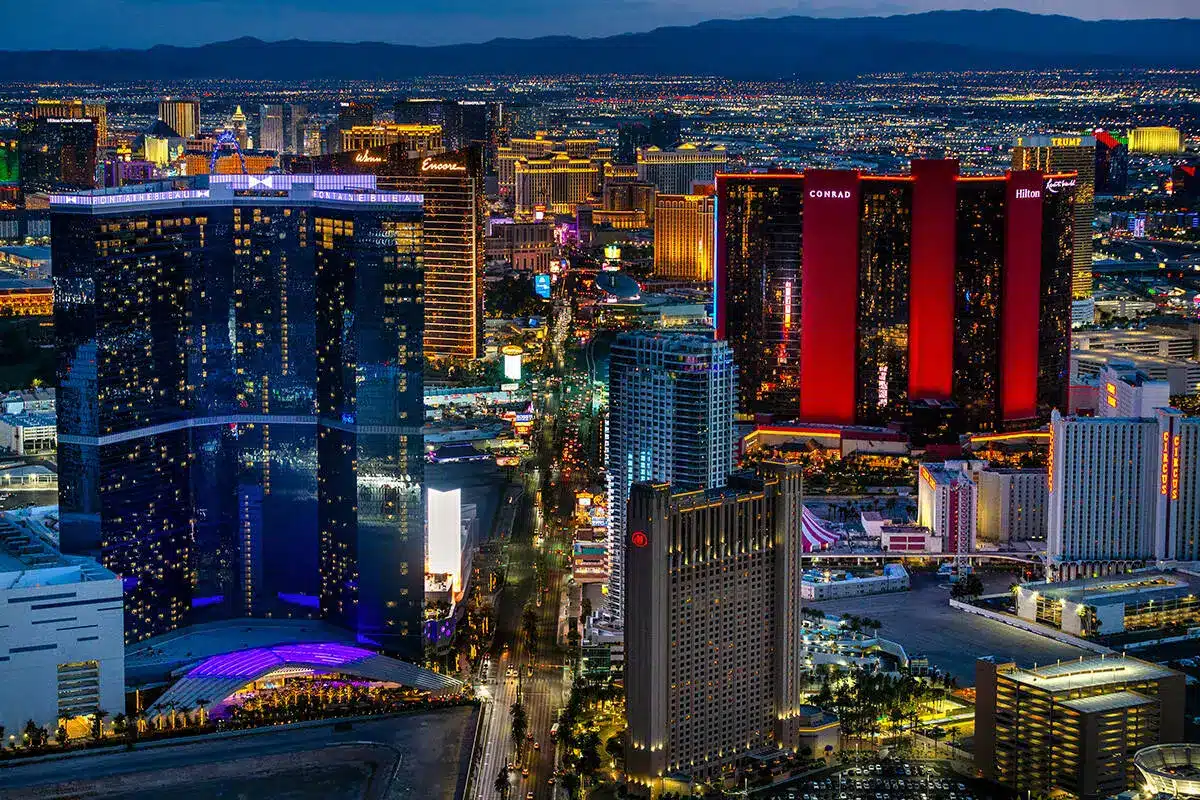
People Inc., the publicly traded company formerly known as IAC, made a non-binding offer on Monday to acquire the 74% of MGM Resorts International it does not already own at $48.30 per share. The all-cash proposal values MGM at approximately $18 billion, including debt, and would make the company a private subsidiary of People Inc. if the deal closes. The offer represents a 10.6% premium to MGM’s closing price on Friday and a 24.1% premium to its 30-day volume-weighted average price.
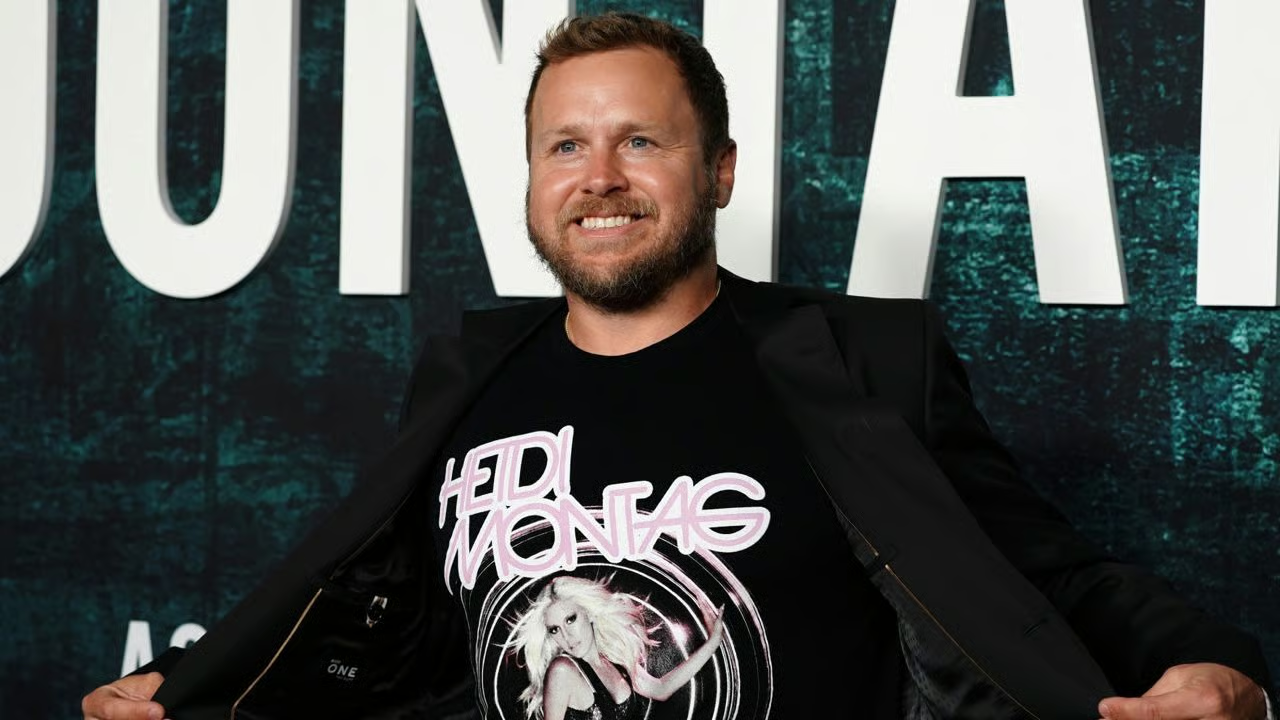
Barry Diller, who chairs People Inc., framed the rationale in a public statement on Monday morning. “We began investing in MGM nearly six years ago because we believed it represented a rare kind of business: one with real-world assets that AI cannot easily replicate or disintermediate and exceptional digital growth opportunities. That conviction has only strengthened over time.”
The “AI-resistant” framing is certainly based on some fibers of truth. It is also not really an acquisition thesis. Diller and the People Inc. board are not buying MGM because they think it will benefit from being defended from AI. They are buying it because the combination of People Inc.’s media properties and MGM’s gaming resorts produces a portfolio that is hard to assemble any other way. The four days separating this announcement from Caesars Entertainment’s $17.6 billion sale to Fertitta Entertainment last Thursday are fairly significant, and the two deals together warrant examination as part of the same pattern.
The Two Deals Are Different Bets on the Same Question
The Fertitta deal and the People Inc. deal are both consolidations of operating casino businesses into private holding companies controlled by individuals with significant non-gaming portfolios. Tilman Fertitta combines Caesars with the Houston Rockets, a relocating WNBA franchise, the Landry’s hospitality empire, and the Golden Nugget casino chain. Diller would combine MGM with People Inc.’s media portfolio, which includes People magazine, Travel + Leisure, Food & Wine, InStyle, Real Simple, Allrecipes, Better Homes & Gardens, and dozens of other lifestyle and consumer brands. It’s also worth noting that Barry Diller still plays a major role at Expedia Group, serving as its Chairman and Senior Executive. Diller is the largest individual shareholder in Expedia Group, holding a nearly 29% stake.
The strategic questions both deals are answering are similar in shape. Casino operators have built large loyalty databases that produce significant repeat business but are limited in their ability to reach beyond existing players. Caesars Rewards has roughly 65 million members. MGM Rewards has roughly 75 million. Acquiring one of those databases gives the buyer marketing access to a large, mostly American adult population with confirmed propensity to spend on travel, entertainment, and gaming. The question each buyer is implicitly answering is what else that audience would respond to if the company controlling the loyalty database also controlled adjacent commercial properties.
Fertitta’s answer is sports, restaurants, and entertainment venues. Diller’s answer is media, lifestyle content, travel, and an entirely different consumer profile. The two megadeals are running parallel experiments on what casino loyalty data can be cross-sold against.
Why This Audience Mix Is Different From Previous Media-Casino Pairings
The most common point of comparison for any media-casino transaction is the prior wave of partnerships and sponsorships that played out between 2020 and 2024. ESPN Bet, the Penn Entertainment partnership that absorbed Barstool Sportsbook. Sports Illustrated Sportsbook, the 888 Holdings-licensed product that wound down within 18 months. MaximBet, the Carousel Group-operated brand backed by the Maxim magazine license that closed in early 2023. The pattern across those deals was consistent. They paired sports-oriented or men’s lifestyle media with sportsbook brands, targeted a male sports-betting audience, and underperformed against the established operators.
People Inc.’s audience profile is meaningfully different. The flagship People magazine reaches an audience that is roughly 70 percent female. Travel + Leisure, Real Simple, and Better Homes & Gardens skew similarly. The lifestyle and celebrity-focused content the company built its identity around is closer to the consumer profile of MGM Resorts’ Bellagio, Aria, and Cosmopolitan properties than it is to a traditional sportsbook audience. MGM’s portfolio has always indexed more heavily toward couples and group leisure travel than its competitors. The strategic case for joining the two companies, which Diller did not articulate in his Monday statement, is that this is a different consumer than the audience the male-dominated media-gambling deals failed to convert.
Of course, it is a hypothesis rather than a result, as the previous media-casino deals also looked good on paper, and many believed they would succeed. However, the failure mode of those deals was specific. They tried to use brand recognition to compete with DraftKings and FanDuel for the same male sports bettor on essentially the same product. People Inc. would not be doing that with MGM. MGM is a casino resort company, not a sportsbook, and the customer People Inc. would be reaching through its media portfolio is not the customer the prior deals were targeting.
Despite Marketing Advantages, Structural Questions Remain Significant
The deal also leaves several structural questions open. MGM owns 50 percent of BetMGM, the joint venture with Entain that operates the company’s online sportsbook and iCasino product. If People Inc. takes MGM private, BetMGM remains a 50/50 partnership between a private company and a publicly traded Entain, which creates an unusual governance structure as Entain has its own institutional shareholder base.
The MGM Empire City situation looks significantly more interesting if this deal goes through. MGM walked away from the Yonkers casino conversion in October 2025, citing a 15-year license term and competitive clustering as reasons the $2.3 billion investment did not make sense. Resorts World New York City converted to a full casino in April and is now generating roughly $28 million in weekly revenue, putting it on a $1.5 billion annual pace. The deal valuation People Inc. is offering for MGM does not appear to include any near-term New York commercial casino upside, because MGM itself walked away from that opportunity months ago. A new private owner would be buying MGM, with the Empire City decision already made.
What Happens Next Depends on MGM’s Board
Diller’s letter is non-binding. Either MGM’s board accepts the offer and negotiates a definitive agreement, or it rejects the offer, and the existing 26 percent stake remains as is. People Inc. has publicly committed not to sell its stake or to vote for a change of control to another buyer, which removes the standard backstop of a competing hostile bid. The practical result is that MGM is now in a position similar to Caesars’ in early March, when Fertitta’s exclusive talks were first reported. The deal will either get done with this buyer or not get done at all.
What the offer signals, regardless of the outcome, is that the largest casino operators in the country are no longer valued primarily as gaming businesses by those interested in buying them. Fertitta is paying $17.6 billion for Caesars because he wants the combined entity for reasons that include, but are not limited to, its casino floor revenue. Diller is offering $18 billion for MGM because he sees a media-and-resorts conglomerate that public markets have not been valuing correctly. Whether that view holds up depends on whether the loyalty audiences these companies have built actually respond to the cross-portfolio integration the new owners are betting on.
By the end of this week, the two largest publicly traded US casino operators may both be moving toward private ownership under buyers with very different non-gaming portfolios. The next question is what each of them does with what they have bought.
Players trust our reporting due to our commitment to unbiased and professional evaluations of the iGaming sector. We track hundreds of platforms and industry updates daily to ensure our news feed and leaderboards reflect the most recent market shifts. With nearly two decades of experience within iGaming, our team provides a wealth of expert knowledge. This long-standing expertise enables us to deliver thorough, reliable news and guidance to our readers.
Latest News