

A Spartanburg Murder at a North Carolina Casino Lands in the Middle of South Carolina’s Casino Fight
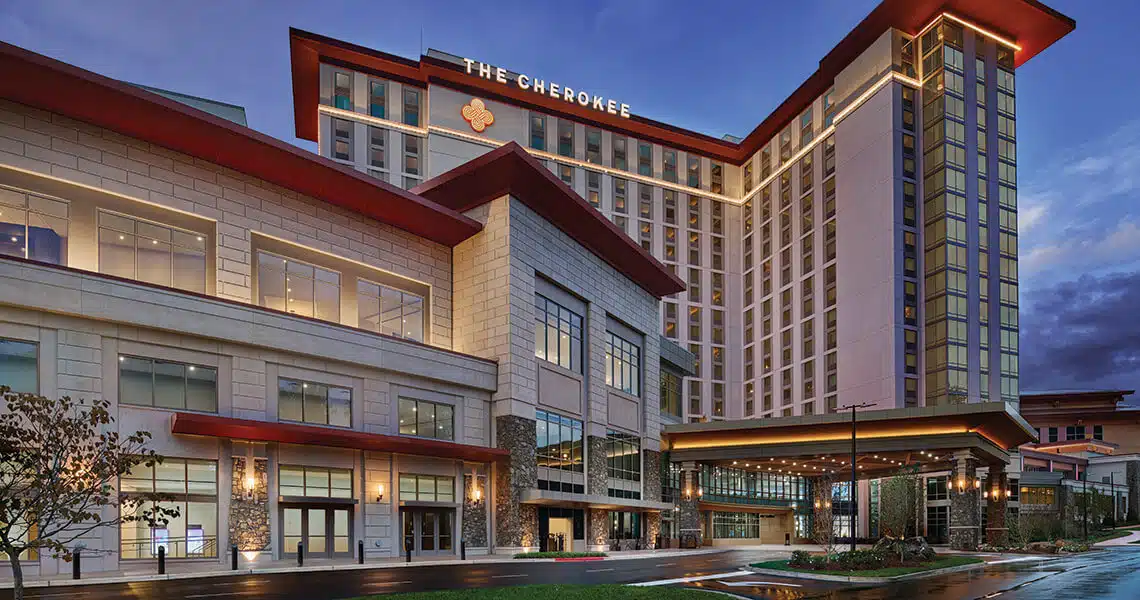
A federal indictment alleges three South Carolinians lured a victim to a North Carolina casino before killing him. The political fallout could play a pivotal role in South Carolina’s Casino vote.
Last month, two leading Republican candidates in South Carolina’s 2026 gubernatorial race made the same argument against legalizing casinos in the state. At the April 1 primary debate in Newberry, Rep. Ralph Norman framed his opposition in unusually direct terms. “You get child trafficking, you get sex trafficking, you get all types of abuse,” Norman told the audience. “I will be opposed to that.” Lt. Gov. Pamela Evette, in her response to the Political Beat candidate guide, used similar language. “Gambling and brick and mortar casinos bring real social and law enforcement challenges,” she wrote. “The potential tax revenue would not be worth the negative costs of rise in crime like human trafficking, drug trafficking, and more.”
The framing was generic at the time. Both candidates spoke about casino crime as a category rather than a singular specific case. On May 19, the U.S. Attorney’s Office for the District of South Carolina handed them a specific case, and the situation was covered in headlines in both states.
The Murder Indictment At The Center of The South Carolina Casino Debate
A federal grand jury in Greenville returned a 10-count indictment charging three Upstate South Carolina residents with luring a man to Harrah’s Cherokee Casino in North Carolina under the pretense of a date, transporting him across state lines, and shooting him to death during a robbery. The defendants, Elisa Marie Rosario, 33, Jeremy Todd Lark, 42, and Kezayvian Lee Campbell, 19, face charges including robbery affecting commerce, kidnapping resulting in death, and use of a firearm during a crime of violence to cause death. Each defendant faces a maximum penalty of life in federal prison.
According to the indictment, Rosario allegedly enticed the victim to travel from South Carolina to Harrah’s Cherokee under the pretense of a date. The defendants traveled with two firearms, latex gloves, and masks. Shortly after the victim arrived at the casino, Rosario urged him to leave with her to a nearby convenience store, where the other defendants took control of his vehicle and transported him 12 miles to Sylva. He was ultimately shot during the robbery. His body and his burning rental car were located later that evening in a wooded area of Spartanburg County.
It should clearly be stated that the casino was not the crime scene. The murder occurred 12 miles away. What the casino provided was a credible pretext. It was a destination far enough from home to make a “date” plausible, with enough activity for the victim’s presence not to seem unusual. Is this enough to be used as a reason to oppose brick-and-mortar casinos in South Carolina?
The Pro-Casino Argument in South Carolina
The legalization push in South Carolina has leaned heavily on a single economic argument. South Carolinians are already gambling. They are doing it at Two Kings Casino in Kings Mountain, at Harrah’s Cherokee further west, and at the various tribal casinos across the border. The revenue is leaving the state. Greenville businessman Wallace Cheves, who helped launch Two Kings, has spent seven years arguing that a Santee casino along I-95 could generate more than $100 million annually in state tax revenue. House Bill 4176, the I-95 Economic and Education Stimulus Act, is structured around that argument.
The pitch is straightforward and, on the numbers, broadly persuasive. The state lottery is currently the only legal gambling product in South Carolina. Mobile sports betting is illegal. An online casino is illegal. South Carolinians who want any of these products either drive to North Carolina or Georgia or use unregulated offshore sites. The case has been that the state is leaving money on the table while exporting both the revenue and the regulatory oversight.
What the Indictment Provides the Opposition
The Harrah’s Cherokee indictment lets the anti-casino side connect three things the pro-casino side has been trying to keep separate.
The first is the cross-border traffic itself. The pro-casino argument frames the current arrangement as a revenue problem. The indictment reframes that same cross-border traffic as something else. South Carolinians go to North Carolina, and sometimes they don’t come back the way they left.
The second is the casino’s role as a destination. State Rep. John McCravy, one of the legislature’s most vocal casino opponents, has argued for over a year that “human trafficking, drugs, crime, addiction and economic depression follow these evil enterprises wherever they go.” The federal indictment describes precisely the predatory-crime-at-a-casino category McCravy has been gesturing at, with a victim from his own state and a venue an hour and a half from his district.
The third is whether building a casino in South Carolina actually solves any of this. Tony Beam, public policy director for the South Carolina Baptist Convention, has argued for years that “when you use something like a vice to promote income or revenue, you always have to have more of it. It doesn’t do anything to make a state better.” The honest version of the pro-casino argument has to grapple with whether bringing this kind of crime home is an improvement.
The Political Calendar As South Carolina Gets Ready to Make a Decison
The political weight of the indictment will be heavier on the gubernatorial race than on the current legislative session. Governor McMaster is term-limited and leaves office in January 2027. His veto pen has been the main reason H.4176 has not advanced. The candidates running to replace him have varying positions, and gambling has been the most differentiated issue in the GOP primary so far.
Norman now has a federal indictment to point to. So does Evette. Wilson and Mace, both of whom signaled openness to legalization at the April debate while urging caution, will be asked about this case at the next debate or before. The Palmetto Family Alliance’s Randy Page, who told reporters earlier this year that the question of casino revenue is “at what cost to the state, at what cost to people in the state, at what cost to families,” now has a specific cost to point to.
The pro-casino candidates and Cheves will continue making the economic case. They are not wrong that South Carolinians are gambling across the border and that the state is leaving money on the table. The Harrah’s Cherokee case does not change that math. It changes the political cost of being the candidate who argued for bringing the casinos home to South Carolina.
Players trust our reporting due to our commitment to unbiased and professional evaluations of the iGaming sector. We track hundreds of platforms and industry updates daily to ensure our news feed and leaderboards reflect the most recent market shifts. With nearly two decades of experience within iGaming, our team provides a wealth of expert knowledge. This long-standing expertise enables us to deliver thorough, reliable news and guidance to our readers.
Latest News