New York’s “No Gambling Ads for Kids” Bill Defines Gambling More Broadly Than Any US State Has
New York has unanimously passed a bill expanding gambling definitions to cover loot boxes, prediction markets, and sweepstakes.
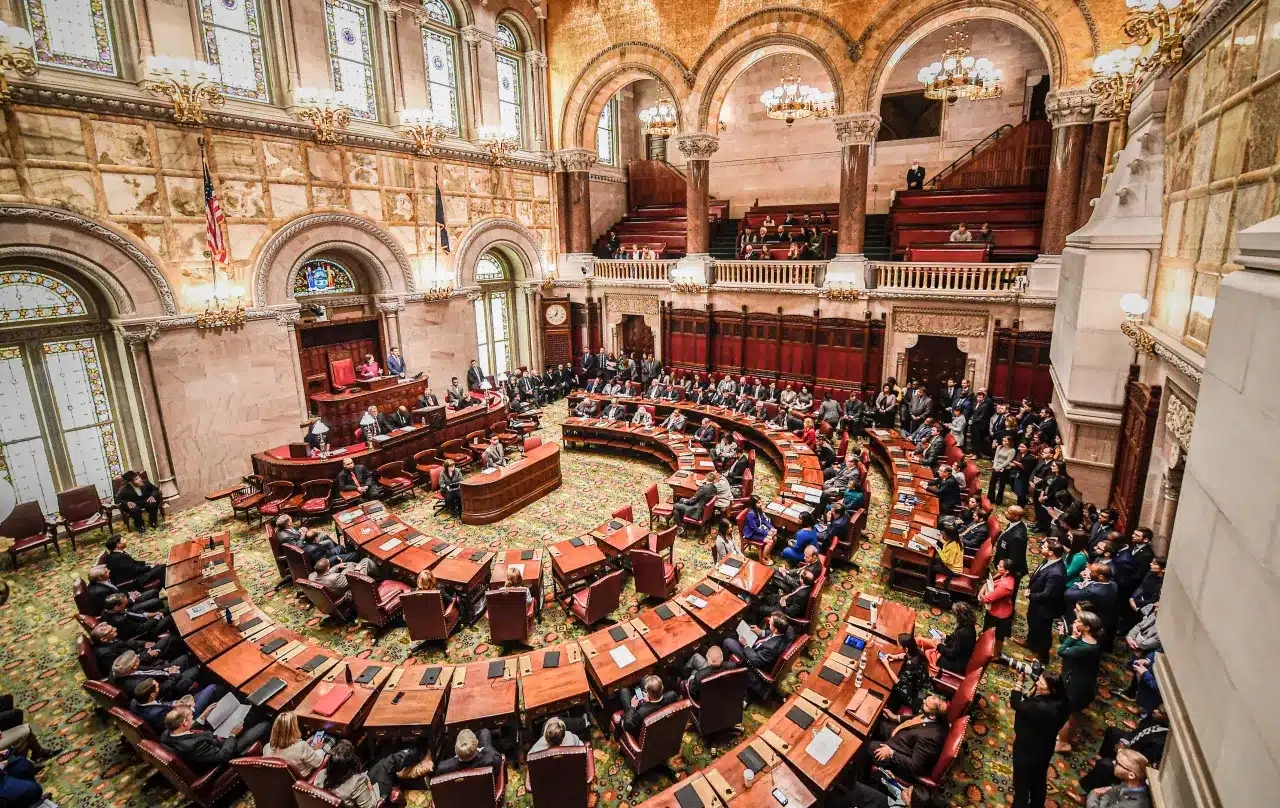
The New York Senate unanimously passed S10092 on Monday, sending the “No Gambling Ads For Kids Act” to the Assembly. The vote was 60-0. The bill prohibits social media platforms from displaying advertisements for any gambling product to minors and requires platforms to affirmatively determine that a user is not a minor before showing such ads. Governor Kathy Hochul, who has been publicly working on underage gambling restrictions for months, is widely expected to sign if the Assembly passes the bill.
The headline framing is straightforward and not considered controversial. Don’t advertise gambling to kids. Most states have something similar on the books. Massachusetts, Virginia, North Carolina, Indiana, and Missouri already have versions of this restriction.
The New York bill is meaningfully different from existing state laws in two specific ways. It defines gambling more broadly than any state does, and it puts the affirmative duty on the platform rather than on the advertiser.
The Definition of Gambling Is Where New York Has Differentiated
Most state laws restricting gambling advertising to minors apply to traditional gambling products: sportsbooks, online casinos, and lotteries. S10092 expands that list considerably. The bill covers traditional online gambling and sports-related gambling, which is the expected baseline. It also covers online sweepstakes gaming, prediction markets, and “online gaming-related gambling,” which the bill defines as “exchanging real money for random, chance-based rewards in games, such as loot boxes and other add-on transactions.” The definition also includes skin trading.
The breadth of the definition matters. By including loot boxes, the bill treats Counter-Strike 2 weapon cases, Dota 2 treasures, and Team Fortress 2 supply crates as gambling products for advertising purposes. With the inclusion of prediction markets, it treats Kalshi and Polymarket the same way it treats DraftKings and FanDuel. And by including sweepstakes gaming, it covers the social casino category that has been growing aggressively in states where traditional online gambling remains illegal.
For social media platforms operating in New York, this is a significant compliance question. Meta, X, TikTok, YouTube, and the rest now have to categorize a much wider universe of advertisers as “gambling” for purposes of New York enforcement. A game studio promoting a new title with loot box mechanics. A sweepstakes casino running affiliate ads. A prediction market platform advertising any product. All of it falls under the same restriction as a sportsbook ad in New York.
The Affirmative Duty Is the Hard Part
The second wrinkle is the part of the bill that does most of the actual work. Most existing state laws restrict the gambling operator from targeting minors. S10092 restricts the social media platform from displaying gambling ads to minors. The platform has to “reasonably determine” that a user is not a minor before showing any gambling-related advertisement.
That distinction is a meaningful shift in regulatory architecture. Gambling operators have long had compliance obligations around marketing and targeting. Social media platforms have had broader obligations regarding content moderation and child protection, but those obligations have not historically extended to the specific verification of age before showing certain ad categories. S10092 effectively imposes age verification as a precondition for certain ad inventory in New York. That is a significant new burden.
The bill does not specify what “reasonably determined” means in practice. Self-reported age, currently the standard on most platforms, is unlikely to clear the bar. Platforms will probably have to implement more rigorous age verification, either through ID checks or through verified-account systems, before they can serve gambling ads to New York users at all. The First Amendment questions around mandatory ID requirements for accessing certain commercial content are real, but the bill’s framing as an advertising regulation rather than a content restriction is designed to push the analysis toward intermediate scrutiny rather than strict scrutiny.
The Bill Pairs With the Valve Lawsuit
S10092 should be read alongside the Valve lawsuit filed by Attorney General Letitia James in February 2026. James sued Valve in New York state court, alleging that loot boxes in Counter-Strike 2 and other Steam titles constitute “quintessential gambling” under the New York Constitution and state penal law. The complaint argues that paying $2.49 for a key to open a randomized case containing potentially valuable virtual items constitutes gambling because the items can be sold for cash on Steam’s marketplace and third-party sites.
Valve filed a motion to dismiss the case last month, comparing loot boxes to baseball cards. The argument is that the items have no intrinsic monetary value within the game and that secondary-market resale should not transform the original purchase into gambling. The legal question is genuinely contested. Class actions raising similar theories have been dismissed in federal court for years on the “thing of value” question.
S10092 is the legislative complement to the lawsuit. If the bill becomes law, James can cite it as legislative confirmation that New York considers loot boxes a form of gambling. The case before the Manhattan judge then becomes a question of applying that legislative judgment rather than interpreting older statutes that did not contemplate virtual-item economies. The bill helps James’s case even if it is not directly applicable to the conduct she has alleged.
How This Will Impact Prediction Markets in New York
The inclusion of prediction markets in the same definitional category as loot boxes and sportsbooks is a pretty big step. James issued a consumer alert in December 2025, warning New Yorkers about Kalshi and Polymarket, calling their products “bets masquerading as event contracts.” New York has not yet sued either platform directly, but the bill puts statutory weight behind the AG’s position that prediction markets are a form of gambling for state-law purposes.
This matters because Kalshi has been winning federal court injunctions against state enforcement actions on the theory that the CFTC’s regulatory authority preempts state gambling laws. New York’s argument would be that S10092 is not a gambling enforcement statute; it is a consumer protection statute regulating advertising to minors, which is a separate and concurrent area of state authority. Whether that distinction holds up against a federal preemption challenge is the kind of question that would end up before the Second Circuit if it were litigated.
The CFTC has been suing states that try to ban prediction markets outright, including Minnesota, Connecticut, Illinois, and, most recently, Rhode Island. New York’s approach is more careful. The bill does not ban Kalshi or Polymarket from operating in the state. It restricts how they can advertise on social media platforms in New York. That is a narrower regulatory action and a harder one to attack on preemption grounds.
The bill is now officially in the Assembly. The structural choices it embeds will affect how social media platforms operate in New York, how loot boxes are regulated nationally, and how prediction markets fit into state-level consumer protection frameworks. The 60-0 Senate vote suggests the political resistance to those choices is, at the moment, minimal.
Players trust our reporting due to our commitment to unbiased and professional evaluations of the iGaming sector. We track hundreds of platforms and industry updates daily to ensure our news feed and leaderboards reflect the most recent market shifts. With nearly two decades of experience within iGaming, our team provides a wealth of expert knowledge. This long-standing expertise enables us to deliver thorough, reliable news and guidance to our readers.
Latest News