Fertitta’s Caesars Deal Is Signed at $17.6 Billion, but the Go-Shop Window Keeps It Open For Now
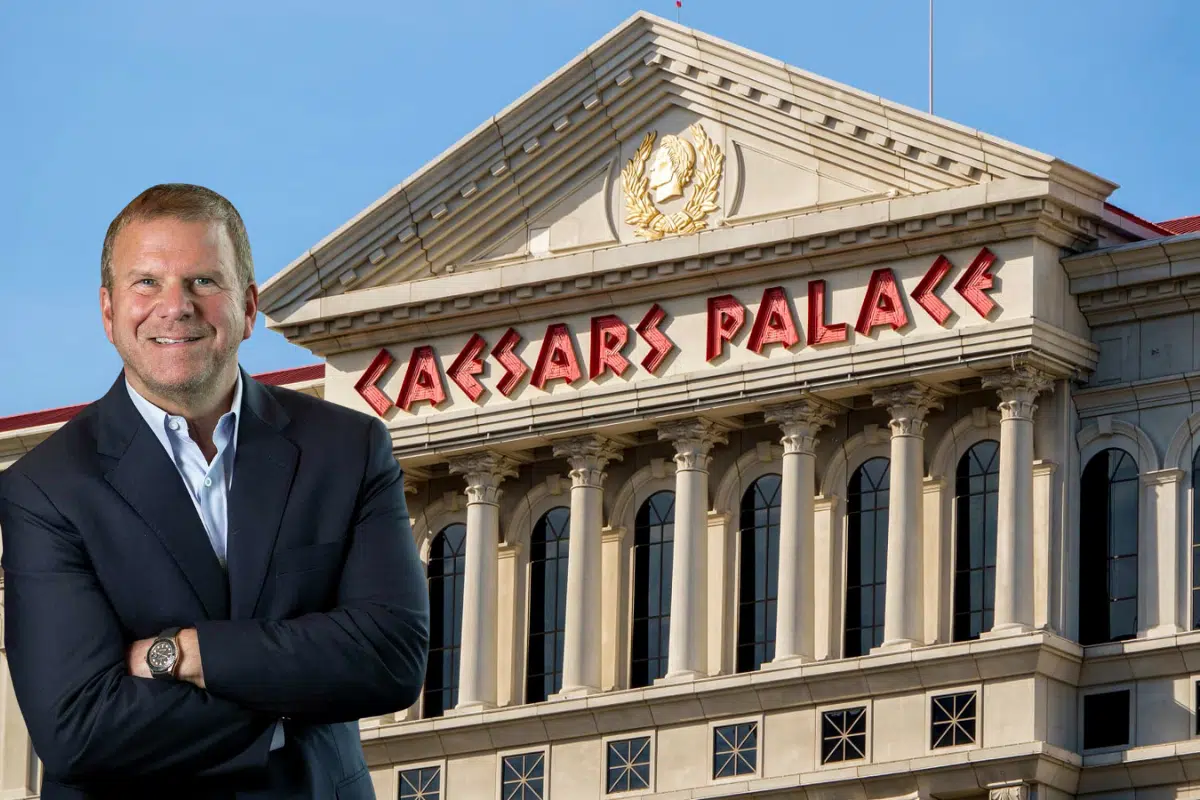
Tilman Fertitta signed a $17.6 billion deal to take Caesars private at $31 per share. A go-shop window stays open through July.
Caesars Entertainment announced this morning that it has entered into a definitive agreement to be acquired by Tilman Fertitta’s holding company, Fertitta Entertainment, in an all-cash transaction valued at approximately $17.6 billion. Caesars shareholders will receive $31.00 per share, a 49% premium over the company’s unaffected share price on February 25, the last trading day before deal rumors began. The Caesars board has approved the transaction and is recommending that shareholders do the same.
The deal we have been tracking since March, when it was first reported as roughly $7 billion in exclusive talks, is now formalized at a much larger enterprise value. That jump is mostly a question of what’s being counted. The $17.6 billion headline figure includes the assumption of approximately $11.9 billion of Caesars’ existing debt. The equity portion that Fertitta is actually paying out to shareholders is closer to $5.7 billion.
Although the agreement is signed, it is not technically closed. There is a meaningful window during which it could still change, providing Caesars with some options until July 11.
What is the Go-Shop Period in the Caesars-Fertitta Deal?
The agreement includes a “go-shop” provision running through July 11. During that window, Caesars and its advisors can actively solicit, consider, and negotiate competing offers from other parties. If a superior proposal emerges, the Caesars board has the right to terminate the Fertitta agreement and pursue the superior proposal, subject to a termination fee.
Go-shop provisions are common in take-private deals, and most do not produce a competing bid. However, Caesars is not an ordinary target. The company has been the subject of consolidation speculation for years, and the gaming sector’s largest institutional shareholders hold overlapping positions across multiple operators. A rival operator or private equity group that believes Caesars is worth more than $31 per share has until July 11 to say so.
Two structural features of the deal make a competing bid harder to mount. The Carano family, which owns roughly 5% of Caesars and traces back to the Eldorado side of the 2020 merger, has agreed to roll a portion of its equity into Fertitta Entertainment rather than cash out. And the entire Caesars management team, including CEO Tom Reeg, CFO Bret Yunker, and President and COO Anthony Carano, is expected to stay on. A competing bidder would be making an offer against an incumbent buyer who already has insider equity support and management continuity locked in. It’s not impossible, but it certainly seems improbable that a competing bid comes in with a higher value and lures the current insiders away from the Fertitta deal.
The Key is Massive Amounts of Debt
The financing structure is worth understanding because it defines what kind of company Fertitta is building. The transaction is not subject to a financing condition, which means Fertitta has committed funding in place. That funding comes from three sources: equity contributed by Fertitta Entertainment, the assumed Caesars debt, and new committed debt financing arranged by a group of 10 banks.
Caesars has carried heavy debt since the 2020 merger of Eldorado Resorts and the old Caesars, itself the product of a leveraged buyout that pushed the company through bankruptcy in the 2010s. The $11.9 billion in assumed debt is the legacy of that history. Fertitta is not clearing it. He is taking it on and layering new acquisition debt on top of it.
This puts the combined company in the same broad category as the other large gaming transactions of the past two years. Apollo’s acquisition of IGT and Everi was financed with roughly $4.3 billion in debt. Aristocrat refinanced $1.85 billion to fund its own M&A capacity. The pattern across the industry is leverage in the service of consolidation, and the Fertitta-Caesars deal is the clearest example.
The Bigger Picture of the Empire Fertitta Is Actually Assembling
The combined entity is substantial. On a combined basis, it includes 60 casino resorts and gaming facilities, Caesars’ digital business spanning sports betting, iCasino, and poker, retail sportsbook operations at more than 200 third-party locations under the William Hill brand, and more than 600 Fertitta outlets, including Landry’s restaurants and the various entertainment and aquarium venues. All of it connects through the Caesars Rewards loyalty network.
That last point is the strategic core. Caesars Rewards is one of the largest loyalty databases in gaming, and Fertitta now controls it alongside his existing Golden Nugget casinos, the Houston Rockets, the WNBA franchise he is relocating to Houston, and the Landry’s hospitality empire. Few operators in American gaming control a comparable mix of gaming, sports, dining, and loyalty assets under single ownership.
The deal also lands while Fertitta holds a second high-profile role. He was confirmed as U.S. Ambassador to Italy, a position whose day-to-day demands have raised questions about how he splits his attention between diplomacy and a sprawling business portfolio. Closing the largest acquisition of his career while serving as a sitting ambassador is, at minimum, an unusual arrangement. But more broadly, it may put to bed many questions about where his focus lies.
The Texas Casino Question Sits Underneath All of It
If you’ve been following the Texas gambling story, the deal sharpens a question that has been building for months. Fertitta is the most powerful gaming operator in America with deep Houston roots, and he now owns the Caesars Rewards database and the operational infrastructure of the country’s largest casino-entertainment company. If Texas ever authorizes commercial casinos, Fertitta is positioned to move faster and at greater scale than any competitor.
The recent speculation about a Fertitta-built casino at the Houston Astrodome, floated by former mayor Annise Parker, looks less far-fetched against this backdrop. A combined Caesars-Fertitta entity would have the loyalty network, operating expertise, and balance sheet to anchor a destination casino in a major Texas metro the moment the state’s laws allow. None of that is imminent, and Texas remains a prohibitionist state with no clear path to legalization. But the pieces are increasingly in one place.
The immediate story is a signed agreement at $17.6 billion with a go-shop window open through July 11. The longer story is that Tilman Fertitta has spent the past year assembling gaming, sports, hospitality, and loyalty assets at a scale that few operators have ever controlled, and the Caesars deal is the capstone. Whether it closes on these exact terms depends on what the next six weeks produce. Whether it reshapes American gaming is no longer much of a question. Tilman Fertitta is holding quite a hand in Texas.
Players trust our reporting due to our commitment to unbiased and professional evaluations of the iGaming sector. We track hundreds of platforms and industry updates daily to ensure our news feed and leaderboards reflect the most recent market shifts. With nearly two decades of experience within iGaming, our team provides a wealth of expert knowledge. This long-standing expertise enables us to deliver thorough, reliable news and guidance to our readers.
Latest News