Texas Spent Four Decades Trying to Keep the Alabama-Coushatta Out of Gaming. This Summer, the Tribe Opens Its Second Casino.
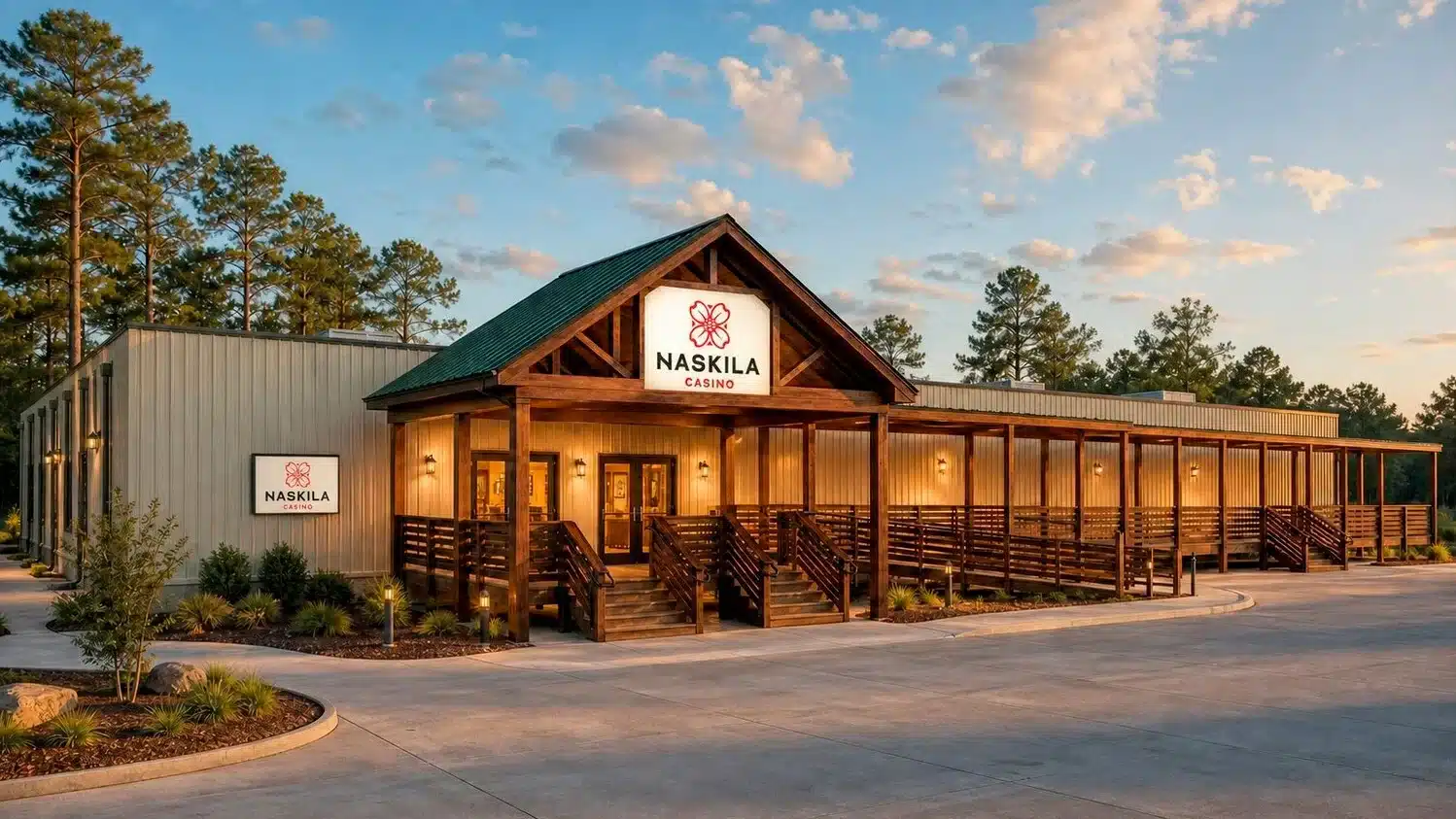
The Alabama-Coushatta casino expansion in Leggett marks the end of Texas’s 40-year legal fight against tribal gaming.
The Alabama-Coushatta Tribe of Texas announced last week that it will open a temporary casino in Leggett this summer. The facility will run 24 hours a day with 300 electronic bingo machines. The tribe will also break ground on the permanent Naskila Casino Resort on June 18.
On the surface, the announcement looks modest. There are 300 machines, 110 new jobs, a 24-hour deli, and a player’s club. However, the legal history behind this opening tells a much bigger story. In short, Texas spent four decades trying to keep this casino from existing. The state lost.
A Four-Decade Fight Over a Single Clause
To understand why a bingo hall in Polk County matters, you have to go back to 1987. That year, Congress passed the Ysleta del Sur Pueblo and Alabama and Coushatta Indian Tribes of Texas Restoration Act. The law restored federal trust status to two tribes that Texas had effectively cut loose in 1983.
However, the deal came with a catch. The Restoration Act stated that all gaming activities prohibited by Texas law would also be prohibited on tribal land. Texas read that clause as broadly as possible. For the next three decades, the state argued in court that the Restoration Act made every Texas gaming regulation binding on the reservations.
In 1994, the Fifth Circuit Court of Appeals agreed with Texas. That ruling kept the Alabama-Coushatta out of modern casino gaming for nearly thirty years. Meanwhile, the Kickapoo Traditional Tribe of Texas operated electronic bingo at Eagle Pass without much trouble. The difference came down to language. The Kickapoo recognition statute did not contain the same restrictive clause.
The Gorsuch Ruling That Changed Everything
Then came June 2022. The Supreme Court ruled 5-4 in Ysleta del Sur Pueblo v. Texas that the Restoration Act bans only gaming activities that Texas categorically prohibits. It does not reach activities that Texas merely regulates.
The distinction sounds technical, but it is decisive. Bingo is regulated in Texas, not prohibited. Therefore, under the Court’s reading, the Alabama-Coushatta could offer Class II gaming under the Indian Gaming Regulatory Act. Texas had spent thirty-five years arguing the opposite. The state lost on a textualist reading of its own statute, written by Justice Neil Gorsuch.
The 2022 ruling made the original Naskila Casino in Livingston legally secure for the first time. More importantly, it cleared the path for the Leggett expansion. Last September, tribal chairwoman Cecilia Flores confirmed that the National Indian Gaming Commission had approved the Leggett land for gaming under IGRA.
A Strategic Move Off the Original Reservation
There is one detail in the announcement that deserves attention. The new Naskila Casino Resort will not sit on the historic reservation in Livingston. Instead, it will rise on tribal trust land in Leggett, about twenty minutes north. The original Naskila will close once the new property opens.
This is an off-reservation move onto land newly placed into federal trust for gaming purposes. Historically, this is exactly the kind of expansion Texas has fought hardest to block. Today, the state has almost no legal standing to do so.
The geographic logic is also significant. Leggett sits about an hour and a half north of Houston on Highway 59. By contrast, the Kickapoo Lucky Eagle in Eagle Pass is roughly six hours away from Houston. The tribe’s announcement promises “a state-of-the-art casino floor, hotel accommodations, and diverse dining and entertainment options.” Those are destination-resort words.
Houston Money Currently Flows to Louisiana
The new resort is positioned to capture Houston-area gambling demand that currently flows to Lake Charles, Louisiana. That migration is not small. Louisiana’s Lake Charles market reported roughly $900 million in gaming revenue in 2024. A meaningful share of that comes from Texas drivers across the Sabine River.
The Alabama-Coushatta now have proximity, federal approval, and a hotel in the plans. As a result, the new resort is on track to become the largest casino in Texas when it opens.
Texas Has No Clean Counter
Texas has no easy response. The state constitution prohibits commercial casino gambling, so the legislature cannot authorize competing commercial casinos. A constitutional amendment would require a two-thirds vote in both chambers plus a statewide referendum. Gaming expansion bills have died every session since 2021, despite heavy lobbying from Las Vegas Sands.
The lottery is under political siege after the 2023 jackpot-buying scandal. Sports betting remains illegal. The Restoration Act, once the state’s strongest lever against tribal gaming, no longer says what Texas insisted it said.
In other words, the Alabama-Coushatta have found the one corridor through Texas’s prohibitionist gaming regime that requires no help from Austin. The architecture is simple: federal trust land, Class II gaming under IGRA, and a Supreme Court ruling on file. That is enough.
The temporary casino opening this summer is not really a soft launch. It is a flag-planting. Three hundred bingo machines and a deli are not the story. The story is that nothing in Austin can stop what comes next.
Players trust our reporting due to our commitment to unbiased and professional evaluations of the iGaming sector. We track hundreds of platforms and industry updates daily to ensure our news feed and leaderboards reflect the most recent market shifts. With nearly two decades of experience within iGaming, our team provides a wealth of expert knowledge. This long-standing expertise enables us to deliver thorough, reliable news and guidance to our readers.
Latest News