Wabanaki Nations Move for Summary Ruling in Defense of Maine iGaming
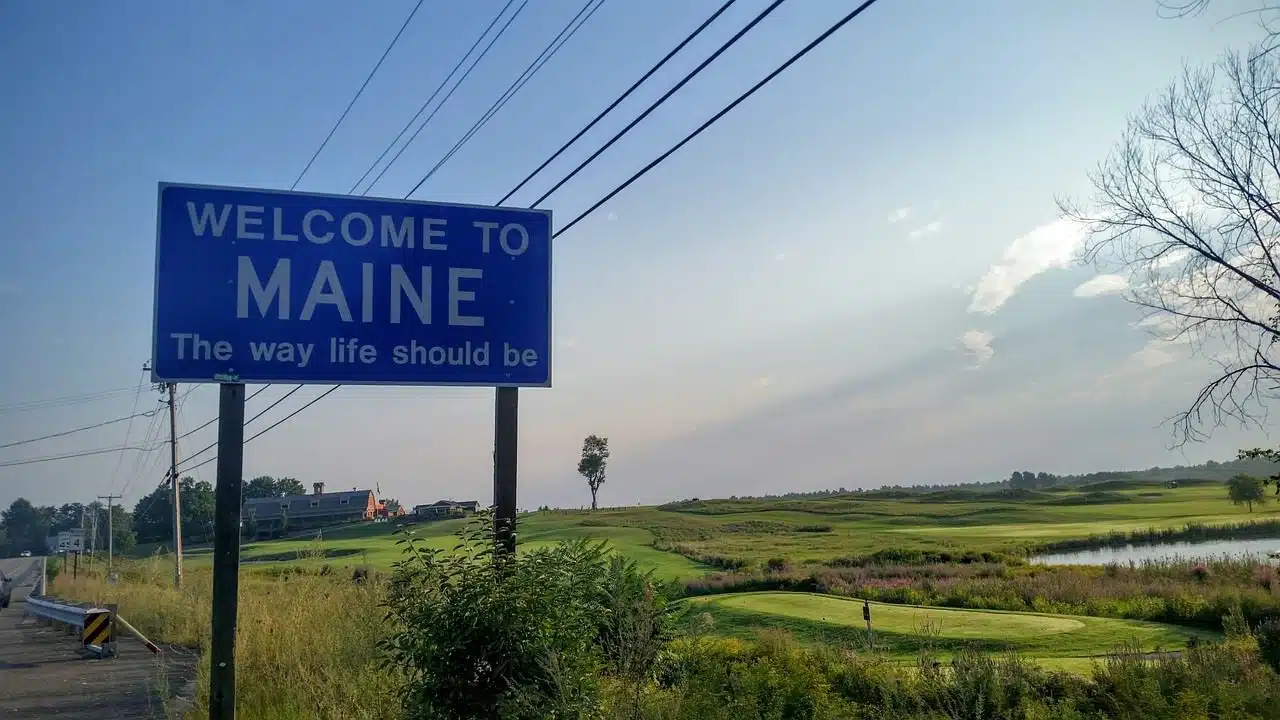
The Wabanaki Nations have moved for summary judgment in Churchill Downs’ lawsuit challenging Maine’s tribal iGaming exclusivity law.
The Wabanaki Nations filed a motion for summary judgment last week in their defense of Maine’s tribal iGaming law, asking a federal judge to rule in their favor without a trial on the grounds that Churchill Downs’ legal theory is foreclosed by decades of settled federal Indian law.
The motion is a direct challenge to Oxford Casino’s parent company to put its best legal argument on the table early, before the case consumes years of litigation and millions in legal fees. What gives that motion its intellectual foundation is a history of tribal law in Maine that is unlike anything else in the country.
The Law Churchill Downs Is Attacking
Maine’s Act to Create Economic Opportunity for the Wabanaki Nations Through Internet Gaming took effect January 11, 2026, making Maine the eighth state to legalize iGaming. The law grants each of the four Wabanaki tribes a single iGaming license, which may be operated by the tribe itself or a wholly owned tribal entity, to offer online casino gaming statewide.
The tribes may partner with commercial operators. DraftKings already holds sports betting partnerships with three tribes and Caesars, with the fourth. A 16% revenue tax applies, with funds directed to state programs.
Churchill Downs, through its Oxford Casino subsidiary, filed suit in January, arguing the law constitutes an illegal “race-based monopoly” that violates the Equal Protection Clauses of both the U.S. and Maine Constitutions, as well as the dormant Commerce Clause by excluding out-of-state operators. Oxford Casino estimates the law will cost it approximately 378 jobs and $60 million in state economic value.
The Wabanaki Nations’ summary judgment motion argues that the equal protection theory fails as a matter of law because laws that distinguish among tribal nations are not racial classifications subject to equal protection scrutiny. They are political classifications based on the unique sovereign status of federally recognized tribes. The Supreme Court has repeatedly affirmed this distinction. Morton v. Mancari, decided in 1974, established the foundational principle that federal laws benefiting tribes are subject to rational basis review, not strict scrutiny, because they are based on the political status of tribal membership rather than on race.
That argument has generally prevailed in federal courts. Churchill Downs is betting that Maine’s tribal law history creates an exception.
Why Maine Is Different From Every Other State
To understand why this case is more complicated than a standard tribal gaming dispute, you need to understand what happened in Maine in 1980, and why it left the Wabanaki Nations in a legal position that no other federally recognized tribe in the country occupies.
When the United States recognized tribes across the continent throughout the twentieth century, it brought them under the framework of federal Indian law: the federal government holds a trust responsibility, tribes exercise sovereign authority over their members and territories, and federal law generally preempts state law when the two conflict. The Indian Gaming Regulatory Act of 1988 built on that framework, establishing that tribes could offer gaming on tribal lands, subject to compacts with states and oversight by the National Indian Gaming Commission.
The Wabanaki Nations are technically excluded from IGRA’s protections. This exclusion stems from the Maine Indian Claims Settlement Act of 1980, a federal statute that resolved the Passamaquoddy and Penobscot nations’ claims to approximately 12.5 million acres of Maine, nearly two-thirds of the state’s total land area, based on violations of the Indian Trade and Intercourse Act of 1790. Congress appropriated $81.5 million to purchase approximately 300,000 acres for the tribes in settlement.
The price of that settlement, extracted by Maine’s political establishment at a moment when the tribes’ negotiating position was weakening, was sovereignty itself. MICSA contained a provision, unlike any in other tribal settlements, specifying that federal laws enacted after 1980 for the benefit of Indians would not apply in Maine unless Congress specifically made them applicable. It also imposed municipal status on the tribes under state law, subjecting them to Maine statutes in ways that no other federally recognized tribe is subject to state law. The Maine Implementing Act reinforced this, treating the tribes in many respects as municipalities of the state rather than sovereign governments
Donna Loring, who served as senior advisor on tribal affairs under Governor Mills, called MICSA “the biggest piece of fraud in Maine’s history and maybe even the country’s history,” arguing that the written words of the act did not capture the spirit or intent of the agreement the tribes believed they were entering. The tribal communities expected a government-to-government relationship. They received municipal status and a carve-out from federal Indian law that would take decades to begin reversing.
The Gaming History That Flows From That Agreement
When IGRA passed in 1988, most tribes across the country gained a clear legal pathway to casino gaming on tribal lands, subject to state compact negotiations. The Wabanaki Nations did not, because MICSA’s post-1980 federal law exclusion meant IGRA did not automatically apply to them. They were treated as Maine municipalities for most purposes, meaning Maine’s prohibition on casino gaming applied to them the same way it applied to everyone else.
Oxford Casino and Hollywood Casino Hotel and Raceway Bangor were eventually authorized under Maine law as commercial casinos. They held the only table games in the state for more than two decades. The Wabanaki Nations had no equivalent access. The Catawba Nation’s experience just south in South Carolina followed a similar pattern of state-level exclusion, eventually forcing them to build a casino in North Carolina rather than their home state.
Maine’s 2022 online sports betting legislation was the first meaningful legislative corrective, granting the tribes exclusive rights to operate sports wagering as a partial acknowledgment of the competitive asymmetry that MICSA had created. The sports betting market generated $66 million in profits in its first year. The iGaming legislation extended that corrective logic to online casino gaming.
What the Summary Judgment Motion Actually Argues
The Wabanaki Nations’ motion makes several distinct legal arguments, each targeting a different element of Churchill Downs’ complaint.
On the equal protection claim, the tribes argue that Morton v. Mancari and its progeny foreclose the race-based theory entirely. Laws that distinguish tribal members from non-members are political classifications, not racial ones, and survive rational basis review if they are reasonably related to the fulfillment of Congress’s unique obligations toward Indian tribes. Maine’s iGaming law, granting exclusive rights to federally recognized tribes as a mechanism for economic development, falls comfortably within that framework. The fact that tribal membership correlates with race does not convert a political classification into a racial one.
On the dormant Commerce Clause argument, the tribes contend that the law does not discriminate against interstate commerce in the relevant sense because the classification is based on tribal status, not geography or out-of-state origin. Any operator could, in theory, become a tribal partner. The law does not favor Maine businesses over out-of-state ones. It favors tribal governments over commercial entities of any origin.
On the “special legislation” claim under the Maine Constitution, the tribes argue that the Maine Legislature has broad authority to make classifications for legitimate governmental purposes, and that economic development for a historically disadvantaged population with a documented history of exclusion from Maine’s gaming economy is precisely the kind of purpose that justifies differential treatment.
What Churchill Downs Actually Needs to Win
For Churchill Downs to prevail, it needs to convince a federal judge to do something courts have consistently declined to do: treat a law benefiting federally recognized tribes as a racial classification subject to strict scrutiny. The Supreme Court’s 2022 decision in Oklahoma v. Castro-Huerta, which allowed states to exercise criminal jurisdiction over non-Indians on tribal lands, gave some ammunition to those who argue the Court is re-examining the federal/tribal/state balance. But it did not overturn Morton v. Mancari or the political classification doctrine.
Passamaquoddy Chief William Nicholas described the suit as an attack on government-to-government economic development by out-of-state casino interests that benefited from their own monopoly for decades while tribes were excluded. That framing is both politically effective and legally relevant, because the history of exclusion is itself evidence of the rational basis for the corrective legislation.
The summary judgment motion is a calculated move. If the judge denies it, the case proceeds to discovery and trial, and the tribes will have to litigate on Churchill Downs’ preferred terrain. If the judge grants it, the iGaming law survives, platforms can launch, and Oxford Casino will have to decide whether to pursue an appeal or accept the new competitive reality. Given that real-money Maine iGaming platforms are expected to begin launching in the months ahead, the timing of that ruling will matter enormously to everyone involved.
Players trust our reporting due to our commitment to unbiased and professional evaluations of the iGaming sector. We track hundreds of platforms and industry updates daily to ensure our news feed and leaderboards reflect the most recent market shifts. With nearly two decades of experience within iGaming, our team provides a wealth of expert knowledge. This long-standing expertise enables us to deliver thorough, reliable news and guidance to our readers.
Latest News