
The Fight Over Who Gets Maine’s iGaming Market Just Got a Lot More Complicated
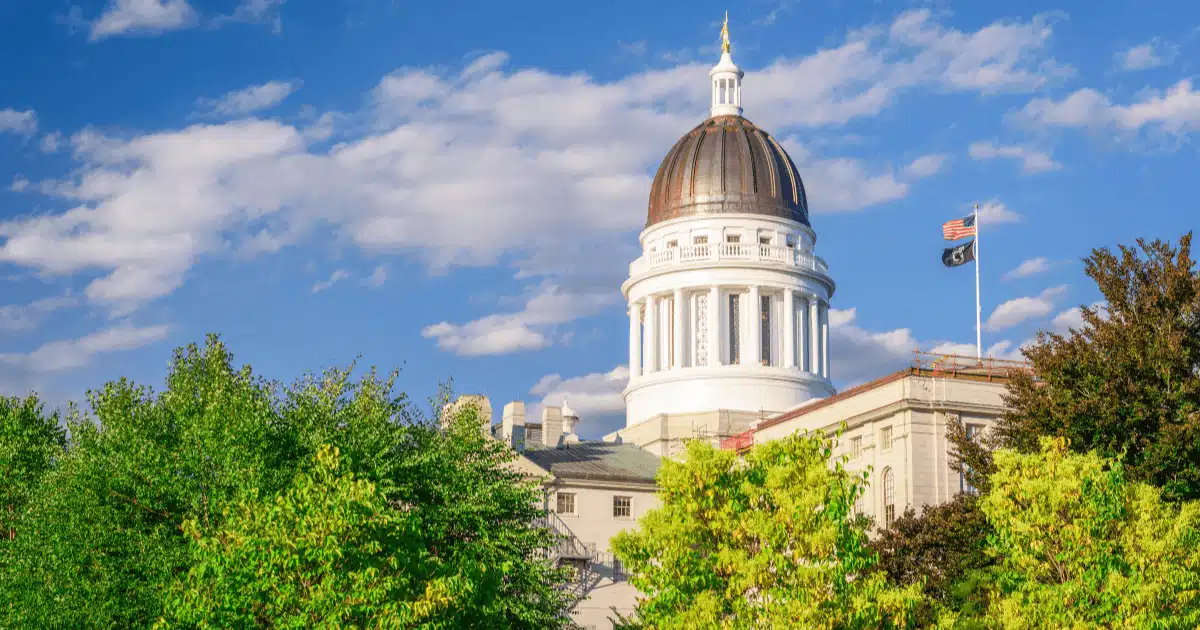
All four Wabanaki Nations have intervened in Churchill Downs’ lawsuit challenging Maine’s tribal iGaming monopoly, setting up a high-stakes legal battle
Maine became the ninth state to legalize iGaming in January, but it did so in a way that infuriated its two brick-and-mortar casinos. The legislation granted exclusive online casino rights to the four Wabanaki Nations, the Passamaquoddy Tribe, the Penobscot Nation, the Houlton Band of Maliseet Indians, and the Mi’kmaq Nation, while leaving Oxford Casino and Hollywood Casino Hotel and Raceway completely out.
Oxford Casino’s parent company, Churchill Downs, filed suit in federal court within weeks, calling the arrangement a “race-based monopoly” that violated the Equal Protection Clauses of both the United States and Maine constitutions.
Last week, the Wabanaki Nations stopped being defendants by proxy and became active participants. All four tribes filed a joint motion to intervene in the lawsuit, which a judge granted Thursday. The fight over who gets to run online casinos in Maine is now fully joined.
The Historical Context Churchill Downs Would Prefer You Ignore
The “race-based monopoly” framing is legally crafted to invoke equal protection doctrine, and it is worth taking seriously as a legal argument. It is considerably less compelling as a moral one, given the history.
Unlike most federally recognized tribes in the United States, the Wabanaki Nations have historically been excluded from the Indian Gaming Regulatory Act, the 1988 federal law that grants tribes the right to operate casinos on tribal land. That exclusion stems from a 1980 land settlement agreement that left the tribes treated more like municipalities than sovereign nations. For decades, the result was that Oxford Casino and Hollywood Casino held the only table games in the state, while the tribes had no comparable access to the gaming economy.
The Wabanaki Nations’ path into gaming began in 2023, when the state granted them exclusive rights to operate sports betting, a market that generated $66 million in profits last year, which the tribes split with platform operators.
The iGaming legislation followed that precedent. From the tribes’ perspective, the exclusive rights are not a monopoly imposed on competitors. They are a corrective measure against an existing monopoly, held for decades by the commercial casinos.
Rep. Aaron Dana, who represents the Passamaquoddy Tribe in the Legislature, said the tribe’s exclusive iGaming right is no different from the exclusive rights Oxford and Hollywood have long held to operate table games. “I think it’s very hypocritical,” he said of the lawsuit.
What the Tribes Are Arguing in Maine
The intervention filing addresses Churchill Downs’ equal protection theory head-on. The tribes’ attorneys argue that courts have long held that privileges extended to tribal nations are not race-based classifications but rather classifications based on the unique sovereign political status of federally recognized tribes. “Adopting Plaintiffs’ equal protection theories could threaten the validity of countless laws that classify based on the unique sovereign status of federally recognized tribes,” the filing states.
That is a well-established line of legal argument, and it has generally held up in federal courts. The Supreme Court has repeatedly affirmed that laws distinguishing tribal nations from other entities are political rather than racial classifications, and therefore not subject to the same equal protection scrutiny.
Churchill Downs is attempting to run that argument backward, and the tribes are making clear they will contest it vigorously at every step.
What Is Actually at Stake for Maine iGaming and Revenue
One Wall Street analyst has estimated that iGaming could represent a $200 million annual market for the tribes. The law sets a 16% revenue tax and allows each Wabanaki tribe to partner with a commercial online gaming operator to offer statewide online casino gaming, available not only on tribal land but across Maine. Bovada and DraftKings already partner with three of the tribes on sports betting, and Caesars with the fourth, so the infrastructure relationships are in place.
The National Association Against iGaming, which opposed the legislation during the legislative process, has also threatened a people’s veto ballot initiative to overturn the law entirely. Governor Janet Mills, who let the bill become law without her signature despite reservations, faces the prospect of watching the policy she passively approved get relitigated both in court and at the ballot box.
The irony that Churchill Downs, a Kentucky company whose Oxford Casino was itself the product of a ballot measure that expanded Maine gambling over tribal objections, is now invoking constitutional equality to block tribal access to a market it wants for itself will not be lost on anyone following this closely. Whether the federal courts find that irony is legally relevant is another matter entirely.
Players trust our reporting due to our commitment to unbiased and professional evaluations of the iGaming sector. We track hundreds of platforms and industry updates daily to ensure our news feed and leaderboards reflect the most recent market shifts. With nearly two decades of experience within iGaming, our team provides a wealth of expert knowledge. This long-standing expertise enables us to deliver thorough, reliable news and guidance to our readers.
Latest News