BetMGM Q1 2026: Revenue Misses by 14%, EBITDA Down 68%, Full-Year Guidance Cut
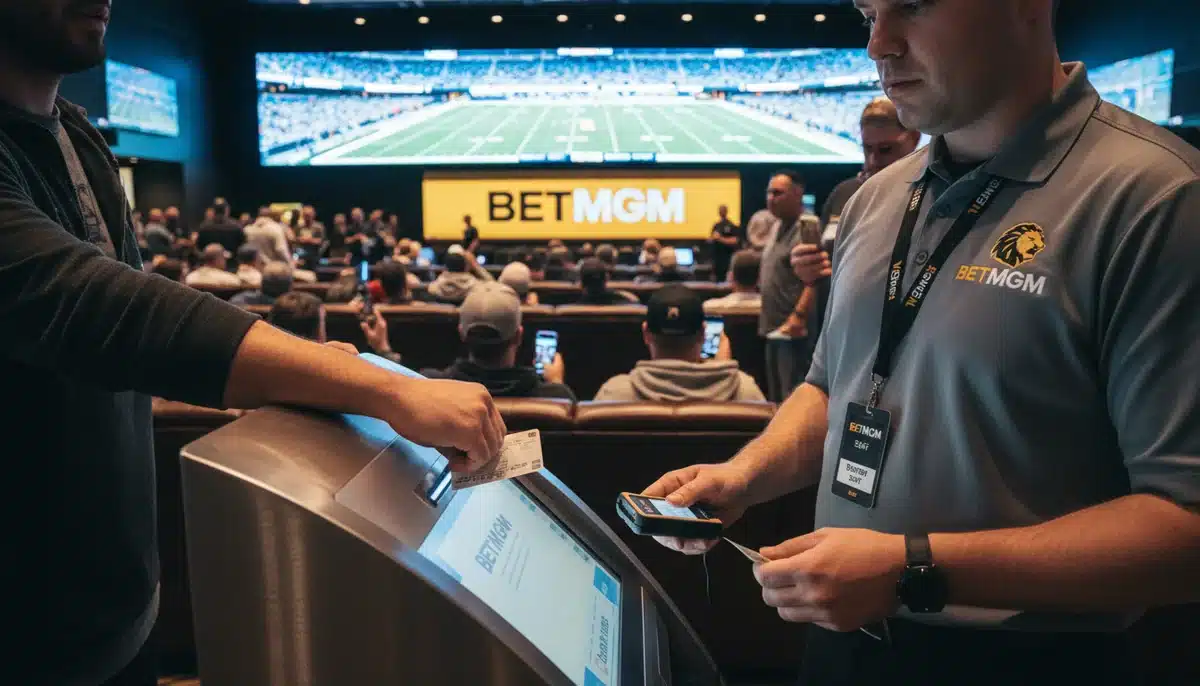
BetMGM has had a difficult start to 2026. The joint venture between Entain and MGM Resorts reported Q1 net operating revenue of $696 million, a 6% year-over-year increase but 14% below the analyst consensus forecast of $810 million.
Adjusted EBITDA came in at $25 million, technically an 11% year-over-year improvement but a 68% miss of the $78 million forecast. MGM and Entain were building off a very strong Q4 of 2025.
The company has revised its full-year 2026 revenue guidance downward to $2.9 billion to $3.1 billion from the previous range of $3.1 billion to $3.2 billion. MGM Resorts CFO Jonathan Halkyard is on the record saying that he believes BetMGM is worth more than many analysts believe. The start of 2026 makes that look like a slippery statement.
What Drove the Major Miss
Management attributed the shortfall to a familiar combination of factors. Customer-friendly sports outcomes during the Super Bowl and March Madness cut into hold percentages, even as both events drive peak volume. Waning general consumer confidence added further pressure. Neither factor is unique to BetMGM, but the company’s results underscore how exposed sports betting profitability remains to short-term variance in sporting outcomes.
Q1 2025 net operating revenue was $661 million. Q4 2025 was $730 million. The sequential decline from Q4 to Q1 reflects both the headwind from the hold rate and the broader market environment.
The Active User Question
Perhaps more concerning than the revenue miss was a 9% year-over-year drop in average monthly active users, falling to 597,000. On the earnings call, analysts pressed management on whether that decline reflects a deliberate strategic pivot or competitive losses.
BetMGM has previously highlighted a “refined player management strategy” aimed at shedding low-value, promotion-dependent users and building a higher-margin, more engaged base.
Post-call commentary from analysts at Jefferies and J.P. Morgan offered some validation of that thesis. Despite lower headcount, handle per active user grew 23% year-over-year, suggesting the players BetMGM retained are generating meaningfully more revenue than those it lost.
The market’s verdict will depend on whether that math holds. Analysts are now treating Q2 as the key test of whether the strategy is working or whether BetMGM is simply losing ground.
Prediction Markets and Competitive Pressure
Analysts also raised the issue of prediction markets directly on the call. A Sensor Tower report from early April showed Kalshi capturing 21% of monthly active users in the US sportsbook market. CEO Adam Greenblatt reiterated his long-standing position that BetMGM will not be a first mover in what it still considers an illegal sports betting market.
However, Greenblatt acknowledged, for the first time, that his team is monitoring the potential to obtain a Futures Commission Merchant license should the regulatory landscape shift. That represents a slight softening of BetMGM’s previously categorical stance, suggesting the company is at least preparing contingency thinking on prediction markets.
iGaming Remains the Bright Spot
Against the sports betting volatility, iGaming was the standout segment. Growth in the vertical came in at 9% year-over-year, a far more predictable revenue stream than the sportsbook.
BetMGM’s iGaming market share sits at approximately 21%. The company recently signed a deal with Games Global to exclusively launch the Gold Blitz franchise in the US, a move designed to protect and extend its position in the higher-margin online casino segment.
Greenblatt pointed to iGaming, multi-product states, omnichannel operations in Nevada, and premium mass sports players as the four pillars supporting the company’s confidence in hitting its updated 2026 guidance and continuing on the path to $500 million in adjusted EBITDA by 2027.
Guidance and Cash Distributions
Leadership is holding its full-year adjusted EBITDA guidance range of $300 million to $350 million but indicated results will likely land at the lower end. The revenue guidance cut to $2.9 to $3.1 billion reflects the weak Q1 start.
For the first time, BetMGM paid a Parent Fee of $3 million to MGM Resorts and Entain for licensing and service fees, a milestone confirming its self-sustaining status. However, the excess cash available for distributions is expected to be significantly lower than the $270 million returned to parent companies in 2025. Analysts estimate the figure could fall to roughly $50-$65 million for the year unless sports hold improves meaningfully in the back half.
Entain shares fell 6% immediately after the release, then recovered to trade slightly positive. MGM Resorts shares also faced downward pressure. MGM currently trades at a price-to-earnings ratio of approximately 48.3x, which some analysts argue leaves limited room for earnings disappointment.
Players trust our reporting due to our commitment to unbiased and professional evaluations of the iGaming sector. We track hundreds of platforms and industry updates daily to ensure our news feed and leaderboards reflect the most recent market shifts. With nearly two decades of experience within iGaming, our team provides a wealth of expert knowledge. This long-standing expertise enables us to deliver thorough, reliable news and guidance to our readers.
Latest News