

MGM Thinks BetMGM Is Worth Billions, Market Disagrees
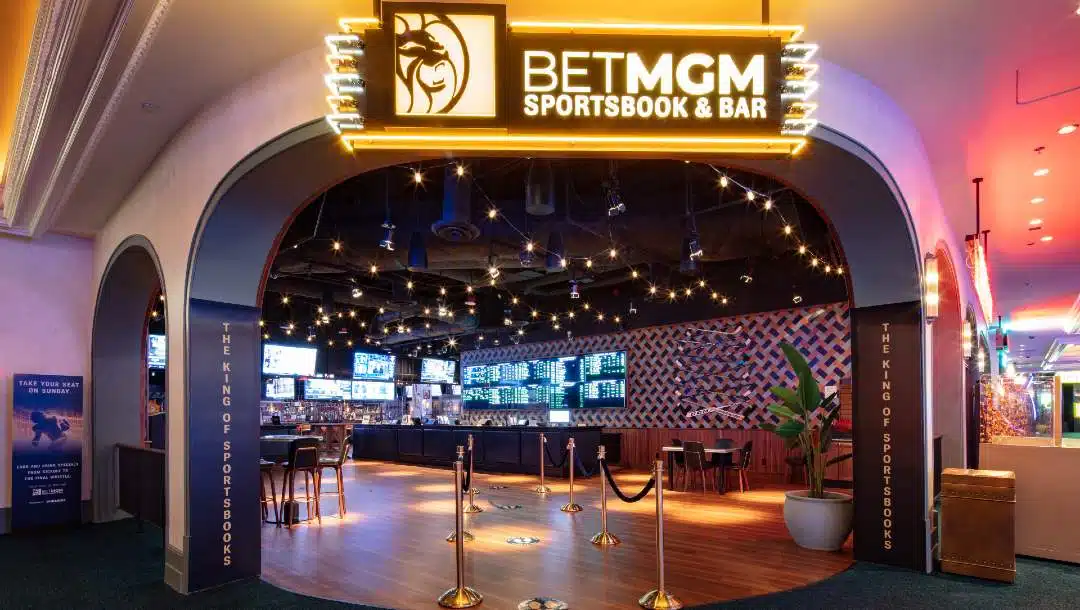
MGM Resorts CFO Jonathan Halkyard had a straightforward message for investors at the J.P. Morgan Gaming Forum last week. BetMGM is a great business, the market isn’t giving MGM credit for it, and if that doesn’t change, the company may have to act.
“I do think there could come a point where if they’re not being rewarded for it through our share price, we’d be compelled to look for other ways to monetize or make clear the value of that business,” Halkyard said. “We think it’s a venture worth billions of dollars right now, both for us and for Entain.”
That is a notably candid statement from a CFO at a major investor conference, and it deserves to be taken seriously.
What BetMGM Is Actually Worth
The math Halkyard laid out is not complicated.
MGM and Entain have each invested approximately $625 million in BetMGM since its inception. Last year, MGM received $130 million in dividends from the venture and expects more this year. BetMGM has built a market share in online sports betting ranging from high single digits to around 15% by state, and more than 20% in iGaming. Those are real numbers in a real business. BetMGM is coming off an excellent fiscal year in 2025.
Halkyard estimates MGM’s 50% stake in BetMGM is worth $13 to $15 per share on its own. Add in MGM China at a similar valuation, and you have already accounted for most of MGM’s share price before factoring in a domestic operating company generating more than $2 billion in EBITDA.
By his reckoning, the stock is deeply undervalued, and the culprit is that investors holding MGM shares aren’t getting full credit for what BetMGM contributes.
He’s probably right. The conglomerate discount is a well-documented phenomenon: when a large company owns a fast-growing digital business alongside legacy physical assets, the market often values the whole at less than the sum of its parts. That phenomenon may be exacerbated in sports wagering as everyone eyes prediction markets in early 2026.
MGM is a textbook case. CEO Bill Hornbuckle added that the story only gets better if more states legalize iGaming, which remains one of the more plausible near-term tailwinds in the industry.
What ‘Other Ways to Monetize’ Actually Means
The interesting question is what happens if the market remains unconvinced. Halkyard was deliberately vague, but the options are not hard to imagine.
A partial IPO of BetMGM would force the market to put a standalone price on the business. A full sale of MGM’s stake would crystallize the value immediately.
It is no secret that MGM would prefer to own all of BetMGM rather than half, and some Entain activist investors have previously pushed for asset sales, which would make the other 50% available.
None of those outcomes are imminent. But a CFO floating them publicly, in a room full of institutional investors, is itself a form of pressure on the market to reassess. It is also a signal to Entain.
MGM Is Not Alone in This Problem
The more revealing aspect of this story is that MGM is not the only major operator having this conversation. Caesars CEO Tom Reeg has been saying almost exactly the same thing about Caesars Digital. The business is performing, the market isn’t reflecting it, and a spinoff would be the logical structural solution. The problem is timing.
“Given what we’ve seen in valuations in the space over the past six to nine months, this doesn’t seem like a market that screams you should come and offer some equity of any kind,” Reeg said on Caesars’ year-end earnings call.
Caesars Digital is focused on hitting $500 million in EBITDA and continuing to prove the business can scale before making any such move.
Two major operators, both sitting on digital businesses they believe are undervalued, both reluctant to act in the current market environment. That is not a coincidence.
It reflects a broader reality: the public markets have not been generous to sports betting and iGaming companies over the past year, and until that changes, the math on a spinoff or IPO simply does not work in their favor. The strategic logic is there. The market conditions are not.
For MGM, the message to Wall Street is clear. The patience is real, but it is not unlimited.
Players trust our reporting due to our commitment to unbiased and professional evaluations of the iGaming sector. We track hundreds of platforms and industry updates daily to ensure our news feed and leaderboards reflect the most recent market shifts. With nearly two decades of experience within iGaming, our team provides a wealth of expert knowledge. This long-standing expertise enables us to deliver thorough, reliable news and guidance to our readers.
Latest News