


Mega Millions Winner Loses $197.5M After Court Rejects Missing Ticket Claim
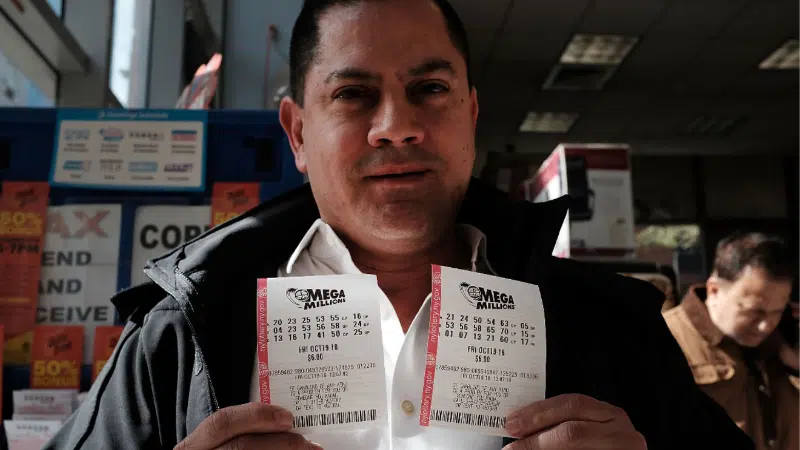
One of the strangest Mega Millions sagas in recent memory has officially come to a close, and it ended exactly how the California Lottery said it would from the very beginning.
A Los Angeles man who won half of a massive $395 million Mega Millions jackpot in December 2023 has lost his legal attempt to claim the remaining $197.5 million, after failing to produce the second winning ticket he insists once existed.
A Missing Mega Millions Ticket, And A Legal Hail Mary
Faramarz Lahijani purchased what turned out to be one of two jackpot-winning tickets sold that night at a Chevron gas station in Encino, roughly 20 miles outside downtown Los Angeles. The winning numbers hit, the prize was split, and everything seemed straightforward, until only one ticket holder ever stepped forward.
Lahijani presented his winning ticket in June 2024 and collected his $197.5 million share. But he claimed that wasn’t the end of the story. According to Lahijani, he had purchased two tickets with the same numbers in separate transactions at the same gas station. One of those tickets, he said, was lost.

With the one-year deadline to claim Mega Millions prizes in California looming, Lahijani filed a lawsuit against the California Lottery in December 2024, just days before the second ticket was set to expire. His argument was simple: because he bought both tickets and successfully claimed one, he was the “sole winner” and therefore entitled to the entire jackpot.
No Ticket, No Win: Judge Ends the Lawsuit
The court didn’t buy it.
On Monday, Los Angeles Superior Court Judge Rolf M. Treu dismissed the lawsuit, siding with the California Lottery and its long-standing rulebook of “no ticket, no payout.” Treu ruled that Lahijani failed to show any enforceable contract or legal obligation that would require the lottery to pay unclaimed prize money without a valid physical ticket.
“These deficiencies appear to be fatal to plaintiff’s claims,” Treu wrote in his ruling.
The lottery emphasized that California law is crystal clear. A winning ticket is the only proof of ownership, and unclaimed prizes cannot be paid out based on testimony, intent, or circumstantial evidence, no matter how much money is on the line.
The case raised more questions than answers, including why anyone would intentionally buy two tickets with identical numbers in the first place. Doing so doesn’t increase your odds of winning; it just doubles the cost. Lahijani never fully explained the logic, leaving observers to chalk it up to superstition or habit.
Then came the twist.
The Twist That Changed Nothing
A woman named Cheryl Wilson attempted to intervene in the case, claiming she was the rightful owner of the missing ticket, and that it had been stolen by a former employer. Her motion was also denied. Judge Treu said the court had no interest in turning the case into a separate dispute over alleged theft or fraud, especially without a physical ticket to examine.

The California Lottery confirmed that the two winning tickets were sold in separate transactions, which opens the door to a much simpler explanation: two different people picked the same numbers. It happens more often than people realize, especially when players share birthdays, anniversaries, or “lucky” combinations.
With the lawsuit dismissed and the deadline now passed, the remaining $197.5 million will officially go unclaimed.
That money won’t vanish entirely, though. Under California law, unclaimed lottery prizes are redirected to public education. Lottery spokesperson Carolyn Becker acknowledged the disappointment but pointed to the silver lining.
“While it’s a shame for potential winners to see any winning ticket expire, it does give a helpful boost to California public schools,” she said.
California allows players a full year to claim prizes, which is longer than most states. Florida, for example, gives winners just 60 days. Even if the mystery ticket holder had come forward, federal taxes would have immediately claimed 24% of the prize, though California’s lack of a state lottery tax would have softened the blow.
Instead, the story ends with a harsh reminder that in the lottery world, luck only gets you so far. After that, it comes down to one fragile slip of paper. And if you lose it, even $197.5 million isn’t enough to change the rules.
Players trust our reporting due to our commitment to unbiased and professional evaluations of the iGaming sector. We track hundreds of platforms and industry updates daily to ensure our news feed and leaderboards reflect the most recent market shifts. With nearly two decades of experience within iGaming, our team provides a wealth of expert knowledge. This long-standing expertise enables us to deliver thorough, reliable news and guidance to our readers.
Latest News