Judge ordered to rehear case challenging smoking in New Jersey casinos
A New Jersey appeals court has ordered a lower court to restart proceedings in a lawsuit over the casino smoking exemption in the state’s Smoke-Free Air Act, citing procedural errors.
A New Jersey state appeals court has directed a lower court to restart proceedings in a major legal challenge over whether the casino exemption in the state’s indoor smoking ban violates the New Jersey Constitution.
The appellate panel found that the trial judge erred in handling the earlier case, particularly in weighing economic studies and applying the proper legal test.
The decision marks a significant development in a years-long fight to end the exemption in the 2006 Smoke-Free Air Act that allows patrons and workers to smoke inside Atlantic City casinos and their simulcasting facilities, a carve-out not afforded to most other workplaces in the state.
Appeals Court Blasts Lower Court Ruling
The appeals court concluded that the trial court judge’s previous dismissal of the lawsuit was flawed because:
- The judge improperly applied a rational-basis test, rather than the broader legal standard required under the New Jersey Constitution’s equal protection provisions.
- The judge deferred to an industry-funded study claiming that a smoking ban would significantly hurt casino revenue without developing a factual record to test the credibility of those projections against competing evidence.
“On remand, the court shall allow the record to be developed and litigated to address the hotly contested projections of revenue loss… and for the court to make appropriate findings of fact concerning the reliability and credibility of the competing expert projections,” the panel wrote.
The ruling means the case will now proceed with a fuller evidentiary process, including live testimony and a deeper examination of the economic and health evidence underlying the dispute.
What the Lawsuit Challenges
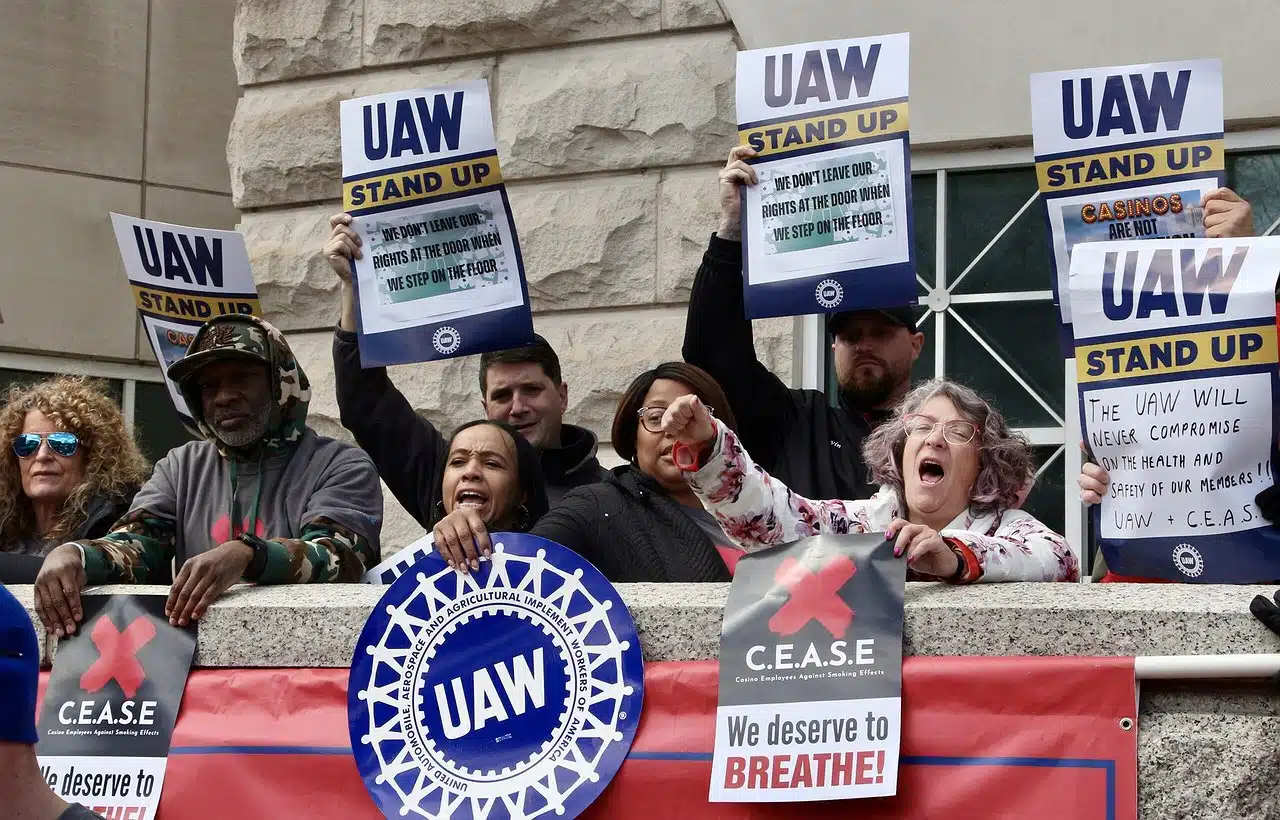
The original lawsuit was filed in April 2024 by a group of Atlantic City casino workers represented by the United Auto Workers (UAW) and Casino Employees Against Smoking Effects (CEASE).
They argue that the exemption in the Smoke-Free Air Act, which otherwise bans indoor smoking across workplaces statewide, denies them a safe working environment and treats them differently from other employees in comparable indoor settings.
In August 2024, Superior Court Judge Patrick Bartels dismissed the suit, ruling that because casino workers were aware of the smoking exemption when they took their jobs and because the exemption has existed for years, it did not violate the state’s constitution.
The judge also accepted the argument that a full ban could drive smokers to casinos in neighboring states, hurting Atlantic City’s gaming industry.
The appeals court’s decision sharply criticizes this approach, noting that economic concerns cannot substitute for a proper, fact-based constitutional analysis.
Where Things Stand Now
With the appellate order, the case will go back to the trial court, where both sides will have the opportunity to present live evidence and expert testimony on both the health impact of secondhand smoke and the likely economic consequences of eliminating the casino smoking exemption.
The case has broader implications not only for employee health and workplace safety, but also for how courts weigh constitutional rights against economic interests when state law creates special carve-outs.
The lawsuit is likely to draw sustained attention from labor groups, public-health advocates and the casino industry, all of whom have vested interests in how the exemption is ultimately treated under New Jersey law.
Background: Casino Smoking in New Jersey
Under the Smoke-Free Air Act, smoking is banned in most indoor workplaces throughout New Jersey but explicitly allowed on casino floors.
This exception has been controversial since the law was enacted in 2006, and efforts to amend it through legislation have stalled for years despite bipartisan support in the Legislature and demonstrations by casino workers seeking smoke-free working conditions.
Opponents of the exemption argue that continued indoor smoking puts casino employees at increased risk of secondhand smoke-related illnesses, while supporters assert that a ban could hurt Atlantic City’s ability to compete with other jurisdictions that permit smoking in their casinos.
What’s Next
The lower court will now reopen the case and conduct a fuller hearing with evidence from both sides. The outcome could influence not only future workplace-smoking policies in New Jersey but also the legal strategies of employee health advocates and industry groups nationwide.
Lawmakers have also considered legislation to eliminate the casino smoking exemption, but legal progress has been slow even as the courts weigh the constitutional questions.
As the rehearing unfolds, the clash between public health priorities and economic protections for casino operations is sure to remain at the forefront of Atlantic City’s legal and political landscape.
Players trust our reporting due to our commitment to unbiased and professional evaluations of the iGaming sector. We track hundreds of platforms and industry updates daily to ensure our news feed and leaderboards reflect the most recent market shifts. With nearly two decades of experience within iGaming, our team provides a wealth of expert knowledge. This long-standing expertise enables us to deliver thorough, reliable news and guidance to our readers.
Latest News