After Landmark Ninth Circuit Ruling, What Does the Future Hold for Prediction Markets?
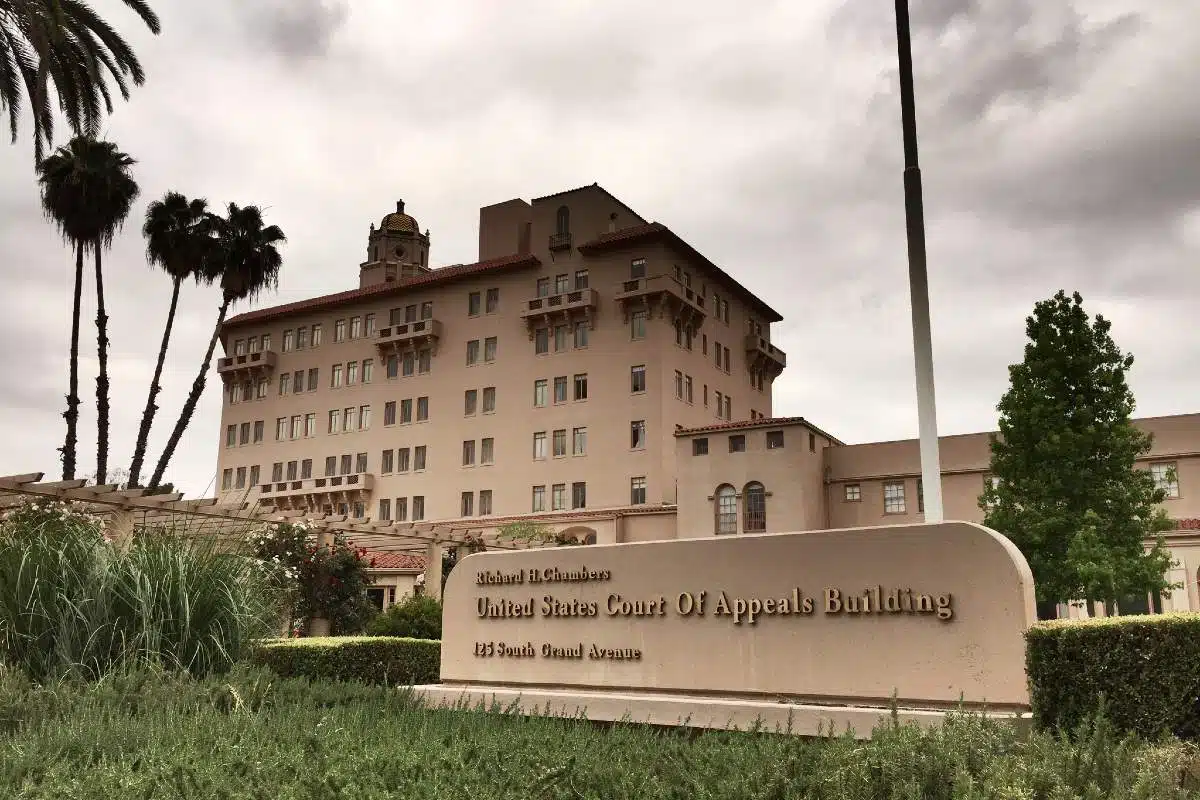
Credit: Ron Coleman/Flickr
The 9th Circuit U.S. Court of Appeals dealt prediction markets a massive loss on Friday, opening the door to state-level enforcement that could see sports contracts legislated out of the vertical. It may signal the eventual end of prediction markets as multi-billion-dollar companies, at least those that operate on U.S. soil.
The appellate court delivered a unanimous 3-0 verdict against prediction operator Kalshi. Kalshi had sought to overturn a District Court ruling requiring Kalshi to suspend trading on sports contracts in Nevada. Kalshi had argued that it could not obey that order without violating the federal requirement of “impartial access” to financial markets.
Almost all industry observers expect the matter to reach the U.S. Supreme Court sooner or later. Until then, the Ninth Circuit decision will likely embolden more states to ban prediction markets from offering sports contracts. The precedent will matter most for other states within the Ninth Circuit: California being notably among them.
Stock prices for top online sportsbooks FanDuel and DraftKings, in decline for more than a year, responded positively to the news:
The ruling raises major questions about the future of prediction markets. Will they continue in some fashion without sports? Will trading volume migrate en masse to Polymarket’s internationally-facing crypto exchange? Do the prediction markets have any hope of victory in a last stand before the Supreme Court?
Bets vs. Event Contracts: a ‘Distinction Without a Difference’
The battle lines in the ongoing court battles between various states and various prediction markets have become relatively clear. States say prediction markets are offering sports betting without proper licenses.
One common argument made by the states is that there’s no reasonable distinction between sports bets and event contracts centered around sports. Prediction markets, counter by saying the resemblance is only superficial, and that the underlying structure of event contracts makes them a financial product subject only to federal regulation.
The 9th Circuit appeared to agree with the states. The ruling found that Kalshi’s arguments amounted to a “distinction without a difference” and that sports event contracts are functionally sports bets. Kalshi’s own advertising factored into that finding
“Kalshi describes and markets its sports event contracts offered on its DCM as ‘legal sports betting,'” wrote Judge Ryan Nelson. “Yet it argues that sports bets and sports event contracts are different.
“…for Kalshi to deny that its sports event contracts are sports bets under a reasonable person’s understanding is disingenuous.”
Proponents of prediction markets have argued that event contracts relating to sports can have financial consequences, and participants could use them to hedge against risk. However, the court’s opinion on the matter again sided with Nevada, saying making a sports bet actually creates risk where none previously existed.
The court also turned around the argument made by Kalshi and the Commodity Futures Trading Commission’s (CFTC). Nelson writes that accepting exclusive federal jurisdiction over sports swaps would mean that every legal, state-regulated sports bet would be in violation of the Commodity Exchange Act, given that they’re functionally the same as Kalshi’s swaps.
“If there is not a difference under the CEA’s swap definition between sports betting on Kalshi and sports betting in Caesar’s Sportsbook, then every person placing a sports bet at Caesar’s Sportsbook (or anywhere else for that matter) is violating the CEA,” he wrote.
Such a reading of the CEA would effectively render regulated sportsbooks illegal. Yet, the CFTC has never intervened in state-regulated sports betting.
The Future of Prediction Markets is Up in the Air
The Supreme Court could still overturn the Ninth Circuit’s decision. That said, the more Circuit courts rule against Kalshi, the more uphill that final struggle will be. In the meantime, however, there is still the possibility that a policy shift by the CFTC or Congress could change the calculus.
The court’s decision applies only to sports event contracts. Most of Kalshi’s other offerings can continue to be made available in Nevada. However, the ruling directs the District Court to re-examine Nevada’s challenge to Kalshi’s election contracts, applying the Ninth Circuit’s logic.
Judge Kenneth Lee, in his concurring opinion, offered a possible ray of hope for Kalshi. He referenced the possibility of amended CFTC rules that would more clearly open the door for sports contracts. The CFTC issued such a proposed rule change, one that it wrote would be “broadly receptive to sports event contracts,” in June.
For now, Lee wrote, the current rule “remains in the books and controls the outcome of this appeal.”
Still, the 9th Circuit Court’s ruling has to be particularly troubling for prediction market advocates because all three judges on the panel were Donald Trump appointees. That suggests that escalation to the Supreme Court offers no guarantees, despite a similar Republican skew there and the friendliness of the current administration toward prediction markets.
‘What is Kalshi Without Sports Betting?’
Could Kalshi and other prediction markets move toward a future that doesn’t involve sports? That would be one in which they offer contracts based on weather, culture, politics, and business. Yet, despite the the increasingly popularity of ultra-short-term commodity markets, everything that isn’t sports is just a drop in the bucket.
Given that most estimates peg sports as around 80% of prediction market volume, it’s difficult to say.
Tribal gaming advocate Victor Rocha likes to ask rhetorically on social media, “What is Kalshi without sports betting?”
That’s a fair question, but 20% of billions of dollars is still a lot of volume. It’s certainly not worth tens of billions of dollars in valuation, but it’s far from nothing. The question is whether users come for the sports and bet on other things incidentally, or would still be interested in the absence of what is currently the main draw.
Polymarket, with its massive international product, appears to have the strongest contingency plan in place compared to its competitors. It could simply retreat from U.S. shores again and continue doing business internationally. However, the addressable market there has also shrunk as various governments, such as those in South Korea and Spain, have recently enacted bans on Polymarket.
On the flip side, exchanges such as Novig that offer only sports appear to be in the most danger. Underdog also falls into this bucket, but it at least has a core fantasy product to fall back on.
The overall tide of the courts continues to turn against prediction markets. As gaming lawyer Daniel Wallach outlined on social media, states have largely continued stacking up legal victories against prediction markets. By his count, they’ve won 33 of 39 rulings thus far.
While prediction market momentum may feel inevitable at times, the legal deck appears to remain stacked in the states’ favor. Turning “the whole world into a casino,” as Trump opined on earlier this year, may be reaching its limit.
Image credit: Ron Coleman/Flickr (license)
Players trust our reporting due to our commitment to unbiased and professional evaluations of the iGaming sector. We track hundreds of platforms and industry updates daily to ensure our news feed and leaderboards reflect the most recent market shifts. With nearly two decades of experience within iGaming, our team provides a wealth of expert knowledge. This long-standing expertise enables us to deliver thorough, reliable news and guidance to our readers.
Latest News